
What Classic Fairy Tales Teach: Lessons in Character and Courage

Introduction
A story is never just a story; it is a beautifully rendered lens through which we view the world. For generations, classic fairy tales have served as more than just whimsical bedtime reading. They are rich, complex narratives filled with colors, ancient archetypes, and profound lessons about the human (or creature) experience. When we explore the world of fairy tales, we aren’t simply looking at colorful characters; we are uncovering blueprints for character development and courage. These ancient stories teach us how to face the terrifying, how to persevere when faced with impossible odds, and the quiet power of staying true to ourselves.
As parents and educators, we often seek the right stories—those that will inspire, soothe, and teach without resorting to dry lecture. These tales provide that exact blend of enchantment and substance. From the perilous journey of little Red to the magical ingenuity of Hansel and Gretel, every element serves a purpose. We will explore what these classic narratives truly teach us about character, how bravery is defined in a storybook setting, and which tales offer genuine depth for bedtime contemplation.
How Character Is Built: Lessons from Archetypal Tales
In the world of fairy tales, character is rarely subtle. Actions have immediate and often powerful consequences, making the moral of the story remarkably clear for young minds. The characters we encounter are typically defined by their virtues and their flaws, providing powerful models for both aspiration and caution.
Ingenuity Versus Impulsivity: The Wisdom of Hansel and Gretel
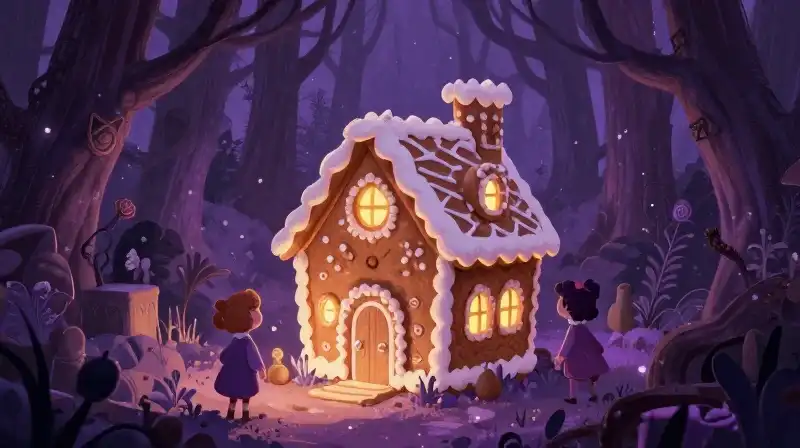
Hansel and Gretel present a compelling narrative of survival, forced to confront genuine danger in the form of a wicked witch [3]. Their story teaches far more than just how to escape; it illuminates the power of ingenuity when faced with overwhelming malice. Rather than relying solely on strength, the children employ clever strategies to outwit a formidable evil. They represent a vital lesson: that the ability to think critically and adapt under pressure is often the most potent form of courage.
The Power of Perseverance: The Lesson of The Ugly Duckling
The journey of “The Ugly Duckling” is perhaps one of the most moving stories regarding self-worth and perseverance [3]. By starting as a misidentified, marginalized creature, the duckling endures a period of isolation. His transformation is not instantaneous; it requires the relentless passage of time and the strength to keep trying. This tale teaches children that true identity and beauty often only reveal themselves when one has weathered a period of being misunderstood or underestimated. It is a beautiful, patient lesson in self-discovery.
Respect for Boundaries: The Caution of Goldilocks
While often read as a humorous romp, “Goldilocks and the Three Bears” is actually a precise, accessible lesson in respect and boundaries [3]. Goldilocks’s curiosity eventually leads to a breach of personal space and a confrontation with consequences. The story effectively demonstrates that even small, seemingly harmless transgressions—taking more than one’s share, entering a private space without permission—can lead to unexpected results. It is a foundational tale for teaching the importance of empathy and moderation.
Defining Courage: Physical vs. Inner Strength in Fairy Tales
Fairy tales redefine courage beyond mere brute strength. True courage, as depicted in these classics, is often internal: the strength to speak a difficult truth, the persistence to keep going, or the bravery to accept one’s authentic self.
| Tale & Character | Form of Courage Demonstrated | Key Takeaway for the Reader |
|---|---|---|
| Little Red Riding Hood | Trust and Trust Management | The necessity of exercising good judgment, even in seemingly safe situations [3]. |
| Hansel and Gretel | Ingenuity and Resourcefulness | The value of using intellect and wit to overcome physical obstacles. |
| The Little Mermaid | Emotional Courage | The immense emotional bravery required to sacrifice comfort or safety for the sake of love or purpose [3]. |
| Rumpelstiltskin | Moral Courage | The difficulty of resisting temptation and adhering to moral principles despite the pressure of a bargain [3]. |
Addressing Common Story Questions
Many people ask, “What is the best fairy tale?” or “Which classic fairy tales won’t give kids nightmares?” The truth is, there isn’t one “best” tale, but rather those whose lessons best align with a child’s current developmental needs and comfort level.
Guidance for Bedtime Stories and Nighttime Comfort
If the goal is to soothe, gently guide children toward tales focused on gentler themes, magic, and transformation rather than confrontation. Stories like “The Shoemaker and the Elves” offer beautiful examples of gratitude and benevolent magic, illustrating how kindness can lead to unexpected collaboration [3]. Similarly, tales of self-discovery like “The Ugly Duckling” can provide deep, reflective comfort, showing that goodness ultimately finds its place.
For those seeking accessible retellings, modern picture books often omit the dark or violent elements of classic tales like “Little Red Riding Hood,” allowing parents to maintain the core narrative’s wisdom while avoiding potential nightmares [2].
Comparing Classic vs. Modern Versions
It is essential to remember that many cherished modern stories are adaptations of older folklore, and the original narratives often carried darker weights. For example, while the Disney version of “The Little Mermaid” is enchanting, the original version by Hans Christian Andersen is significantly sadder and more emotionally complex [3]. Similarly, films like “Frozen” often draw inspiration from much older, potentially darker tales like “The Snow Queen” [2]. Understanding these variations allows us to provide context and help children navigate the difference between nostalgic fantasy and historical folklore.
The Symbolism of Classic Creatures and Settings
Beyond the plot, the creatures and settings in fairy tales carry deep symbolic meaning. They represent externalized emotions, challenges, or internal states.
The Witch and the Beast as Externalized Conflict
The villain in a fairy tale rarely exists just to be evil; they usually embody an internal fear or a societal flaw. The wicked queen in “Snow White and the Seven Dwarfs,” for instance, uses her magic mirror to obsess over perfection, symbolizing profound insecurity and jealousy [3]. Likewise, the witch in “Hansel and Gretel” represents the absolute physical embodiment of the unknown and the hunger that lies outside the safe boundaries of home. By personifying these threats, the story gives children a concrete target for their fears, making the subsequent victory over the threat much more satisfying.
The Role of Magic and the Transformation Motif
Magical intervention in tales like “Cinderella” or “The Frog Prince” serves to validate the protagonist’s inner worth. Magic—whether a “fairy godmother” or a “fairy tree”—is a narrative device that confirms that the virtuous, innocent heart of the protagonist will ultimately be recognized and elevated [3]. Transformation itself, as seen in “The Frog Prince,” is a powerful lesson that outward appearances are often deceiving, inviting the child to look beyond superficial judgments.
Synthesis: The Enduring Value of Storybook Worlds
Classic fairy tales offer a uniquely balanced gift to the developing mind: they are accessible to young readers, yet they possess enough depth to stimulate deep thought. Whether through the bravery of a resourceful child escaping a magical woods, the patience required to become a radiant swan, or the humility taught by respecting boundaries, these stories map the landscape of human potential.
They teach us that character is not defined by luck, but by the choices made under pressure. They provide children with a vocabulary for resilience, showing them that even when faced with a seemingly insurmountable obstacle—a hungry witch, a jealous queen, or a demanding bargain with Rumpelstiltskin—courage is the active choice to endure, to outwit, and to keep seeking one’s truest, most authentic self.
By engaging with these ancient tales, parents give their children more than just a story; they give them an internal compass for navigating the complex and often fearsome beauty of the real world.
Sources
- Best Classic Fairytale (94 books) — goodreads.com
- 12 Classic Fairy Tales That Won’t Give Kids Nightmares — readbrightly.com
- List of Fairy Tales: 20 Fables, Fairy Tales, and Folktales — prowritingaid.com
Frequently Asked Questions
What is the best fairy tale?
The article clarifies that there is no single 'best' fairy tale. Instead, the most appropriate tale is one whose lessons align with a child's current developmental needs and comfort level.
Related Articles