Pans Labyrinth Fairies: Why Are They So Complex and Dark?

Introduction
We often think of fairy tales as havens—worlds of glass slippers, benevolent dragons, and creatures whose magic primarily serves to enchant and instruct. But what happens when the line between charming enchantment and brutal reality dissolves? In Guillermo del Toro’s masterpiece, Pan’s Labyrinth, the enchantment is profoundly different. The fairies are not the whimsical guardians of a safe world; they are intricate, sometimes dangerous, and deeply tied to the complex psyche of a child trying to survive a world defined by fascist cruelty. For parents, educators, and story lovers alike, these creatures offer a fascinating look at the limits of imagination and the specific power of gothic escapism.
They represent a powerful bridge between the grim, violent historical reality of 1944 Spain and the lush, disturbing world of pure fantasy. By examining their forms, their functions, and the thematic questions they raise, we can understand why these specific fairies remain such a compelling, complex feature of children’s literature, even when that literature leans into darkness.
The Form of the Forest’s Mystery
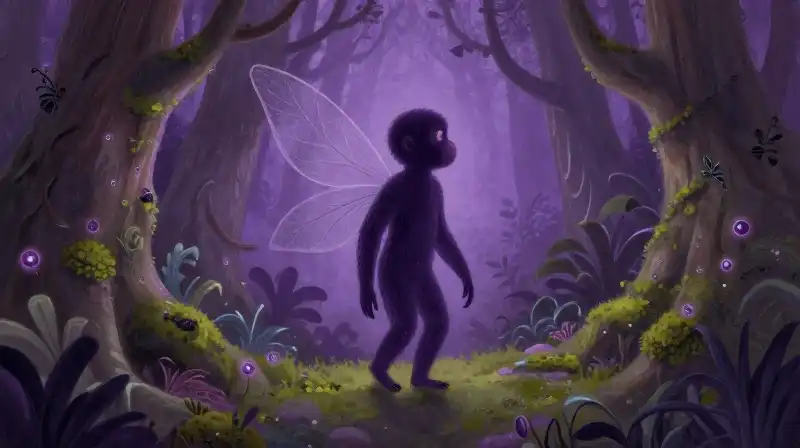
To understand the function of the fairies, we must first look at their physical reality. These are not the small, winged sprites of gentle nursery rhymes. The fairies in Pan’s Labyrinth are characterized by a sophisticated, unsettling blend of insectoid and humanoid features [1]. They are depicted as slender and elegant, yet they possess a body that evokes a somewhat primate or monkey-like silhouette, complete with distinct, pointy ears [1].
Their wings, notably, defy traditional fairy lore. Instead of delicate, membranous insect wings, they resemble the structure and beauty of leaves [1]. Furthermore, their capacity for transformation is a key component of their nature. They are not fixed beings; they are sapient creatures with the ability to “metamorphize” into almost any form they choose, suggesting a fluid, almost shapeless magic [1]. One of the most specific, telling examples of this transformation is their change into a Malaysian stick insect, a detailed reference to the creature *Acrophylla titan* [1]. This combination of elegance and insectile strangeness, enhanced by the designs of Sergio Sandoval, lends them a mysterious and sometimes uncanny presence, mimicking fictional phasmids [1].
A Personal Touch in Dark Fantasy
Interestingly, the creatures are rooted in personal inspiration. Guillermo del Toro found his artistic spark for these unique beings in his own childhood experience—a mounted Malaysian stick insect [1]. This infusion of personal memory into the fantastical elements elevates the fairies beyond mere props, making them feel like deeply imagined inhabitants of a personal mythology.
Thematic Complexity: Escapism vs. Brutality
The central tension surrounding these fairies lies in their relationship to reality. Are they comforting companions, or are they agents of manipulation within a hostile realm? The narrative provides clues that suggest they are both, serving complex roles in the story.
Manifestation and Disassociation
One of the primary interpretations of the fairies is that they function as a manifestation of Ofelia’s disassociation [2]. As the brutal violence and fascist regime of the real world press in on the family, the fairies provide a necessary, magical escape. They appear when Ofelia interacts with her fairy book, acting as a comforting presence that pulls her into a realm where she can wield genuine power [1]. In this sense, they are a vital part of her coping mechanism, giving her a magical outlet from the horrors surrounding her [2].
The World of Cruelty and Choice
However, the “magic” they inhabit is anything but sweet. The world is not a gentle paradise; it is a realm of inherent cruelty [1]. They exist within an “Underworld” habitat that contrasts sharply with gentle fairy tales. Some fairies are possessed or owned by the Faun, while others—such as those consumed by the Pale Man—suffer violent fates [1]. This confirms that the magic of Pan’s Labyrinth exists alongside its inherent brutality, placing it firmly within the genre of Magical Realism [2].
The fairies, therefore, raise a profound question for parents and educators: When do we teach a child that imagination is a safe harbor, and when do we show them that even the things they most love can be manipulative, dangerous, or tragic? The fairies force the reader to confront the difference between a simple fantasy and a psychologically layered magical world.
Addressing the Curiosity: Understanding the Lore
Many viewers and new fans are curious about the specific roles and meanings of these creatures. Let’s dive into the questions that often come up about this dark, beautiful lore.
What are the fairies in Pan’s Labyrinth? (Nature and Purpose)
The fairies are complex, sapient beings that embody the intersection of fantasy and psychological need. Physically, they are characterized by a refined, insectoid/monkey-like form and leaf-like wings, often possessing the ability to metamorphic into forms like the Malaysian stick insect [1]. They function narratively to serve as a bridge: linking Ofelia’s real, desperate need for fantasy to the terrifying, gothic landscapes of the film [1, 2]. They provide an elaborate, internal world that allows the protagonist to process and cope with external trauma.
Why can’t Vidal see the faun? (The Nature of Perception)
The difference between the world of the fairies and the world of the adults (like Vidal) is defined by the concept of Magical Realism [2]. The Faun, and the fairies, exist in a plane of magic that is invisible to the rational, brutal adult world. Vidal’s reality is one of rigid fascism and tangible violence. Since the magic of the realm is fundamentally separate from the literal, objective reality the adults inhabit, the adults cannot see, interact with, or validate the existence of the fantastical beings [2]. The fairies are only visible to those attuned to the magical resonance of the story, such as Ofelia.
Was Pan’s Labyrinth inspired by fairy tales? (The Twisted Origin)
While the fairies and the overall story borrow the foundational structures of traditional fairy tales—the helper, the dangerous quest, the magical realm—the film dramatically subverts them [1]. It takes the tropes of children’s stories and sets them against a backdrop of extreme darkness. The fairies take the traditional role of “enchantment” and turn it into something more unsettling, complex, and less predictable, making the tale a powerful piece of dark fantasy rather than a gentle story.
Synthesis: The Enduring Power of the Unsettling Tale
The magic of *Pan’s Labyrinth* lies not in its predictable comfort, but in its profound recognition of difficult truths. The fairies are a masterful example of this truth in action. They challenge the reader to consider that sometimes, the greatest acts of magic are not about wishing things into existence, but about creating an imaginative sanctuary when the real world feels unbearable. They are a brilliant artistic decision—allowing a story about the harshest of historical realities to use the language of childhood fantasy, not to escape the darkness, but to survive it.
For any parent or educator, these creatures offer rich material for conversation: exploring the definition of courage, the difference between illusion and reality, and how the human imagination—even when fueled by sorrow—can be a powerful, resilient force.
Sources
- Fairy (Pan’s Labyrinth) | Non-alien Creatures Wiki | Fandom — non-aliencreatures.fandom.com
- Is Pan’s Labyrinth the cruelest fairy tale movie? : r/movies — reddit.com
Frequently Asked Questions
What are the fairies in Pan's Labyrinth?
The fairies are complex, sapient beings that embody the intersection of fantasy and psychological need. Physically, they possess a refined, insectoid/monkey-like form with leaf-like wings and can metamorphose into forms like the Malaysian stick insect. Narratively, they function to bridge Ofelia’s need for fantasy with the terrifying, gothic landscapes of the film, providing a magical outlet for her to cope with external trauma.
Why can't Vidal see the faun?
The world of the fairies and the faun exists in a plane of magic that is fundamentally separate from the literal, objective reality inhabited by adults like Vidal. Because his reality is defined by rigid fascism and tangible violence, the magical realm is invisible to him and cannot be validated.
Was Pan's Labyrinth inspired by fairy tales?
Yes, the film borrows foundational structures from traditional fairy tales, such as the helper, the magical realm, and the dangerous quest. However, the story dramatically subverts these tropes by setting children’s story motifs against a backdrop of extreme darkness, transforming them into a powerful piece of dark fantasy.
Related Articles