Enchanted Forest Lore: Symbols, Real-World Magic, and Story Settings

Introduction
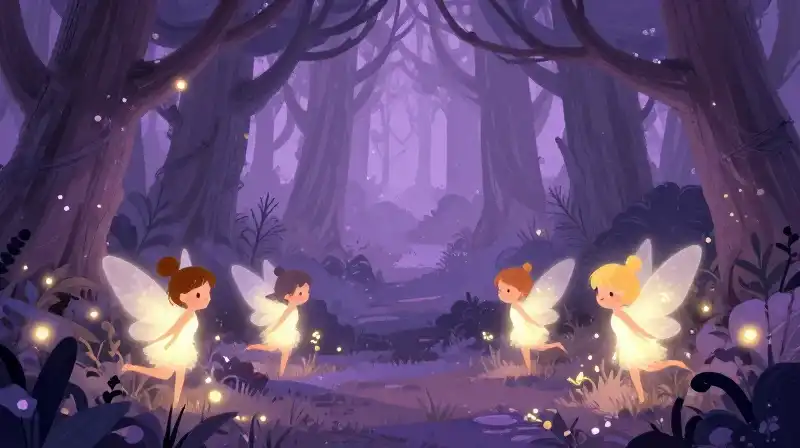
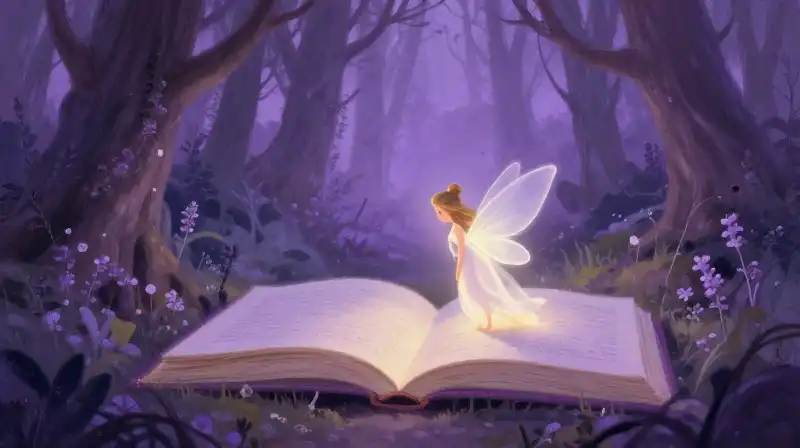
Imagine a place where the laws of gravity feel soft, where the shadows seem to hold old secrets, and where the trees might just be listening. This is the enchanted forest: more than just a collection of ancient trees, it is the ultimate stage for transformation, a threshold between the world we recognize and the vast, wondrous unknown. For generations, storytellers have relied on the woods to hold their greatest mysteries, and it is no surprise that real-world locations—from moss-covered paths in England to towering sandstone cliffs in China—inspire the same deep sense of wonder and apprehension in us all.
When we open a story set within these mythical glades, we aren’t just looking at a backdrop; we are witnessing a collision of possibilities. The enchanted forest functions as a crucial literary trope, a “liminal” space—a doorway where old rules cease to apply and new, deeper truths can emerge. But what exactly does this magical landscape represent? How does it prepare a young hero for their destiny, and what secrets do the rustling leaves hold?
The Forest as Liminal Space: The Threshold of Transformation
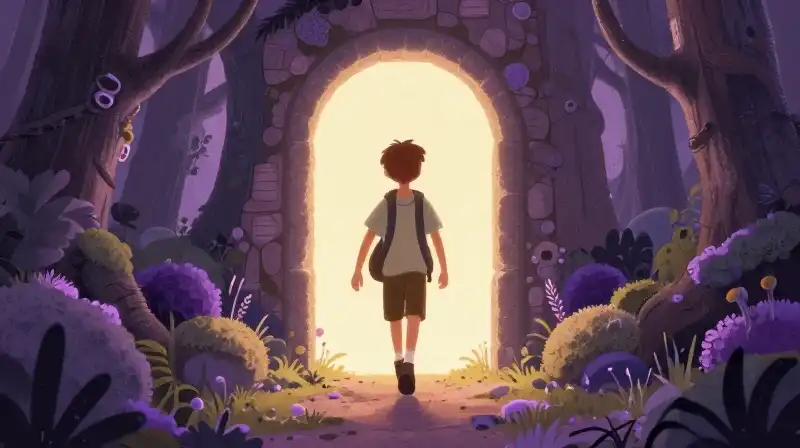
The primary narrative function of the enchanted forest is the introduction of chaos and the promise of growth. In storytelling, the forest is fundamentally a place of liminality, meaning it is a transitional area. Characters who enter these woods are, by definition, stepping out of the predictable safety of home and into a landscape that demands change. This is where heroes are tested and transformed.
For those in traditional folklore, the forest serves a dual purpose: it is both a vital sanctuary and a perilous crucible. While it can house terrors like ogres, witches, and mythical monsters such as those in the tale of Hansel and Gretel, it simultaneously offers safe haven to those in need, exemplified by characters like Snow White [2]. It is a place that can both threaten the protagonist and ultimately be the very path that makes them worthy of their quest. In chivalric romances, the knight-errant wanders through trackless woodlands, encountering immense peril that forces him to evolve into the hero he must become [2].
The Two Faces of the Woods: Refuge, Peril, and Revelation
Not all enchanted forests feel like a place of danger, and depending on the specific legend, the wood can be a profoundly nurturing environment. The paths within these woods often lead not just to treasure, but to revelation. Encounters here frequently involve magical aid; heroes may meet creatures like talking animals—be it an enchanted hind or a wise bird—that offer critical guidance or illuminate a hidden truth [2]. These stories suggest that even in the heart of the mysterious wilderness, there are forces aligned with human goodness.
Conversely, the dark side of the woods is defined by the unresolved and the monstrous. In contemporary stories, this “enchanted” quality can turn into a profound horror, with forests housing malevolent forces like the cannibals seen in the *Wrong Turn* film [2]. Whether the threat is a supernatural witch or a brutal human savagery, the forest ensures that the stakes are always high, forcing the character to confront their deepest fears.
The Symbols Within the Boughs
Beyond its role in a plot, the forest carries heavy symbolic weight. In many psychological and literary interpretations, the enchanted forest represents the unconscious mind—a place where the boundaries of ordinary human experience dissolve [2]. It is a realm of the unknown, a mirror for a character’s inner self where they are forced to face their own potential, fears, and untapped magic.
The inclusion of figures like Robin Hood, whose deep affinity for the woodland places him outside typical societal structures, or the Green Man, who embodies nature itself, further bridges the gap between traditional supernatural enchantment and the living reality of the natural world [2]. These elements suggest that the woods are not just an escape from society, but a vital part of the human spirit.
Where Fantasy Meets Earth: Real-World Enchantment
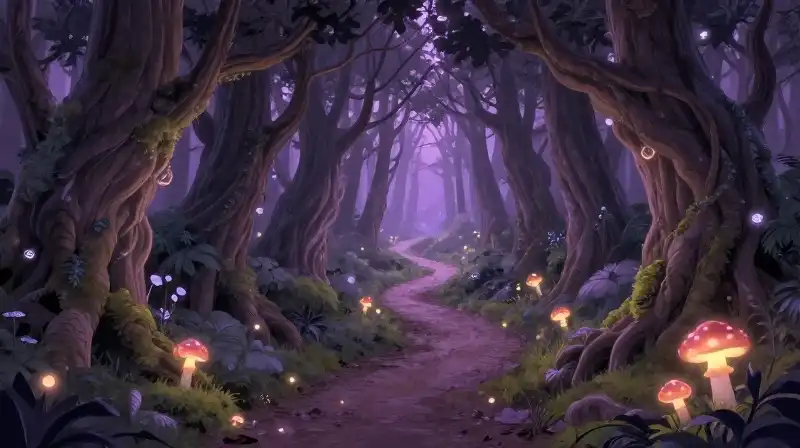
The power of the enchanted forest lies in its ability to transport our imaginations. Modern travelers and filmmakers are constantly searching for real-world landscapes that can capture that same atmospheric magic. From ancient, mystical decay to surreal, alien landscapes, nature itself offers perfect canvases for the fantasy.
Here are several real-world landscapes that embody the spirit of the magical woods:
- Wistman’s Wood, England: This location embodies the theme of ancient, untouched decay. Its moss-covered boulders and gnarled, twisted branches create the unmistakable impression of a place that exists outside of modern human influence [1].
- The Dark Hedges, Northern Ireland: These magnificent avenues of yew trees naturally form a haunting tunnel. This structure resembles a dramatic gateway into an adventure, perfectly capturing the feeling of entering a mystical threshold [1].
- Puzzlewood, Gloucestershire: This forest emphasizes sensory immersion—think dense, layered paths, creeping moss, and creaking bridges. It captures the deeply enveloping, immersive quality found in many classic woodland tales [1].
- The Zhangjiajie National Forest Park, China: Its towering sandstone columns are a marvel of natural engineering. This landscape provided the real-world inspiration for the surreal, floating peaks of Pandora in the movie *Avatar*, proving that nature itself can look like an alien ecosystem [1].
- Gryfino, Poland and the Baobabs of Morondava, Madagascar: These extreme examples showcase how nature can look utterly alien or “hook-shaped,” suggesting a truly strange and potent magical influence, fitting the criteria for an extraterrestrial or completely new mythical realm [1].
Deciphering the Forest’s Inhabitants and Lore
The beings that dwell in these woods are varied and profoundly symbolic. Depending on the age and themes of the story, these inhabitants guide, threaten, or teach.
| Creature Archetype | Common Role | Symbolic Meaning | Example Context |
|---|---|---|---|
| Traditional Folklore Creatures | Magical Aid or Curiosity | Innate wonder and wisdom | Fairies, unicorns, and magical animals [2] |
| The Green Man | Nature’s Soul or Bridge | The intertwining of life and wildness | Robin Hood and ancient woodland myths [2] |
| Witches/Monsters | Trial or Danger | The challenge to growth; confronting the unconscious | The wicked witches or ogres encountered by heroes [2] |
| Modern Horrors | Pure Obstacle/Threat | The dissolution of safety/survival of the fittest | Cannibals in Wrong Turn or dark fairy tales [2] |
The Forest in Bedtime and the Classroom: Using the Lore
The enchanted forest offers rich, actionable themes for educators and parents looking to deepen story appreciation. The complexity of the woods allows us to teach multifaceted ideas without relying on a simple “good vs. evil” binary.
For children at bedtime, the “enchanted” setting is powerful because it creates a perfect balance of safety and mystery. When the forest is treated as a place of secret knowledge (like the sanctuary where Snow White might hide), it teaches children that refuge exists and that growth often requires moving away from the predictable. The imagery of ancient trees and soft moss encourages quiet contemplation and deep sensory engagement, which is naturally soothing [1].
In the classroom, the forest can be used to explore thematic development:
- Liminal Thinking: Use the forest to discuss transitions and change. How does a character change when they leave the world they know and enter a wild, unpredictable place?
- Ecology and Folklore: Compare real-world ancient woods (like Wistman’s Wood) with fictional ones to discuss how humans view and protect nature.
- Narrative Pacing: The deep, confusing paths of the woods are ideal for discussing escalating tension and the feeling of “the journey.”
Closing the Loop: The Ever-Deep Mystery
The enduring power of the enchanted forest rests not in its physical reality, but in its perfect ability to hold all human desires: the longing for adventure, the fear of the unknown, the hope for sanctuary, and the yearning for transformation. Whether you are looking for the serene, moss-draped tranquility of a real English woods or a towering, fantasy-inspired landscape like Zhangjiajie, the enchanted forest promises that within its deepest shade lies a story that is still waiting to be found.
Sources
- 8 Real-World Forests That Look Like They Belong in a Fantasy Novel — atlasobscura.com
- Enchanted forest — en.wikipedia.org
Related Articles