The Magical Fairy Forest: A Sanctuary for Kids Imagination

Introduction
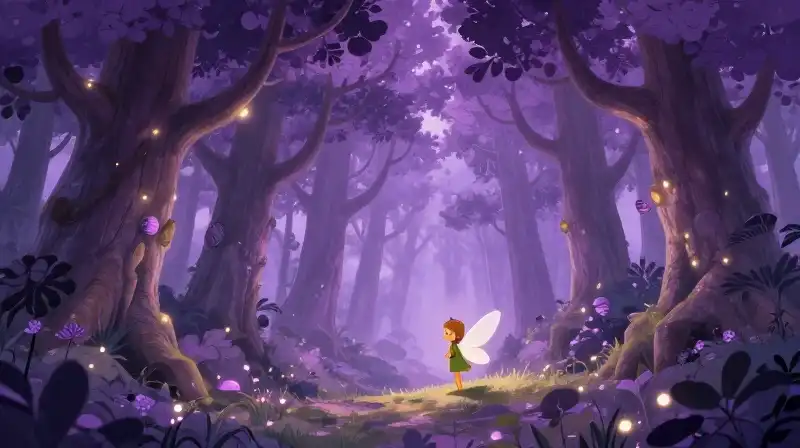
The idea of a “Fairy Forest” suggests a place where the mundane world softens at the edges, where moss grows thick with secrets and the shadows hold the promise of wings. It is a concept that has transitioned from the static backdrop of a classic picture book to a dynamic, multifaceted environment designed to actively cultivate a child’s inner world. For those of us who study the heart of storytelling, the Fairy Forest is more than just a whimsical setting; it is a conceptual sanctuary and a powerful educational tool. It challenges us to see a forest not as merely a collection of trees, but as a living narrative—a space where history, education, and pure, unadulterated magic can intersect.
The Fairy Forest: More Than a Story Backdrop
 A core question often asked about magical themed spaces is, “What is the Fairy Forest really for?” The answer is wonderfully complex, as the concept adapts to various purposes, whether in traditional folklore, modern play installations, or professional educational settings. It functions simultaneously as several different identities.
A Narrative Sanctuary
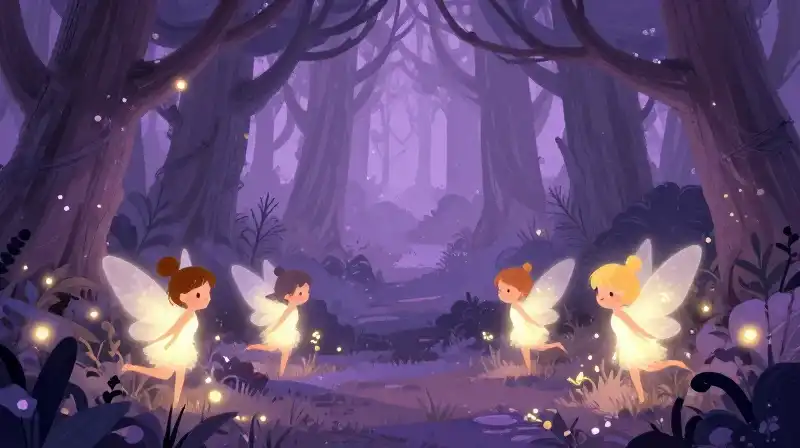
In its simplest form, the Fairy Forest acts as the original stage for beloved fairy tales. It is the home of the little beings who guard the woods, providing the natural “canopy” under which children’s imaginations can run wild. This setting has traditionally hosted characters drawn from classic literature, offering a familiar comfort while allowing for surprising transformations. We might find Little Red Riding Hood navigating the ancient woods, or discover the wife of Peter, Peter Pumpkin Eater, tending to her home amidst the foliage [2]. These familiar archetypes become fully integrated into the enchantment of the forest, grounded by the lush, imaginative environment itself [2].
An Educational Sandbox
In its role as an outdoor classroom, the Fairy Forest transforms the act of play into a deep learning experience. It is a “canvas for custom provocations” [3]—meaning the landscape is curated not just for fun, but to spark specific cognitive and imaginative exploration. The staff act as more than simple caretakers; they function as thoughtful guides and curators who “scaffold” (support) children’s learning within this imagined landscape [3]. By immersing children in a richly imagined outdoor environment, the forest facilitates what some describe as a “deep and healthy relationship” between young people and the natural world [3].
A Haven for Vulnerability
Crucially, the Fairy Forest often serves a more emotional function than a purely educational or commercial one. It is conceived as a safe and welcoming space. It provides a sanctuary, a place of “imaginative vulnerability,” specifically cited as a safe haven for queer families and children across the spectrum of neurodiversity [3]. This highlights the sophisticated understanding that true magic in a children’s space is the unconditional safety it provides for a child to simply *be* themselves.
Exploring the Ecology of Enchantment
The atmosphere of the Fairy Forest relies heavily on its specific details—the touch of the air, the texture of the ground, and the change in light. These details elevate the setting beyond a simple drawing and into a felt reality.
The Enchanted Pine Tree Forest
Specific elements, such as the Enchanted Pine Tree Forest, are used to establish a palpable mood of comfort and wonder. The description of these areas as “a lovely and cool place to explore” [2] grounds the magic in a tangible sensory experience. This intentional focus on specific micro-environments transforms the forest from a general concept into a destination with distinct moods for different moments of play.
The Cycle of Seasons: Dynamic Storytelling
Unlike a static painted backdrop, the concept of the Fairy Forest embraces change. It is dynamic, changing with the seasons and offering diverse experiences that connect the fantastical narrative to the real world’s cycles. We can experience the budding magic of spring through seasonal animal viewing, or participate in a different kind of enchantment during the fall with seasonal pumpkin patches [2]. This transition suggests that the “stories” within the forest are not bound by time, but are instead continuous and seasonal.
| Forest Function | Primary Role | Impact on Child |
|---|---|---|
| Narrative Setting | Hosts characters from classic folklore [2]. | Fosters connection to timeless myths and tradition. |
| Educational Environment | Provides space for ‘provocations’ and guided learning [3]. | Encourages curiosity and self-paced exploration. |
| Emotional Sanctuary | Offers a safe haven for diverse families [3]. | Build-confidence and a sense of belonging. |
Navigating the Different Interpretations
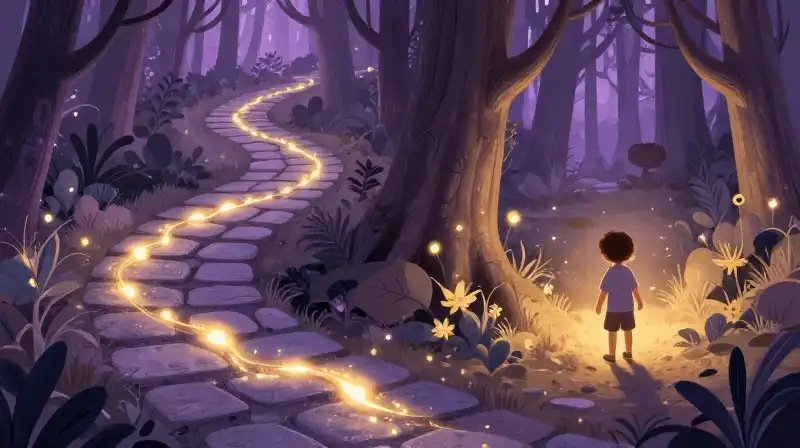 Because the term “Fairy Forest” appears across various venues—from commercial amusement parks in Oak Ridge [1] to specific school programs in Howard County [2]—it is important to distinguish between these interpretations.
Commercial vs. Curated
Some iterations, such as the Fairy Tale Forest in Oak Ridge, New Jersey, are focused on charming, entertaining experiences designed to develop imagination and bonds through a low-key park structure [1]. In contrast, more curated versions, particularly those designed as preschool environments, focus heavily on the structural relationship between the environment and the child’s development, utilizing the forest as a backdrop for purposeful scaffolding [3].
Magic of Discovery
While all interpretations share the element of wonder, the specific focus of the magic shifts. In some settings, the magical element is integrated through a general “Fairy Tale Forest” where the goal is experiencing the “whole park” and enjoying scheduled, grand entertainment within a beautiful backdrop [1]. In the educational context, the magic resides in the child’s *internal* reaction—the magic of discovering their own capabilities and connections within a natural landscape [3].
Why the Fairy Forest Matters for the Modern Child
The modern approach to a space like the Fairy Forest moves beyond the idea of a simple “story time” or “theme.” It recognizes that the environment itself is a character, and a character deserves depth and agency. By bringing the elements of “stories, places, magic, and pirates” [2] together into a cohesive living world, the Forest encourages narrative creation rather than just narrative consumption. It gives the child the power to turn the space into their own story. This approach is especially crucial today, where screens often provide passive consumption; the Fairy Forest is a mandate for active engagement, demanding that children utilize their senses and their minds to bring the world to life.
The Enduring Magic of the Forest Sanctuary
The true power of the Fairy Forest lies in its dual capacity to be both profoundly traditional—holding the familiar spirits and characters of old—and radically modern—embracing neurodiversity, nature-based education, and fluid identity. It teaches children that the greatest stories are not found in a single book, but in the deep, messy, changing connection between themselves, the earth, and the infinite capacity of a forest to hold every kind of imaginative dream. It is, quite simply, a space where vulnerability becomes the greatest superpower of all.
Sources
- Fairy Tale Forest in Oak Ridge, NJ — fairytaleforest.com
- Walk through our new Fairy Forest and see where the fairies live, in the heart of Howard County — clarklandfarm.com
- Admissions and Tuition — fairyforest.com
Related Articles