German Fairy Tale Castles: Settings That Inspire Dreams

Introduction
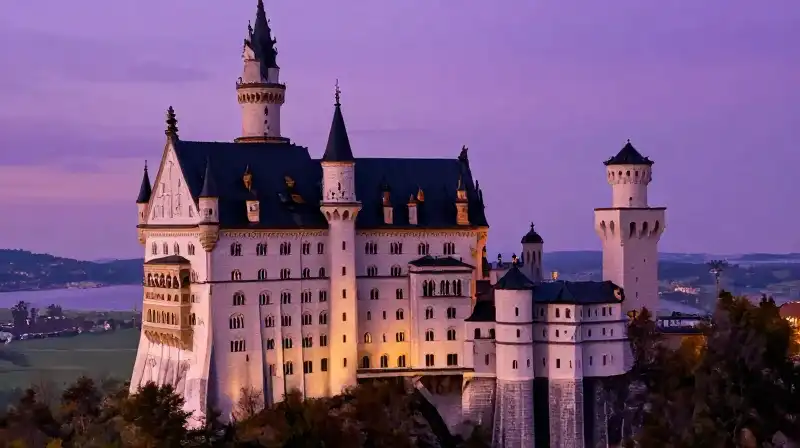
Imagine a palace nestled dramatically against jagged, emerald peaks, catching the fading light of the Bavarian Alps. Its towers reach upward like stone prayers, and the winding pathways seem to lead not to a hallway, but directly into the heart of a grand, impossible story. These are not merely beautiful structures; they are magnificent dream machines—German fairy tale castles that have captured the collective imagination for over a century. They embody the feeling of a world paused between history and myth, where the line between a medieval knight’s romance and a Disney princess’s dream is intentionally blurred.
For parents and educators, these settings offer a perfect entry point into the rich worlds of folklore and art. They help us ask deeper questions: What does isolation feel like in a story? How does music shape a palace? And why does a fictional world feel so utterly real when inspired by such grand architecture? This is more than a guide to beautiful buildings; it is an exploration of how human longing—the desire for a grander, more theatrical past—gives rise to the very visual language of modern high fantasy.
The Architecture of Dreaming: King Ludwig and Theatrical Romanticism
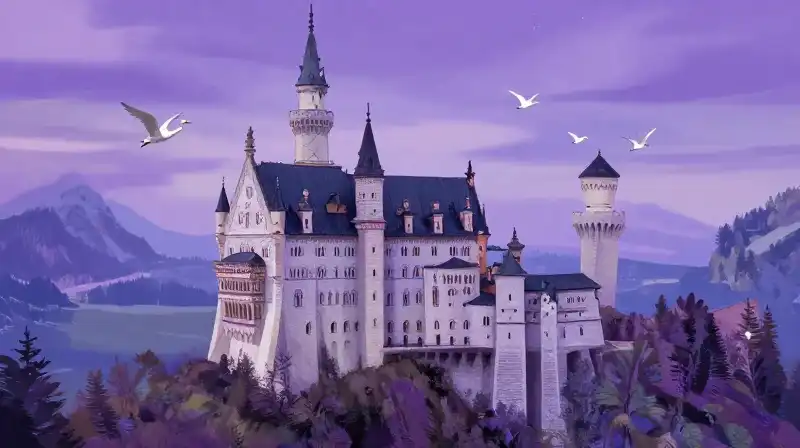
The ultimate exemplar of this dream-making approach is Neuschwanstein Castle. While it may look like a pure product of a child’s imagination, its origins are rooted in a very real, albeit wonderfully eccentric, 19th-century monarch. Neuschwanstein is a perfect case study in “Castle Romanticism,” a historical movement where builders sought to construct palatial retreats that evoked the atmosphere of old knightly tales [1].
Commissioned by King Ludwig II of Bavaria—often known as the “Swan King”—the castle was never meant to be a typical royal residence. Instead, it was conceived as a private, intensely theatrical retreat. Ludwig was deeply fascinated by music, particularly the operatic mythology of Richard Wagner, and he wanted his surroundings to reflect that opulent, highly dramatic world [1, 2].
From Opera to Ornament: Wagner’s Influence
The design, drafted by Christian Jank and realized by Eduard Riedel, used eclectic architectural styles, blending Neo-Romanesque and Neo-Gothic elements [1]. Crucially, the castle’s internal motifs were drawn directly from Wagner’s scores. Consider the opulent Singers’ Hall, which specifically references the fiery passion of *Tannhäuser*, or the castle courtyard, inspired by the soaring, mythical quality of *Lohengrin* [1].
This intentional design makes the castle a massive, physical stage. Every detail—the lavish ornamentation, the lofty turrets, the dramatic siting on a rugged hill—was a deliberate attempt to manifest a highly idealized, almost unbelievable version of the Middle Ages, viewed through the lens of modern Romantic sensibility [3]. Ludwig treated the castle not merely as a residence, but as a personal, immense theater for his fantasies [1].
Thematic Depth: Why Setting Shapes the Story
For young readers, the setting is often as important as the characters themselves. The majestic and isolated environment of German fairy tale castles offers distinct themes that resonate deeply with children and help them process complex emotions.
Isolation and the Inner World
Neuschwanstein’s commanding perch high in the Bavarian Alps, surrounded by serene lakes like Alpsee and Schwansee, gives it a powerful sense of magnificent isolation [1, 2]. This isolation is key to the fantasy feeling. In story terms, this “inaccessible place” often mirrors the internal landscape of the characters—a hidden realm of longing, or a secret, perfect world away from the mundane world of adults. It is a space dedicated entirely to the magic, unburdened by the practicalities of modern life [3].
The Fantasy vs. Function Paradox
A fascinating point to discuss with children is the difference between a “dream” castle and a “real” castle. While its popular image is that of an inaccessible fortress for valiant knights and tragic princesses, Neuschwanstein is a fully functional, though spectacularly eccentric, structure [3]. This paradox is useful for analysis: it shows that even our deepest dreams can have very concrete, complicated origins. The structure stands as a powerful testament to how historical imagination can be used to build a world for storytelling [1].
From History to High Fantasy: The Global Impact
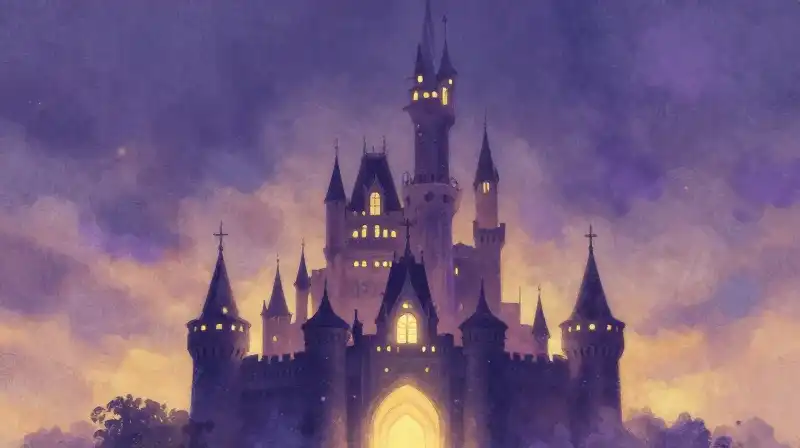
If any single building is responsible for the visual language of modern children’s stories, it is Neuschwanstein Castle. The castle has achieved such iconic status that it is arguably the most significant real-world inspiration for contemporary fairy tale visuals [2, 3].
The most famous example is, of course, its role in designing the look of Disney’s Sleeping Beauty castle. This connection is crucial because it bridges the gap between specific European history (the dramatic, Wagnerian Romanticism) and the globalized, simplified ideal of “fairytale.” Neuschwanstein takes the complex, moody, historically-informed fantasy and distills it into the luminous, instantly recognizable silhouette that has defined childhood for generations [2, 3].
This transition from real, elaborate 19th-century ornamentation to simple, narrative-driven fantasy helps us understand how settings are abstracted for children. While Ludwig II’s castle was intensely detailed and specific to his operatic preferences, its popular image focuses on the overarching themes of magic, beauty, and romantic longing.
A Parent’s Guide: Understanding German Castle Themes
As you explore these settings with your child, you can use them to discuss themes that range from courage to vulnerability:
| Thematic Element | Story Interpretation | Use at Bedtime/In Class |
|---|---|---|
| The High Tower | A place of aspiration, height, and sometimes, lonely reflection. | Discuss reaching goals and the strength found in standing tall. |
| The Gate/Bridge | The threshold between two worlds (the ordinary and the magical). | Use the threshold concept to introduce story transitions or moral choices. |
| Isolation (The Setting) | The necessary space for a character to discover their own strength. | Talk about having “quiet time” to think or be a big kid in their own space. |
The castle, in all its complexity, is a perfect symbol for the idea of a “secret world”—a place where magic happens when we believe in it, whether that belief is inspired by a grand King’s vision or the quiet power of a bedtime story.
The Enduring Spell of the German Castle
German fairy tale castles, particularly the majestic structures of the Bavarian Alps, are monuments to an intense desire to capture the sublime—the feeling of beauty combined with overwhelming power. They remind us that the most powerful stories often grow out of the confluence of history and high imagination. By studying Neuschwanstein, we see how a man’s deep love for music and myth can create a tangible landscape that continues to fuel the universal desire for a perfect, wondrous world in every child who looks up at its towering silhouette.
Sources
- Neuschwanstein Castle — en.wikipedia.org
- 6 fairy-tale castles to visit in Germany — goaheadtours.com
- The ultimate fairy tale castle, Neuschwanstein Castle in Bavaria, Germany : r/ArchitecturePorn — reddit.com
Related Articles