
How the Donkey Skin Fairy Tale Connects to Cinderella

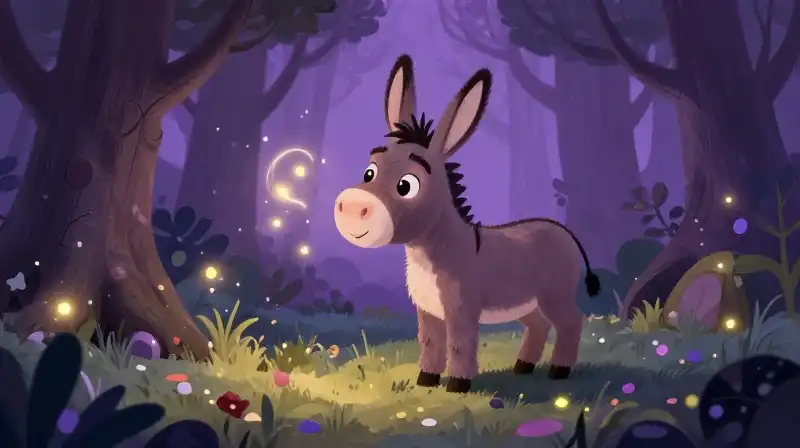
Introduction
There is a powerful, shimmering thread that connects disparate tales across continents and centuries—a story about the transformation of worth, hidden behind a mask of appearance. When we look at “Donkeyskin,” the tale of the hero who falls ill with longing after glimpsing “the ugliest animal one could find” [2, 3], and we then look at “Cinderella,” the classic story of the maiden finding her footing under ash and soot, the similarities are more than just coincidental. Both narratives serve as potent explorations of identity, where the “unnatural love” [1, 3] a heroine might experience is ultimately recognized only after her outward guise is shed. This deep thematic resonance suggests they are not merely similar, but rather two powerful iterations of the same fundamental story structure, exploring how inner worth inevitably triumphs over outward appearance [1, 3].
The Structural Kinship: Following the Fairy Tale Roadmap
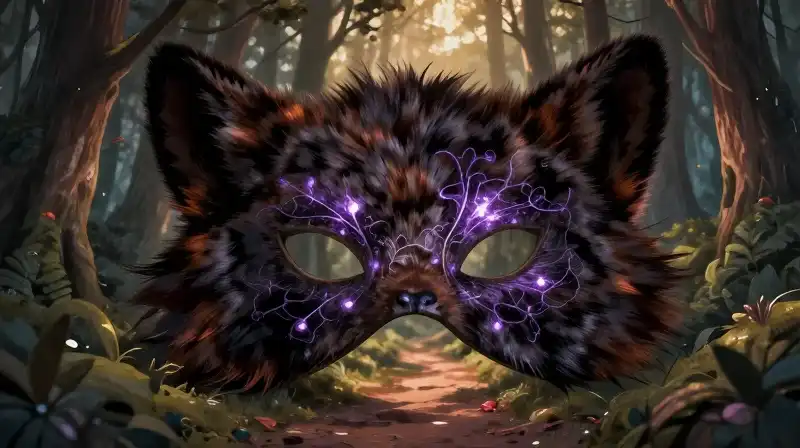 To understand the connection between the story of “Donkeyskin” (known as *Peau d’Âne* in French) and the lineage of *Cinderella*, we must look beyond the superficial differences—such as the specific animal used for disguise or the initial motivation of the father [1, 3]. Instead, we look at the “ATU” classification, which provides a blueprint for universal folklore. The study of folklore often classifies tales using an analytical grid. “Donkeyskin” is classified as folktale type ATU 510B, which deals with the persecution of a heroine disguised in animal hide to escape an oppressive male figure [1, 3]. This classification links directly to the ATU 510A type, the structural blueprint for stories like *Cinderella* [1]. The connection is not accidental; it is structural, meaning both tales follow a remarkably consistent pattern of suffering, disguise, magical intervention, and ultimate recognition.
Unmasking the Common Narrative Arc
While the details vary greatly—ranging from a princess in a lilac fairy’s guidance to a maiden scrubbing soot from the hearth [1, 2]—the core mechanism remains stable:
- The Problem: The heroine is forced into a menial or hidden role to protect herself from an oppressive force (e.g., an incestuous father in *Donkeyskin* [1, 3], or stepfamily oppression in *Cinderella*).
- The Concealment: A physical disguise or a socio-economic barrier keeps her hidden. In *Donkeyskin*, she wears the donkey’s hide; in other versions, the guise is a “mouse-skin” or simply a “shaggy/hairy appearance” [1].
- The Magical Facilitator: A guide or source of magic appears to assist her, providing tools that allow her true potential to surface. This is the role played by the “lilac fairy” who advises her to make impossible demands [1, 2, 3].
- The Reveal: Through a final, often challenging, moment, the truth of her identity is revealed.
Appearance Versus Inner Value: The Theme of the Unmasking
The most profound similarity between *Donkeyskin* and tales of *Cinderella* lies in their relentless critique of superficial judgment. Both stories are powerful meditations on the idea that outward appearance is a meaningless barrier to true character. In *Donkeyskin*, the protagonist’s transformation is a physical, visual spectacle. She moves from being covered in “dirt and rags” from the farm kitchen to dazzling displays of her inner nobility when she unveils her true beauty [2, 3]. The donkey’s skin—meant to symbolize worth and dignity—is used as a vessel of shame by society, yet it becomes the very thing that conceals a person of immense value. Similarly, in *Cinderella*, the soot and rags of her domestic service are not merely a plot device; they represent the temporary stripping away of social status. The heroine’s true value is demonstrated not by her initial dress, but by her inherent virtue, patience, and the eventual grace with which she navigates the final challenges. Both tales insist that the true “princess” or “bride” is already there, beneath the layers of concealment—be it donkey hide or kitchen grime.
The Significance of Social Mobility
The movement from the farm to the court, or from the hearth to the palace, serves as a powerful lesson in social mobility. In *Donkeyskin*, this journey is predicated on her ability to shed her animal disguise, often appearing in her “splendid dresses” [2, 3]. This transformation symbolizes the triumph of spirit over circumstance, demonstrating that pedigree, virtue, and inherent radiance are more “perfect” than inherited wealth.
The Quest for the Perfect Fit: A Test of True Worth
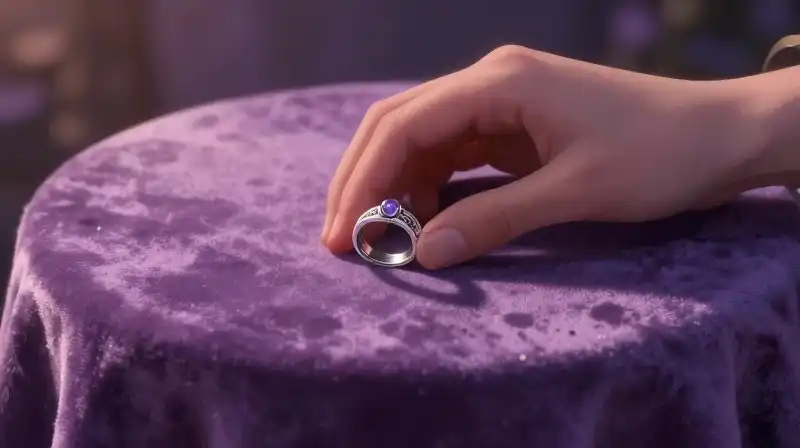 In many classic fairy tales, the hero must perform a precise test to discover his true beloved, and *Donkeyskin* shares this highly specific mechanism with the *Cinderella* archetype. The required “perfect fit” acts as the ultimate litmus test for sincerity and destiny. In the version of *Donkeyskin* provided by Perrault, the quest for the rightful bride’s match is often tied to a physical challenge—such as finding a ring that must fit perfectly [1, 2]. This is exemplified by the motif where the heroine is baking and the ring is discovered in the cake [1, 2]. The prince’s distress at encountering a rough, animal-covered woman—an embodiment of the “ugliest animal one could find” [2, 3]—is later transformed into a singular focus on the “secret woman.” This specific physical connection mirrors the tests often found in *Cinderella*, where only the right shoe, or the precise fit of a piece of jewelry, can expose the true royal lineage. The physical object (the ring, the shoe) is not just a trinket; it is a piece of undeniable proof of destined connection [1, 2, 3].
Addressing the Reader’s Questions
What fairytale is Donkey Skin based on?
As previously established, “Donkeyskin” is rooted in the same narrative framework as the ATU 510A type, which includes *Cinderella*. While “Donkeyskin” is a specific, powerful variation of this global archetype [1, 3], it shares the same fundamental narrative DNA concerning concealed identity and eventual social ascent. Regional variants confirm this core structure, from the Greek tale in Epeirus where the heroine is hired as a goose herder to East Slav versions where she is called “Pigskin” or “Svinoy chekhol” [1]. The use of different animals—be it donkey, goose, or pig—changes the local flavor, but the thematic core remains the same.
Is Donkeyskin similar to Cinderella?
Yes, they are fundamentally similar. The commonality lies not in their superficial plots, but in their structural components and the themes they explore. Both tales feature:
- The Persecuted Heroine: A woman suffering due to circumstances beyond her control [1, 3].
- The Disguise/Barrier: A temporary mask (animal hide or rags) that conceals her true, regal inner self [1, 3].
- The Magical Catalyst: A helper (the “lilac fairy” or the magical transformation) that facilitates her visibility [2, 3].
- The Proof of Worth: A specific challenge or object (the ring, the fitting dress) that authenticates her identity [1, 2].
The Lesson of Transformation
*Donkeyskin* and *Cinderella* are more than just fairy tales; they are powerful meditations on human worth. By the time a child or a parent has absorbed the lesson of these stories, they are not merely learning that good is rewarded. They are learning that who we are—our dignity, our internal nobility, and our true identity—is indelible. It is not something that can be hidden by a patch of dirt or masked by an animal hide. The “donkey skin” may cover a royal body, but it can never cover a royal spirit [1, 3]. This shared journey of disguise and unmasking provides immense value at bedtime and in the classroom. It teaches children to look past the immediate, messy, or “unappealing” exterior of a person, to look for the magic and the true brilliance that resides within. When we read these tales, we aren’t just watching a princess or a farm worker; we are watching the enduring lesson of the self being recognized and redeemed. ***
Sources
- Donkeyskin — en.wikipedia.org
- Perrault: Donkey Skin — sites.pitt.edu
- Donkey-Skin - A Perrault Fairy Tale — pookpress.co.uk
Frequently Asked Questions
What fairytale is Donkey Skin based on?
Donkeyskin is rooted in the same narrative framework as the ATU 510A type, which includes Cinderella. This structure, which deals with a heroine disguised in animal hide to escape an oppressive figure, is a global archetype. Regional variants of this core story use different animals, such as the goose in Epeirus or the pig in East Slav traditions.
Is Donkeyskin similar to Cinderella?
Yes, they are fundamentally similar because they share common structural components and thematic elements. Both tales feature a persecuted heroine and a temporary disguise or barrier that conceals her true self. They also incorporate a magical catalyst and a specific challenge or proof of worth, such as a perfect physical fit, to authenticate her identity.
Related Articles