
The Evolution of the Fairy Tale Princess: From Passive to Powerful

Introduction
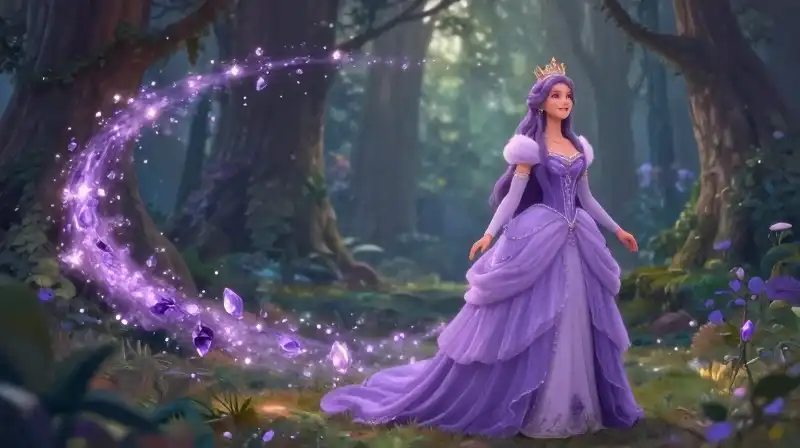
There is a certain mythic splendor to the image of the fairy tale princess—a vision of delicate grace, perhaps trapped by a sleep or protected by a glittering barrier. For many, the stories begin with the “Big Three”: Snow White, Cinderella, and Sleeping Beauty, where the narrative often centers on waiting for a prince or fulfilling a predetermined destiny. But when we peel back the vibrant layers of these beloved tales, we find a narrative far richer and more nuanced than the glittering surface suggests. The concept of the princess is not a static figure, but a dynamic archetype that has evolved dramatically from a passive recipient of fate to a powerful, proactive force capable of profound change. The true magic of a fairy tale often lies in the “under the floorboards”—the original folk stories that hold the seeds of modern perfection. These stories are rarely neat; they are messy, they are clever, and they often feature heroines who solve problems themselves, rather than waiting for salvation. Understanding this evolution is not just a lesson in literary history; it is an invitation to see the deep, complex motivations that make children’s stories so profoundly comforting and endlessly fascinating.
The Original Template: Passive Archetype and Folk Roots
To understand the journey, we must first acknowledge the traditional starting point. The initial archetype of the princess often served a specific narrative purpose within folklore: to represent innocence, purity, or a domestic ideal that must be tested or preserved [1]. In many earliest iterations, the princess is a figure who is remarkably passive. Her journey is often less about agency and more about surviving circumstances—a consequence of her circumstances or the treachery of others. However, even within this early framework, the seeds of power were often hidden within the “clever” actions of the heroine. Consider the archetype of the Clever Miller’s daughter [2]. This figure represents a highly functional form of intelligence that was often overlooked. While she may not be crowned royalty initially, her wit and resourcefulness allow her to navigate social strata and obstacles, demonstrating that her value lies not merely in her beauty, but in her ability to think critically [2, 1]. This suggests that even when the princess appeared passive, her underlying capability was often problem-solving.
Beyond the Glass Slipper: The Unconventional Heroine
The vast world of folk literature offers princesses who deliberately eschew the mold entirely. Some are celebrated for their resilience in the face of physical limitations, while others defy traditional beauty standards, suggesting a far broader definition of worth [1].
When exploring lesser-known tales, the focus often shifts from romantic fate to overcoming specific, tangible hurdles. We find protagonists like Thumbelina, whose narrative explores the challenges of being small in a world of giants, or the protagonist of *The Princess and the Pea*, whose struggle highlights the complexity of sensory perception and truth [1]. These stories redefine success—it is not necessarily about finding a prince, but about maintaining integrity or finding one’s rightful place despite size or environment [1].
In more dramatic folk tales, such as *The Goose Girl* and *The Green Serpent*, the princess character is used to explore themes of overcoming profound treachery and redefining what constitutes beauty outside of courtly ideals [1]. These characters are not waiting to be saved; they are actively seeking justice or self-validation.
The Shift to Modern Complexity: Agency and Motivation
As storytellers moved from oral folklore to commercially produced media, the evolution of the princess became even more pronounced. Modern narratives began to emphasize internal motivation and agency—the princess is no longer primarily *for* the prince; she is doing something *for herself* [1]. In many traditional folk tales, a protagonist might have a specific, almost spiritual quest. For example, in *The Well at the End of the World*, the character—while perhaps not always referred to as a princess—is driven by a desire to seek a destination beyond the ordinary, demonstrating an inherent drive for knowledge or freedom [1]. This search for destination elevates the character from a decorative figure to a genuine seeker. The contrast between deeply rooted folklore and highly polished modern adaptations, such as those produced by Disney, is a critical distinction for parents and educators [1]. Disney narratives, for all their popularity, often simplify or “abandon” complex traditional storytelling in favor of highly digestible, commercial frameworks [1]. A clear example of a complex, internally-driven character is the adaptation of *Odette* (from Swan Lake Tale and various anime versions) [2]. Here, the character’s struggle is not simply to wait for love, but to navigate a desperate, often tragic conflict involving identity, commitment, and survival, giving her a depth far beyond a mere romantic trope [2]. Similarly, tales like *The Wild Swans* with the character *Elisa* explore endurance and personal sacrifice as a path to agency [2].
Addressing the Central Questions: Who is the Most Powerful Princess?
The concept of a “most popular” princess is highly subjective, but if we define “powerful” as having the greatest range of thematic complexity and agency, the list moves far beyond the traditional favorites.
Based on thematic depth and active participation, we can identify characters who exemplify the modern, powerful princess:
- Vasilisa the Fair: She is a quintessential example of the princess as a courageous problem-solver [1]. Vasilisa is not a passive beauty; she is a resourceful heroine who battles powerful figures and overcomes domestic challenges through magic and her own bravery [1].
- The Clever Miller’s Daughter: This character represents the triumph of intellect over inherited status. Her power is sociological, demonstrating that intelligence is a greater determinant of success than lineage [2, 1].
- Odette: Representing the modern adaptation, Odette demonstrates powerful emotional agency, where her struggle is rooted in identity and the difficult choices she must make for the collective good, rather than just romantic happiness [2].
- The Plain Princess: Although existing outside traditional copyrights, this character concept offers powerful thematic commentary. It challenges the idea that beauty is central to virtue, providing a model for intrinsic worth over external appearance [1].
Understanding the Modern Landscape: From Archetype to Icon
The existence of extensive cultural hubs, such as the “princess Wikia,” confirms that this archetype is a robust and multifaceted cultural topic that exists across real-life inspirations, specific literary adaptations, and modern media [2]. This variety is key to how we approach children’s stories. For educators and parents, recognizing the distinction between a character with deep, functional folklore roots (e.g., *The Goose Girl* or the Clever Miller’s daughter) and a character created specifically for contemporary media (like the commercially recognized *Odette* or games featuring “Fat princess” archetypes [2]) is incredibly useful [1]. The princess archetype, in all its variations, teaches fundamental lessons about motivation. Whether she is seeking knowledge, freedom, or simply demonstrating courage while interacting with difficult figures, her stories showcase diverse paths to fulfillment [1].
Synthesis: Why the Evolving Princess Matters
 The transformation of the fairy tale princess from a passive figure awaiting rescue to a proactive, often solitary hero is a powerful reflection of societal shifts in how we define strength. It reminds us that true power is not about external validation (like a crown or a prince), but about internal resilience, intelligence, and moral clarity. For children, this evolution offers an invaluable lesson: they do not have to wait for someone else to solve their problems. By exploring the diverse motivations and powerful actions of characters like the Clever Miller’s daughter or Vasilisa the Fair, we empower them to recognize their own inherent ability to navigate challenges and find their own unique forms of heroism, whether they are found in the pages of an old folk tale or in a modern, imaginative landscape. The princess, in her many forms, proves that the greatest magic is the magic a character creates within themselves.
Sources
- The Less Known Fairytale Princesses — jimdorantales.com
- Category
Tales princesses | The princess Wikia | Fandom — the-princess.fandom.com
Frequently Asked Questions
What is the most popular fairy tale princess?
The article notes that the concept of a "most popular" princess is highly subjective. It does not name a specific popular figure but instead focuses on how the role of the princess has evolved from a passive archetype to a proactive one.
Related Articles