
The Evil Queen Explained: Ambition, Vanity, and the Snow White Magic
Introduction
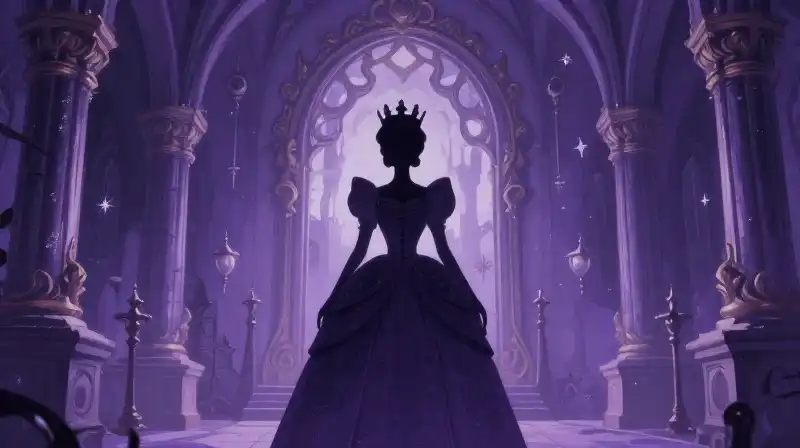
In the sprawling landscape of children’s fairy tales, few figures capture both paralyzing intensity and profound theatrical darkness quite like the Evil Queen. She is not merely a villain who acts for spite; she is a character defined by an inescapable, corrosive obsession: the need to be deemed the “fairest one of all.” To study the Queen—whether the elegant Queen Grimhilde of the original German tale or the snarling, ancient hag of Disney’s 1937 film—is to look at the complex intersection of vanity, societal expectations, and unchecked ambition. She represents the internal battle between the image we project and the wild, uncontained truth beneath it. For parents and educators seeking depth, she offers a rich exploration of what happens when the pursuit of perfection becomes a monstrous force.
The Roots of Royalty: From Grimm’s Iron Princess to Disney’s Dark Sorceress
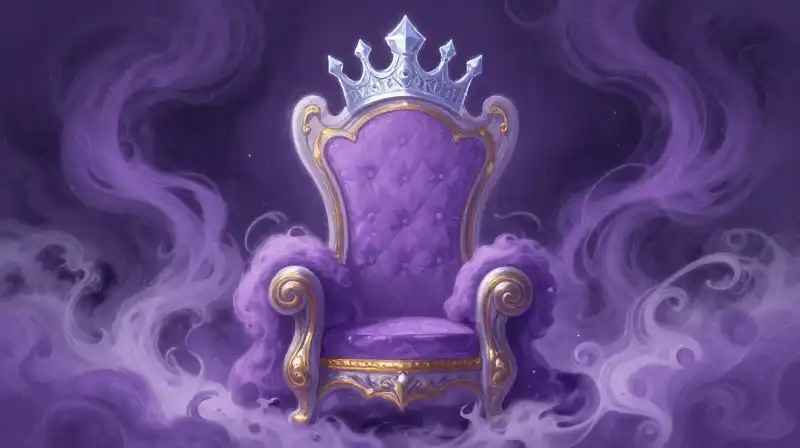
The foundation of the character was laid in the 1812 German fairy-tale, “Snow White,” known historically as Queen Grimhilde [2]. However, the character’s visual language and methods have shifted dramatically across cultural interpretations, offering valuable lessons in how stories evolve to suit new mediums. In the original Grimms’ tale, the Queen is a figure of immense, cold authority, while the Disney adaptation reimagines her as a magical, transformative entity. This difference highlights the transition from traditional fairy tale narrative to cinematic dramatic characterization.
By looking closely at her iterations, we see how the Queen’s persona is constructed across time and media:
| Aspect | Queen Grimhilde (Original/Early) | The Evil Queen (Disney, 1937) |
|---|---|---|
| Primary Motivaton | Vast insecurity and adherence to royal status. | Extreme jealousy and the need for external validation. |
| Method of Concealment | Likely relied on disguises or court intrigue. | Utilized powerful dark magic for physical transformation [1]. |
| Key Alias | Queen Grimhilde | The Wicked Queen, Old Witch, Peddler [3]. |
| Visual Tone | Regal and authoritative. | Sharp, high-contrast—dominantly black and oppressive [2]. |
The Mirror and the Monologue: The Queen’s Unshakeable Vanity
The pivotal tool in the Queen’s power—and her downfall—is the magical mirror. Initially, the mirror serves as a standard piece of court ornamentation, reflecting the Queen’s own flawless image. Yet, it quickly transforms into a weapon of passive cruelty, systematically informing her of Snow White’s superior beauty [2]. This mechanism reveals the central conflict of the character: a woman who possesses all earthly power yet finds herself powerless against a simple truth—that youth and natural beauty exist beyond her own control.
Her pursuit of perfection isn’t simply a dislike of Snow White; it is a desperate attempt to control the perception of her own existence. The Queen’s vanity is so absolute that it leads her to the extreme measure of attempted regicide, proving that her desire for status far outweighs her sense of moral restraint.
The Alias Game: More Than Just a Name
Throughout the narrative, the Queen does not remain in one form. She holds numerous aliases, illustrating the varied depths of her deceit [3]. Whether she is addressed as the Wicked Queen, the Peddler, the Old Lady, or simply the Witch, her core intent remains constant: deception to gain access to what she covets. Her decision to disguise herself as a peddler to enter Snow White’s cottage is a calculated, manipulative act that starkly contrasts with her true, intimidating, royal nature [2]. These many masks are a visual metaphor for the various ways external appearances can mask profound internal emptiness.
The Dark Transformation: The Old Witch and the Mind’s Mirror
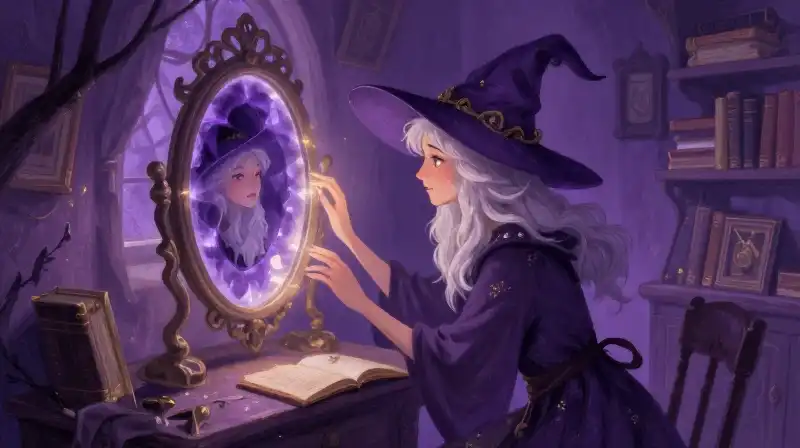
The most complex aspect of the character is the transformation from the poised, cold monarch into a cackling, gaunt hag—the Old Witch. In the Disney film, this is a magical shift that goes far beyond a simple costume change or a disguise. It is a dramatic shift in both body and demeanor. While the Queen is initially portrayed as composed, her witch persona is manic and uninhibited, defined by its constant, unsettling laughter [1].
Scholars and viewers have offered interpretations suggesting that this transformation is thematic. The Old Witch can be seen not just as a change in appearance, but as a manifestation of her true, unbridled self. The Queen, constrained by the strictures of royal composure, eventually sheds that constraint into a more primal, raw state [1]. It represents the moment where the controlled, social mask drops, revealing an inner self that is unhingedly driven by envy.
Color, Voice, and the Architecture of Evil
The film uses visual elements to reinforce this thematic divide. A stark contrast is painted between the Queen’s regal, oppressive costume—dominated by black and deep, dark tones—and Snow White’s radiant, vibrant wardrobe [2]. The darkness surrounding the Queen visually communicates her inner corruption and the weight of her dark ambition. Furthermore, the technical construction of her character is deeply psychological. Her voice acting was intentionally developed by removing the illusion of false teeth to achieve a harsh, distinct quality, which becomes particularly pronounced during her shift into the Old Witch [1]. This focused detail allows the audience to perceive the unsettling difference between the polished royal voice and the cracked, aggressive voice of the sorceress.
Ambition’s Downfall: A Lesson in Excessive Desire
Ultimately, the Evil Queen’s failure is tied directly to the magnitude of her ambition. Her relentless quest to be the “fairest in the land” becomes an impossible standard that she cannot meet through any means but destructive magic. By transforming into the Old Witch, she sacrifices the very aesthetic she sought to possess—the perfect, youthful beauty she craves—and loses all semblance of royal elegance [2, 1]. She trades the dignity of the throne for the instability of sorcery.
This narrative trajectory provides a powerful, albeit dark, lesson for young viewers: ambition that lacks self-awareness or empathy is inherently self-sabotaging. Her final moments—being trapped by the Seven Dwarfs and attempting to destroy them with a massive boulder, only to be struck by a catastrophic lightning bolt that annihilates her and her kingdom [2]—symbolize the explosive, violent consequence of reaching a destructive peak.
Exploring the Queen’s Persona: A Closer Look at Related Questions
The fascination with the Queen often leads to questions about her historical influence and the specifics of her portrayal. Her design and theatrical gravitas drew inspiration from iconic figures of the age, including Greta Garbo, Marlene Dietrich, and Joan Crawford, intentionally casting her as a sinister, mature *femme fatale* [2].
- Snow White Evil Queen name: While she is universally known as the Evil Queen, her original European name is Queen Grimhilde [2].
- Old witch from Snow White real name: In the story, she holds several forms (Old Lady, Peddler), but her core identity remains Queen Grimhilde.
- Snow White Evil Queen actress: The iconic role in the 1937 film was brought to life by the legendary Lillian Aurelia Disney.
By dissecting the Queen, we understand that true menace isn’t always loud or overtly monstrous; sometimes, it is the cold, relentless pursuit of something unattainable. She is a vivid, multi-layered character who moves far beyond simple good-versus-evil binaries.
Sources
- I still find it hard to believe that the Evil Queen and the Old Witch are the same person : r/disneyprincess — reddit.com
- Evil Queen (Disney) — en.wikipedia.org
- Evil Queen | Disney Wiki | Fandom — disney.fandom.com
Related Articles