
The Evil Ice Queen: Understanding the Archetype of the Snow Queen

Introduction
The phrase “Evil Ice Queen” conjures images of shimmering castles, razor-sharp determination, and a terrifying, beautiful coldness. For many children, this powerful figure is instantly recognizable through modern adaptations, yet the archetype holds layers of ancient folklore, complex literary themes, and fascinating cultural differences. At its core, the Snow Queen is far more than just a villain; she is a powerful symbol of emotional detachment, rigid judgment, and the dangers of letting the coldness of the heart freeze everything around you. Understanding this archetype—the often fierce, often captivating figure of the Ice Queen—is a wonderful way to explore deeper themes in storytelling. We will look at where she originated, how her depiction has evolved across media, and what her biting coldness might truly represent in the narratives we love and sometimes fear.
Defining the Ice Queen Archetype
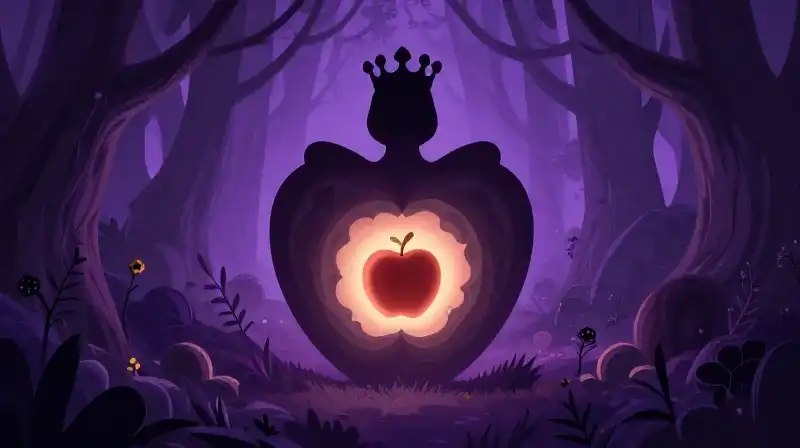
 At the broadest level, the Snow Queen serves as a recurring and highly complex archetype in children’s narratives, representing a formidable Ice Queen villain [1]. She embodies a specific type of antagonist who possesses incredible power but lacks genuine warmth or empathy. Her dominion is not usually chaos, but rather stillness, perfect crystalline order, and an icy emotional distance. Unlike villains driven by simple greed or petty spite, the Ice Queen often embodies a deeper, more abstract emotional state. She is the embodiment of the “coldness” that can consume a world, or a heart, turning vibrant life into a frozen tableau. This makes her a compelling character for analysis: she is beautiful, powerful, and devastatingly remote.
The Peril of Perfection and Obsession
The Ice Queen’s power is often tied to her obsession with purity, perfection, or absolute control. Her “evil,” therefore, is rarely malicious in a simplistic sense; it is the destructive force generated by an unchecked, emotionally frigid idealism. This motif can be viewed within a broader spectrum of powerful antagonists, including the Evil Queen, yet the Snow Queen specifically carries the weight of crystalline, unyielding severity [1].
The Literary Origin: Hans Christian Andersen’s Masterpiece
While modern pop culture often simplifies the figure, the definitive literary origin for the tale is Hans Christian Andersen’s 1844 masterpiece, “The Snow Queen” [2]. Andersen established the Snow Queen not merely as a threat, but as a transformation—a journey into a strange, beautiful, yet cold realm. In the original folklore, the Snow Queen represents a rigid, overwhelming ideal. Her magic is often portrayed as a stunning, yet utterly unforgiving, force of nature. The tale explores themes of inner warmth, true love, and the vulnerability of the human spirit against the backdrop of an overwhelming, perfect, yet cold environment [2].
Modern Manifestations and Cultural Confusion
 Because of her strong visual identity and powerful thematic resonance, the Snow Queen archetype has been enthusiastically adopted by various modern media, including:
- Ice Queen in *Adventure Time*, where her power is both grand and often chaotic [1].
- Lorelei and Killer Frost in Marvel adaptations, where she is framed within the context of super-powered conflict [1].
- Freya (the Ice Queen) in various lore [1].
This broad modern presence, however, has created significant cultural confusion. The search term “Snow Queen” frequently leads to results related to Disney’s *Frozen* [1, 2], an adaptation that re-contextualizes the archetype through a lens of familial and emotional longing, rather than strict, icy rigidity.
It is important to distinguish the traditional folklore archetype from these popularized versions. While *Frozen* delivers a widely accepted and beloved narrative, the original Snow Queen story focuses more sharply on the nature of coldness and the transformative power of inner feeling, which is a rich area for deeper story analysis.
A Niche Adaptation: The Finnish 1986 Version
To understand how specific cultural contexts shape this villain, consider the Finnish 1986 live-action film, *Lumikuningatar* (Snow Queen) [2]. This adaptation diverges significantly from the more famous animated versions. Within the narrative of *Lumikuningatar*, the villainous Queen is not simply a distant force of nature; she is often portrayed as a seductive figure, actively luring a specific character (the brother of the protagonists) into her domain to become her captive prince [2]. A concrete detail in this adaptation—the involvement of a specific token or coin central to the plot—serves to ground the magical threat in a tangible, physical object, contrasting with the more purely metaphorical coldness often found in other versions [2]. Such adaptations highlight the complexity of identifying highly niche or foreign takes on established folklore.
Addressing User Questions: Who Is The Evil Snow Queen?
When asking “Who is the evil Snow Queen?”, the answer depends on which story you are reading. She is fundamentally an Ice Queen archetype [1], a figure who rules over cold, perfect, and unyielding domains.
- In Traditional Folklore (e.g., Andersen): She is a powerful, ethereal antagonist who tests the protagonist’s capacity for warmth, purity, and inner emotional sincerity [2]. Her evil is the overwhelming nature of her own frozen perfection.
- In Modern Adaptations (e.g., Marvel, *Adventure Time*): She often becomes a more straightforward, power-driven antagonist whose coldness is a reflection of her immense, often unchecked, magical strength [1].
- In Specific Cultural Readings (e.g., *Lumikuningatar*): She can be portrayed with elements of seduction and manipulation, using charm and power to capture others [2].
Thematic Analysis: What Does Her Coldness Mean?
For parents and educators, the Snow Queen is a rich resource for discussions about emotions, character development, and the consequences of emotional distance. The archetype allows us to analyze some profound, difficult concepts in a storybook context.
- The Dangers of Rigid Judgment: The Snow Queen represents judgment so absolute that it denies all nuance, warmth, or messy human emotion. Her world is perfect only in its stillness. This provides a powerful cautionary tale about the dangers of rigid thinking or moral absolutism.
- Emotional Distance and Consumption: The tale of the Snow Queen explores the consequences of being consumed by an obsession with order or perfection [2]. Her frozen kingdom is beautiful, but it is also utterly inert; life, true emotional connection, and spontaneity cannot survive within her crystalline borders.
- The Power of Internal Warmth: The central conflict of the archetype often revolves around proving that internal, genuine warmth (kindness, empathy, sacrifice) is a force stronger and more enduring than external, imposed cold perfection [2].
A Closer Look at the Cold Palette
If you are interested in capturing the essence of this character or her world visually, the Snow Queen demands a very specific, intentional palette. The “Ice Queen” is not merely blue; she is a spectrum of frozen light and shadow.
| Color | Visual Meaning | Emotional Impact |
|---|---|---|
| Cerulean and Icy Blue | Frozen water, glacial depths, pure sky | Calmness, aloofness, overwhelming purity. |
| Silver and Chrome | Polished armor, crystallized structures, moonlight | Rigidity, strength, sterile perfection. |
| Deep Indigo/Violet | Shadow within the snow, magical depth, night sky | Mystery, hidden power, depth of emotional distance. |
| The key to visualizing the Snow Queen is pairing these cold tones (icy blues, whites, silver) with moments of “Internal Warmth” (a single splash of sunset yellow or a fragile red, symbolizing the human soul) to highlight the thematic contrast. |
Why This Character Endures in Storytelling
The Snow Queen persists in children’s stories because she challenges our comfortable notions of good and evil. She is not merely a caricature; she is a complex representation of nature’s absolute power and the fragility of the human heart. She allows young readers to explore heavy themes—like the importance of empathy, the risks of perfectionism, and the value of messy, imperfect warmth—through the framework of a dazzling, frightening, and magnificent antagonist. She reminds us that the most profound magic is often found not in crystalline perfection, but in the messy, vital spark of life itself.
Sources
- Snow Queen | Villains Wiki | Fandom — villains.fandom.com
- [TOMT] Children’s movie about an Evil Ice Queen?? : r/tipofmytongue — reddit.com
Frequently Asked Questions
Who is the evil snow queen?
The Snow Queen is a complex Ice Queen archetype who embodies cold, perfect, and unyielding domains. In traditional folklore, she is an ethereal antagonist who tests the protagonist's sincerity; however, in modern adaptations, she is often a power-driven antagonist whose strength reflects her unchecked magical force. Furthermore, in specific cultural readings, she can be portrayed with elements of seduction and manipulation.
Related Articles