

The Ice Queen: How Fairy Tales Teach the Power of Innocence


Introduction
A chill settles over the heart long before the first snowflake falls. In Hans Christian Andersen’s classic tale, *The Snow Queen*, the cold is not merely a weather pattern; it is a profound emotional landscape. It is a narrative about the danger of perfect, unyielding logic and the profound, necessary power of genuine human warmth. This story, published in 1844 [1], is more than just a fairy tale of a frozen kingdom; it is a delicate study of what happens when the heart hardens, and where the thaw begins. The quest of Gerda to rescue Prince Kai transports readers into a world where emotion is outlawed and perfection is a trap. We invite you to look closely at the symbols of this story—the shattering mirror, the relentless ice, and the resilience of a child’s love—to find the insights they offer parents and educators, teaching us that the purest form of being is often the most powerful force of all.
The Alchemy of Cold: What the Ice Symbolizes
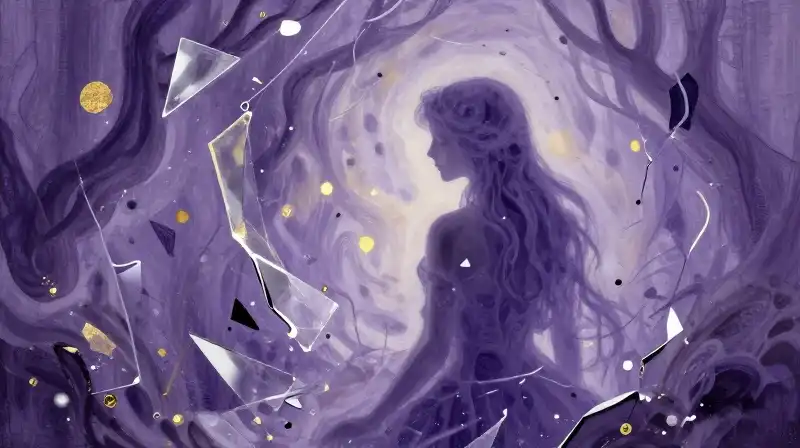 To understand the power of the tale, we must first understand what the “ice” represents. The icy realm of the Snow Queen is a masterful metaphor for emotional and moral stasis [1, 2]. This is not the invigorating cold of winter, but a brittle, manufactured perfection—a realm defined by the absence of passion, spontaneity, and love.
The Shattering of Warmth
The transformation of the characters begins with a wicked catalyst: a magic mirror. This mirror, created by a nefarious figure—be it a Devil, a Troll, or a dwarf [1, 2, 3]—possesses the sinister ability to magnify and amplify all the negative and imperfect aspects of the world [2]. Once fragments of this distorted mirror lodge within Kai’s soul, his internal state shifts. The true tragedy is the loss of human connection, symbolized by the contrast between the warm world and the frozen. Before the spell, life was depicted through the vibrant imagery of a window-box garden and blooming roses—symbols of love and natural warmth [1, 2]. After Kai falls under the spell, he rejects these vibrant signs of affection, choosing instead to study the cold, flawless structure of snowflakes under a magnifying glass, mesmerized by the “perfection of cold” [1, 2].
The Reign of the Snow Queen
The Snow Queen herself, ruler of the “snow-bees” (Snedronningen), embodies this extreme cold and unnatural perfection [1]. Her kingdom is a domain of permafrost, where governance is dictated by frozen logic and crystallized judgment [1]. This is a fascinating portrayal of authoritarian perfection: a state where every element is ordered, flawless, and utterly devoid of life-giving emotion [1].
The Mirror of Reason: The Crisis of Logic and Emotion
The climax of the narrative occurs at the Snow Queen’s throne, before the titular “Mirror of Reason” [1]. This mirror is the ultimate tool of cold, intellectual existence. It dictates a world where feeling is illogical and subjective, replaced by sterile, quantifiable perfection. Kai’s final confrontation is a forced intellectual exercise; he is compelled to spell “eternity” using jagged pieces of ice [1]. This act symbolizes his fully frozen, logical, and emotionally barren existence. He has reached the point where his mind dictates his reality, and empathy has been replaced by cold calculation. The Snow Queen’s realm demands that one see the world as perfectly structured, but if there is no space for a messy, beating heart, there is no life at all.
Gerda’s Power: The Triumph of Sweet Innocence
 If the Snow Queen represents the tyranny of logic, Gerda represents the unstoppable power of pure, innocent compassion. Gerda is not the physically strongest character in the tale; her power is entirely existential. Her ability to save Kai relies entirely on the “sweet and innocent child’s heart” [3]. This insight suggests that inherent goodness and simple love are the only forces capable of melting the frozen, brittle coldness [1].
The Hero’s Infiltration and Growth
Gerda’s journey itself follows the structure of a classic hero’s journey, forcing her to infiltrate an utterly impossible and dangerous realm—the icy palace [3]. She is often depicted as being vulnerable (sometimes barefooted and susceptible to the cold), emphasizing that her success is not due to physical power, but moral fortitude. A remarkable detail is the symbolic growth achieved through this emotional ordeal. Upon their eventual return home, Gerda discovers that both she and Kai have fundamentally changed; they are now grown up [1]. This change signifies that the trauma and the overcoming of the frozen emotional state have forced profound personal maturation. They have not merely recovered; they have evolved past their previous states.
The Symbolic Contrast: Warmth as Resistance
Throughout the tale, the most important symbols of resistance to the cold are subtle but powerful:
- The Garden and Roses: These serve as the physical, visual anchors of love and human affection [1, 2]. They are the vibrant, uncontrollable forces of nature that the frozen world tries to suppress.
- The Snow-Bees (Snedronningen): These are not gentle animals but rather the cold agents of the Queen, serving as literal manifestations of the pervasive, chilling perfection of her domain [1].
- Tears as Melt: The most critical visual cue is the power of Gerda’s tears. These tears—representing unguarded love and deep feeling—are the agents that physically melt the ice [1, 2]. They prove that empathy is the only solvent capable of dissolving the rigid structure of the heart.
Addressing Key Questions: The Power of Innocence in Culture
Is *Frozen* based on *The Snow Queen*?
While both stories feature powerful, ice-bound queens and protagonists who undergo dramatic emotional transformations, *Frozen* is not a direct adaptation of the Hans Christian Andersen original [1]. The core philosophical distinction lies in their thematic focus. Andersen’s story, *The Snow Queen*, is fundamentally about the triumph of pure, innocent emotion over cold, controlling logic [1]. In contrast, *Frozen* explores the pain and resolution of emotional isolation, focusing more on sisters protecting each other from a literal, external ice-based curse. Both narratives resonate deeply with children, however, because they address the fear of emotional paralysis—the fear of becoming “frozen” inside.
Why the “Child’s Heart” Matters for Bedtime Stories
For parents and educators, *The Snow Queen* offers a powerful, concrete lesson that transcends typical “good vs. bad” binaries. It teaches children that their inherent capacity for compassion and love is not a weakness, but a critical, life-saving strength. When reading this tale, you are not just reading about a princess; you are affirming the profound value of empathy. The gentle, persistent warmth of love (Gerda) is always capable of breaking through the most perfectly structured barriers (the ice and the mirror).
This is the enduring message: even when the world seems cold, perfect, and unforgiving, the choice to feel—to love and to be vulnerable—is what allows for growth and the eventual, necessary thaw.
Sources
- The Snow Queen — en.wikipedia.org
- Hans Christian Andersen: The Snow Queen — hca.gilead.org.il
- Snow Queen fairy tale by hans christian anderson — russianamericancompany.com
Frequently Asked Questions
Is Frozen based on Ice Queen?
The article states that *Frozen* is not a direct adaptation of Hans Christian Andersen’s original story, *The Snow Queen*. While both tales feature dramatic emotional transformations and ice-bound characters, their thematic focuses differ greatly. Andersen’s story centers on the triumph of pure emotion over cold logic, whereas *Frozen* is noted for exploring emotional isolation and external curses.
Related Articles