
Rumpelstiltskin: From Grimm’s Imp to Disney’s Dark One
Introduction
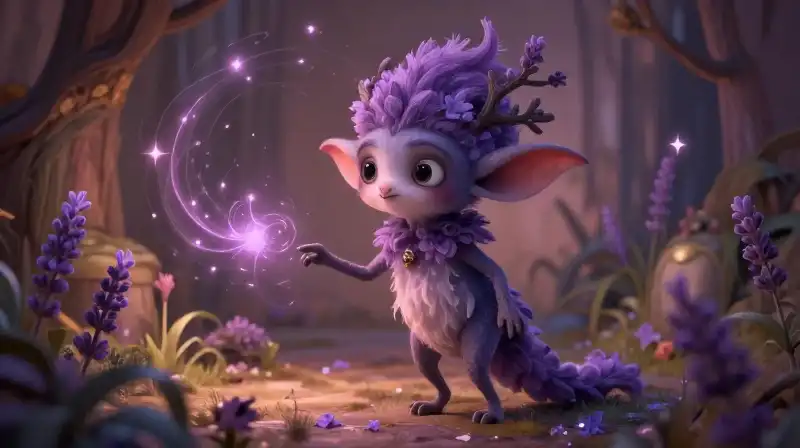
What is the cost of a wish? That question, once framed in the sharp, midnight chill of German folklore, has evolved into one of the most enduring questions in children’s literature. While modern television might present him as a charismatic, morally grey rogue, Rumpelstiltskin—the master of magical bargains—is at his core a terrifying figure whose power is derived from manipulation, debt, and the ruthless pursuit of a name. Whether we find him as a gleefully male imp demanding a prince or as a weary shop owner trading secrets in the Enchanted Forest, the thread connecting every version of this character is the same: nothing, not even gold, is free.
This is a character who challenges the simple dichotomy of good versus evil. He represents the inherent dangers of commerce, the gravity of debt, and the intoxicating but often fatal power of language. To understand Rumpelstiltskin is to understand the “Rumpelstiltskin principle”—the ancient, perilous belief that knowing the true name of a being grants power over it—and how this ancient wisdom continues to haunt the stories we tell our children today. We will explore how this ruthless bargainer has journeyed from the brutal, uncompromising pages of the Brothers Grimm to the richly layered, albeit sometimes controversial, depths of modern fantasy.
The Grimm Original: A Lesson in the High Price of Bargaining
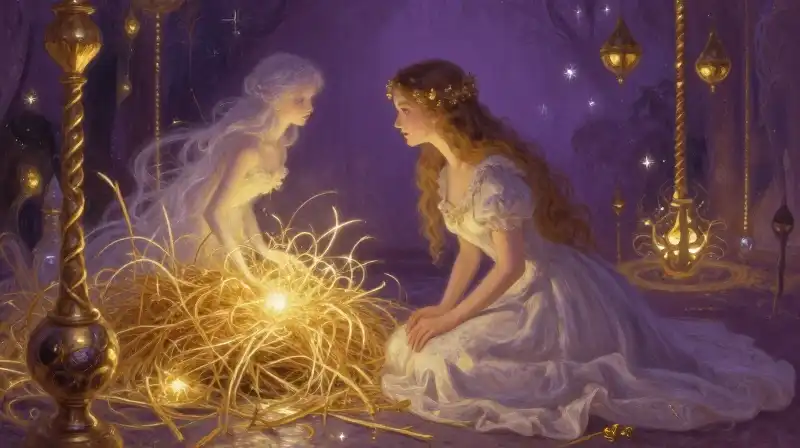
Before his iconic portrayal as a “Dark One,” Rumpelstiltskin emerged in a vastly different, far grimmer context: a classic piece of German folklore. In the versions collected by the Brothers Grimm in their 1812 edition, the tale begins not with a charming magical encounter, but with an impossible task. A miller’s daughter is placed under an impossible duress—she must spin straw into gold under the threat of execution [3].
It is here that the Imp-like figure appears. In these early versions, Rumpelstiltskin acts less as a witty negotiator and more as a cruel supernatural entity who arrives after the protagonist has given up hope. He offers to perform the impossible task in exchange for a necklace, then glass beads, and finally, her ring [3]. This establishes the core nature of his being: he is a magical figure who operates strictly through deals and bargains, always demanding payment [2].
The Stakes: Childhood and the Power of Language
The drama escalates quickly to a level that defines the difference between traditional folklore and modern adaptations. According to [3], after the girl successfully transforms the straw into gold three times, the imp demands something truly devastating: her firstborn child. The central dramatic conflict hinges on this demand.
The story’s turning point also embodies a key theme from ancient beliefs: the power of language. The protagonist survives this brutal transaction by learning the imp’s true name, a survival mechanism categorized by folklorists under the Aarne–Thompson–Uther Index ATU 500: “The Name of the Supernatural Helper” [3]. This moment—the discovery of his name within three days—is the ultimate demonstration of her power over him. Early variants of the ending vary in their intensity, ranging from the imp simply running away in rage to far more gruesome outcomes, such as tearing himself in two or falling into a deep chasm [3].
For parents reading these tales, it is crucial to understand this distinction: the Grimm version is a brutal exploration of the consequences of agreeing to a magical deal, featuring themes of life, death, and the terrifying cost of impossible demands.
Rumpelstiltskin’s Modern Evolution: From Imp to “The Dark One”
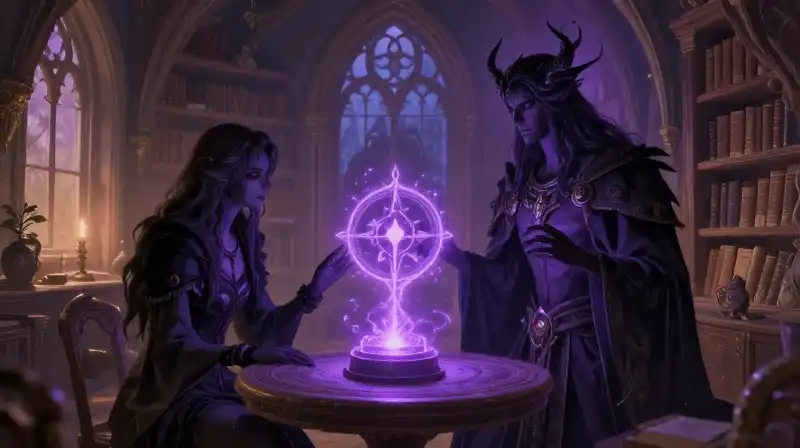
As fairy tales traveled across cultures—appearing in versions from Scotland (Whuppity Stoorie) and the Czech Republic (Rampelník)—they often adapted to new narrative structures. The most significant modern shift came with the popular Disney adaptation in *Once Upon a Time*. In this realm, the character undergoes a complex reinvention [2].
The impulsive, life-or-death stakes of the Grimm version are often smoothed over for a traditional Disney audience. In the *Once Upon a Time* series, Rumplestiltskin is portrayed as a powerful, albeit morally ambiguous, magician who acts as a pawn-shop owner and orchestrates events within the Enchanted Forest [2]. He is identified as “The Dark One,” but he is also a central figure who moves through a much more elaborate, sprawling narrative [2].
The Challenge of Adaptation
The leap from the “imp” of the Grimm tale to the nuanced, complex character of the television series presents significant thematic challenges [1]. Many critics and fans observe that the harsh, dark reality of the original Grimm—the required sacrifice of the child—is difficult to translate for a character traditionally viewed through the lens of a classic Disney protagonist [1]. This has led to modern adaptations sometimes focusing less on the literal “blood price” and more on his power and his capacity for redemption.
Furthermore, the contemporary Rumplestiltskin often takes on other archetypes. [2] notes that his character, Mr. Gold, frequently fills narrative roles previously occupied by the Beast from *Beauty and the Beast* or the Crocodile from *Peter and Wendy*, suggesting a broader cultural role as the “tempting but dangerous partner” in modern fantasy [2].
A Tale of Two Characters: Comparison Table of Versions
To help parents and educators navigate these differences, consider this comparison of the core character elements:
| Feature | Grimm’s Original Tale (1812) | Disney’s Once Upon a Time (Modern Adaptation) |
|---|---|---|
| Core Motivation | Greed, contractual obligation, and supernatural cruelty. | Power, manipulation, and self-preservation; occasionally acts as a foil or reluctant savior. |
| Key Demand | The protagonist’s firstborn child (a grim reality). | Favors, secrets, magical artifacts, or complex plot orchestration. |
| Role | The Grim Adversary/Imp. | The powerful, morally grey “Dark One” and Shop Owner. |
| Narrative Tone | Brutal, focused on survival and ancient wisdom (the name). | High-stakes fantasy, character drama, and “bandied about in development hell” (i.e., complex plot). |
Beyond the Bargain: Analyzing the Theme of Knowledge
The most profound element of Rumpelstiltskin is not his desire for gold, but his obsession with the absolute truth. He is a creature of language, defined by the terms of the deal. His catchphrase, “All magic comes with a price,” encapsulates his life’s philosophy [2]. He operates entirely within the framework of contracts. The power of the miller’s daughter—and indeed, the enduring lesson of the tale—is the understanding that while a monster can command power, it cannot survive the specific, intimate knowledge of its own identity.
This is a vital, practical lesson for children: it teaches them that while they may be put in difficult situations (like being threatened by execution or impossible tasks), there is always an element of agency tied to their own insight and words. Knowing the true nature of a problem is the first step toward overcoming it. This sophisticated concept—the “Rumpelstiltskin principle”—is far more than a spooky twist; it is a lesson in personal empowerment.
Addressing Reader Curiosity and Related Searches
Is Rumpelstiltskin a good character to show children?
Rumpelstiltskin is complex. In his Grimm form, he is genuinely frightening, featuring elements that detail the imp’s demand for a child [3]. For children, the modern adaptation, where he is a “greedy s.o.b” at best, tends to be more manageable, allowing them to understand “choices and consequences” rather than absolute terror [1]. For young readers, the focus should be on the moral dilemma and the protagonist’s resourcefulness, rather than the darkest versions of the ending. The lesson of “the price of magic” works well as a conversation starter about integrity and honesty.
Why is the imp’s name so important?
The name is the ultimate symbol of power. By discovering the name, the protagonist strips the supernatural being of his invulnerability. It is a concrete, specific detail in the tale that teaches the reader that labels and titles do not define someone’s true nature, and that understanding the true self—or the true nature of a problem—is the most powerful thing one can possess. The imp, despite all his magic, is bound by the language he uses to define himself.
How is Rumplestiltskin different from other magical figures?
What sets Rumpelstiltskin apart is his “bargain economy.” Unlike a classic benevolent fairy godmother who provides a miracle without demanding repayment, Rumpelstiltskin is fundamentally a cosmic salesman. He views magic as a currency that must be traded at a high rate. This unique portrayal allows creators to explore themes of modern labor, debt, and the corrupt nature of promises, which is far more sophisticated than a simple “good wizard” narrative.
Final Synthesis: The Enduring Shadow of the Deal
Rumpelstiltskin endures because he taps into a universal fear: the fear of the “little details.” The small, easily forgotten names, the minor agreements, and the overlooked contracts. He is the person who pushes you to the edge of ruin, not through brute force, but through meticulous demands. Whether he is a horrifying imp demanding a child or a well-dressed shop owner offering a risky trade, his presence serves as a vital reminder that in the world of stories and in the world of life, every promise carries weight, and every act of power has a corresponding cost. He remains a cautionary tale of consequence, perfectly suited for bedtime discussions that explore not just “what happened,” but “why it matters.”
Sources
- I’m surprised Disney hasn’t done Rumpelstiltskin yet : r/disneyprincess — reddit.com
- Rumplestiltskin | Disney Wiki | Fandom — disney.fandom.com
- Rumpelstiltskin — en.wikipedia.org
Related Articles