
Disney Evil Witch: The Queens Obsession to Be the Fairest in the Land
Introduction
In the grand parade of children’s literature, few villains cast as long a shadow as the formidable Queen from *Snow White*. Though often simply labeled the “Evil Witch” in modern discourse, her actual status as the Queen—a royal figure obsessed with regality and permanence—makes her story far richer than a simple tale of a bad sorceress. She is a study in vanity, a master of dark charm, and the embodiment of the fears that arise when a powerful person places their worth entirely in the reflection of others.
Her relentless pursuit of being “the fairest in the land” is the driving force of the classic fairy tale, transforming her from a regal figure into a darkly iconic presence. This obsession is where the story truly shines, offering a compelling, cautionary tale about the volatility of beauty and the corrosive nature of vanity. We delve into her motives, her visual language, and the powerful themes she brings to the storybooks and screen, exploring how this powerful antagonist continues to hold a mesmerizing place in the hearts of Disney fans.
The Anatomy of a Queen’s Obsession
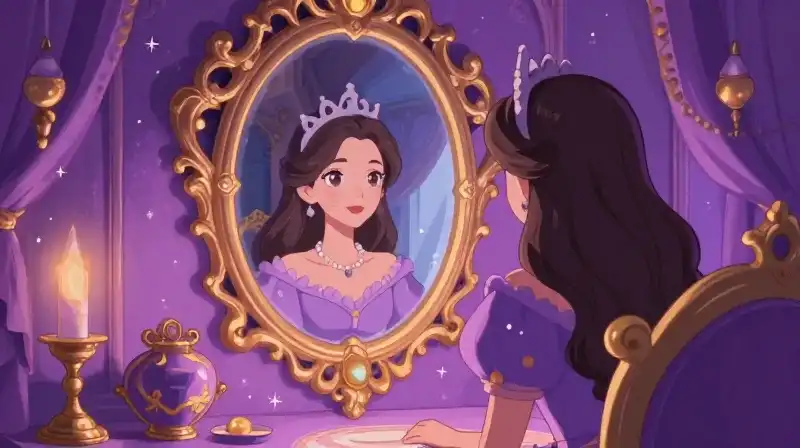
At the core of her being is a fierce, narcissistic belief that her power and worth are inextricably linked to her beauty. For the Queen, beauty is not a gift to be cherished; it is a standard to be maintained, a crown that must never dull. This explains her meticulous nature and her willingness to take extreme measures, such as attempting to kill Snow White [1, 2]. Her initial conflict with Snow White is not driven by a desire for power over a realm, but a deep, psychological need to be “the fairest” [1].
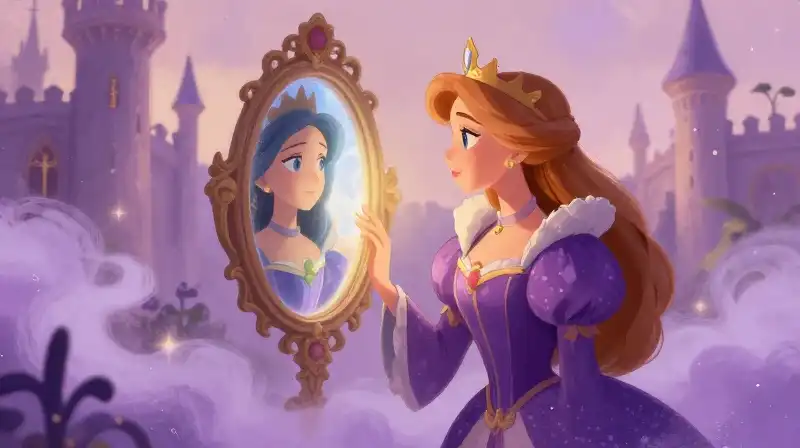
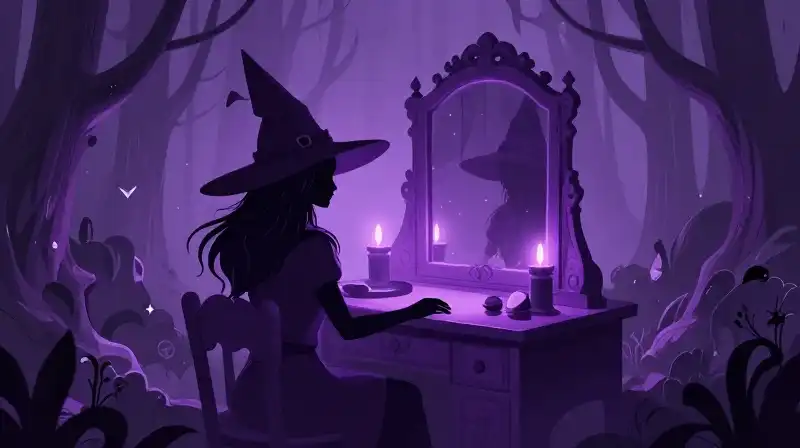
Her daily ritual centers on the magic mirror, which serves as both her ultimate arbiter and her greatest weakness. The mirror constantly reaffirms her perfection until it delivers the devastating truth: Snow White has become “the fairest” [1]. This dependency on an external object for self-validation drives her downfall and necessitates the shift from a vain ruler to a darkly magical, feared figure.
The Dark Transformation: Disguise vs. Deep Magic
A key distinction between the original fairy tale and the beloved Disney adaptation is the method of her metamorphosis. In the traditional version, the Queen may simply wear a disguise. However, the Disney iteration elevates her villainy by having her actively use dark magic to physically alter her form [1]. She transitions into a sinister “Wicked Witch,” an act facilitated by a spellbook and a bubbling cauldron. This transformation is visually striking, as her inherent beauty “is shrouded in ugliness and age” [1].
This magical shift allows the story to explore the theme that when obsession becomes absolute, it can literally corrupt one’s inner self. She moves beyond simple deception; she becomes a physical manifestation of her corrupted desire, embracing a dark aesthetic that contrasts sharply with the innocent, bright palette of Snow White’s wardrobe [1].
Visual Symbols of Vanity and Power
The visual language of the Evil Queen tells a story of extreme ambition and self-aggrandizement. Her throne itself acts as a symbolic mirror of her personality, decorated with a motif of a peacock, which represents her “extreme vanity” [1]. This attention to detail underscores that her life is as much about appearance and display as it is about deception.
- The Dark Aesthetic: Clad in black robes and a high collar, the Queen’s costume is painted in rich satin and velvet [1]. This deliberate darkness stands as a visual counterpoint to Snow White’s lightness, creating a powerful contrast between beauty and shadow.
- The Magic Mirror: Beyond a simple prop, the mirror is the central mechanism of her internal conflict and external power. It is the ultimate tool of her surveillance, keeping tabs on the realm’s inhabitants to confirm her own status [1].
- The Arsenals of Deceit: Her dark power extends into specific, dangerous objects—the “heart box” and, most notably, the poisoned apple [2]. These items are the instruments through which her vanity manifests into tangible harm.
Addressing Reader Curiosity
What is the name of the evil witch in Disney?
The character is fundamentally the Evil Queen, though the name “Queen Grimhilde” is also associated with the character, particularly in certain regional versions of the tale [2]. In the context of modern Disney, she is the Queen driven mad by vanity and obsession. In the Disney adaptation, her terrifying form is often depicted as a dark, regal figure who transforms into a “Wicked Witch” during the narrative [1].
Why was the evil witch fired from Disney?
There is no record or narrative evidence suggesting that the Evil Queen was ever “fired” from Disney; rather, she is a foundational character in the Disney canon. She is celebrated as one of the most iconic Disney villains [1, 2] and is frequently featured alongside other villains like Maleficent in modern park attractions, such as Fantasmic! [1, 2]. Her enduring presence proves her status as a central, non-disposable part of the Disney mythology.
Grimm vs. Disney: The Tale of Two Versions
The difference in approach between the Brothers Grimm and Disney offers a fascinating lesson in adaptation. The original fairy tale gives us a foundational story, but the Disney version gives us a psychological character study [1, 2]. The Queen’s portrayal by animators as a complex and powerful “1930s femme fatale” and medieval villainess required a performance that balanced both regal beauty and profound menace [1]. This evolution shows how storytelling adapts to create richer emotional depth for a modern audience.
The Lessons Behind the Shadow: Themes for Reflection
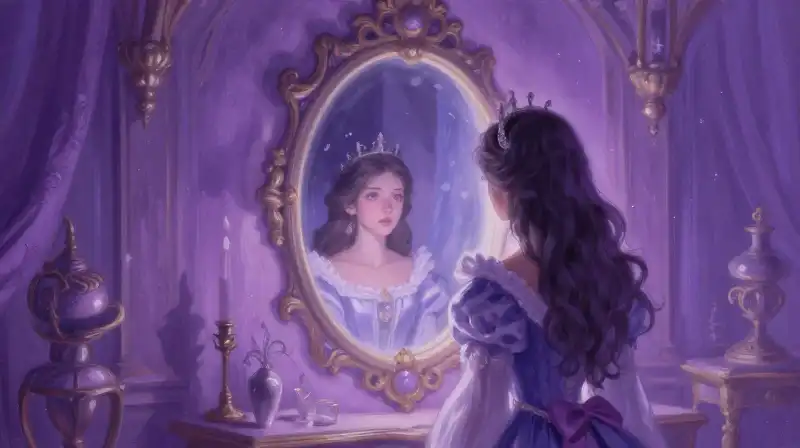
For parents and educators, the Queen is a powerful subject for discussion. She is not merely “bad”; she is a cautionary figure. Her relentless quest for perfection highlights the danger of prioritizing external appearances over internal character. While her actions—poison, traps, and dark magic—are frightening, her motivation reveals a deep-seated insecurity rooted in an unhealthy fixation on being “the fairest.”
This is why the tale of *Snow White* remains so rich for analysis. It is a brilliant look at how extreme narcissism leads to isolation and ultimate destruction, suggesting that true worth resides not in a mirror’s reflection, but in one’s own core goodness. The Queen’s ultimate fate—being trapped on a cliff and destroyed by a lightning bolt—is a fitting conclusion to a life lived solely in the pursuit of a fleeting, unattainable beauty [1].
Ultimately, the Disney Evil Queen is far more than a collection of scary tropes. She is a nuanced character—a mix of high fashion, medieval darkness, and profound insecurity. She serves as a brilliant, vivid reminder that the deepest dangers in any tale are often not the magical creatures themselves, but the fragile, volatile, and obsessive hearts of those who wield power.
Sources
- Evil Queen (Disney) — en.wikipedia.org
- Evil Queen | Disney Wiki | Fandom — disney.fandom.com
Frequently Asked Questions
What is the name of the evil witch in Disney?
The character is fundamentally known as the Evil Queen. Although the name 'Queen Grimhilde' is also associated with the character, this is particularly true in certain regional versions of the tale. In the context of modern Disney, she is depicted as the Queen driven mad by vanity and obsession.
Why was the evil witch fired from Disney?
There is no record or narrative evidence suggesting that the Evil Queen was ever fired from Disney. Rather, she is a foundational character in the Disney canon and is celebrated as one of the most iconic Disney villains. Her presence is frequently featured in modern park attractions like Fantasmic!
Related Articles