Nixies: The Enchanting and Dangerous Water Spirits of Fairy Tales


Introduction
When we think of the mythical creatures of the water, we often picture the grand, golden tail of the mermaid or the ethereal, tragic beauty of the sea serpent. But hidden in the deeper, colder currents of European folklore reside spirits far more grounded in the grit of the river itself. These are the nixies—a mysterious, shapeshifting family of water spirits whose presence is marked by both stunning beauty and profound danger [1].
They are more than just mythological figures; they are embodiments of nature’s wild and untamable spirit. For a reader looking for a genuine story that moves beyond simple “good versus evil,” the nixie provides a nuanced lesson in duality. Are they the alluring enchantresses of the river, tempting travellers with music and dance? Or are they ancient, powerful forces of nature that demand a price for their attention, warning us of the hidden risks lurking in the wild spaces we pass through daily? Let us dive into the folklore of these enchanting and perilous beings.
The Many Faces of the Nixie
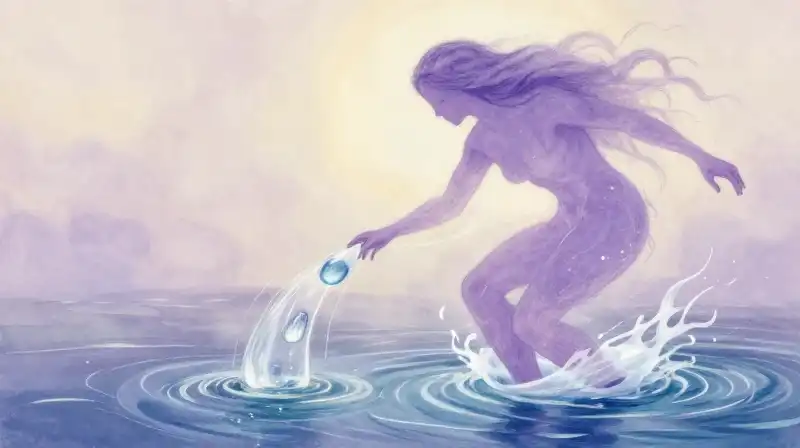
The word ‘nixie’ itself springs from the Common Germanic root *nikwus, which translates roughly to the idea of washing or being washed [1]. Their names—varying across Scandinavian and Germanic traditions as *nix*, *nixie*, *näck*, or *nøkken*—tell a story of their intimate connection to running water [1]. Unlike the solitary whale or the distant mermaid, nixies are intrinsically linked to the local geography, inhabiting rivers and lakes.
Shifting Between Forms
One of the most fascinating traits of the nixie is their capacity for shapeshifting. They are masters of disguise, allowing them to be found wherever the magic of the river takes them. In some tales, they manifest as fair and naked human forms, their beauty designed to catch the eye and slow a passing swimmer or traveler [1]. In others, they take on the guise of various aquatic animals, most notably the mythical “brook horse,” which is said to ride the water’s surface [1, 3]. This flexibility in form means that the nixie is never “one thing”—it is a constant mystery, adapting to suit the moment, whether it appears as a beautiful damsel or a powerful, unpredictable force of the deep [1].
The Male Companion and the Power of Song
While the concept is often feminized, the male counterparts—frequently called the *Nix* or *Strömkarlen* (River Man)—are just as significant, especially in exploring the spirit’s connection to artistry [1, 3]. These males are often depicted as skilled musicians. According to folklore, they possess a powerful, enchanting song capable of mesmerizing anyone who listens. In some regional variations, they even become teachers, imparting their musical skills to those who approach them [1, 3]. They represent a different kind of temptation: not physical or fatal, but one of intellectual and artistic mastery, demanding respect for their gifts.
Are Nixies Good or Evil? Unpacking the Duality
This is perhaps the most common question asked when studying nixies: are they benevolent or menacing? The clear answer, drawn from their complex folklore, is that they are neither, but rather “neither” in the way that nature itself is neither purely good nor purely evil. They embody a profound duality that serves as a central theme in their tales [1].
The Benevolent Flow
In their kinder manifestations, nixies can be seen as harmless or even beneficial to those who understand their nature and treat them with appropriate respect [1]. They can be seen as keepers of the river’s secrets, guardians of the local water sources, and even as teachers in the case of the skilled, musician male spirits [1, 3]. When they appear as inviting, seductive figures, they often lure others toward opportunities or beauty—the “temptation” might be a skill, a secret, or a moment of exquisite pleasure.
The Dangerous Depths
However, many traditions portray the nixie as a decidedly malevolent force [3]. Their power is tied to the danger of the water itself. In these tales, they are dangerous predators who actively lure unsuspecting swimmers and children into fatal drownings [1, 3]. This destructive power is often linked to their seductive appearance, especially when they dance on the water’s surface just before a drowning incident [3]. To look into the nixie’s gaze is often to invite a risk that the river cannot tolerate.
| Nixie Aspect | The “Good” Manifestation | The “Dangerous” Manifestation |
|---|---|---|
| Theme | Guidance, artistry, hidden beauty. | Danger, predation, fatal temptation. |
| Behavior | Teaching music, existing as mystical guides. | Luring to drowning, demanding tribute/payment. |
| Thematic Lesson | The pursuit of knowledge/beauty. | The risks of succumbing to temptation. |
Beyond the Dangers: Symbolism and Story Lessons

The persistent stories about nixies teach powerful, foundational lessons about the world around us. They are essentially allegories for the untamed power of nature and the moral lessons found in the stories of temptation.
Nature’s Untamable Power
The core of the nixie legend is the untamable power of the wild river landscape. By inhabiting these wild, deep places, the nixie acts as a warning—a primal reminder that nature is magnificent, seductive, and utterly indifferent to human wishes [3]. They are both guides and predators, representing the fundamental uncertainty of wilderness [3]. For a child, this doesn’t have to be terrifying; it is a beautiful lesson in respect for the environment.
The Allure of Forbidden Promises
The concept of the “Forbidden Promise” is explored beautifully in regional lore. A notable Swedish tale features a fisherman who attempts to trade his own beautiful daughter to the Nixie in exchange for a catch of fish [1]. This story moves beyond simple monster-fighting and asks: what is a person willing to sacrifice for a fleeting, extraordinary gain? This thematic depth makes the nixie far more compelling than a generic monster; they represent the high price of desire.
Why No Salt? The Unattainable Luxury
A fascinating detail found across various traditions is that when a nixie hosts lavish banquets in their magnificent underwater palaces, the food is often served without salt [3]. This seemingly minor detail serves as a powerful piece of folklore. It suggests that while the nixies possess immense beauty and luxury, they are fundamentally different from humans. Their world, while grand, is perpetually unsatisfying to the mortal guest—a subtle but poignant symbol of the unattainable perfection of the mythical world.
Addressing the Questions: Nixies vs. Sirens and More
When studying folklore, questions about comparisons often arise. Here is how the nixie stands distinct from other famous sea creatures:
- Are Nixies like Sirens? While both are seductive water spirits, the distinction lies in their environment and their intent. Sirens are often depicted as powerful forces primarily focused on seducing humans toward a singular doom or song of irresistible pleasure, typically from the ocean. Nixies are more intrinsically tied to the local, immediate freshwater landscape (rivers, lakes) and their nature is defined by shapeshifting and a wider range of motivations—from the fatal to the merely fascinating.
- Is a Nixie good or evil? As noted, the spirit lives in the duality. In story, they usually serve as a test of character and caution. Their presence represents a choice: will you respect the boundary of nature, or will you try to claim its gifts and succumb to its power?
- What is the demon named nix? The term “Nix” refers to the broad category of this Common Germanic water spirit, and the specific male variations include names like the *Näcken* [1, 3], who are often portrayed as powerful nature figures demanding specific rituals—such as three Thursday nights of music and offerings—before revealing their full power [3].
Protecting Yourself from the River’s Magic (Folklore Guidance)
In the world of folklore, protection isn’t about modern technology; it’s about reverence and the use of specific, elemental counter-forces. If a traveler wished to avoid the dangerous side of the nixie, tradition offered precise methods for those wary of their powerful magic [1, 3].
One common protective practice was the belief that exposure to metal rendered them powerless. This could take the form of throwing a piece of steel into the water, or, for those planning to swim in a risky location, stabbing the ground to “claim” the territory before entering the depths [1, 3]. These rituals served as an early form of boundary-setting, acknowledging that the power of nature requires respect.
Beyond the Myths: Why the Nixie Matters to Storytelling
Nixies are remarkable because they are not one-dimensional villains; they are elemental questions in human form. For parents and educators using children’s stories, the nixie offers a fantastic way to teach concepts far richer than simple “don’t swim near the river.” The nixie allows us to discuss the concept of risk, the duality of natural beauty and danger, and the complex ideas behind desire and sacrifice.
By introducing a creature that can be a beautiful musician, a seductive temptress, or a cold force of drowning, you give children (and adults) a tool to look deeper into the stories they love. They remind us that the wild places—the rivers and forests and ancient myths—hold secrets that are both enchanting and deeply respectful of our caution.
***
Sources
- Nixie (folklore) — en.wikipedia.org
- Nix | Water Spirit, River Demon & Shape-Shifter | Britannica — britannica.com
- Ronel the Mythmaker — ronelthemythmaker.com
Frequently Asked Questions
Is a Nixie good or evil?
The article clarifies that nixies are neither purely good nor purely evil, but instead embody a profound duality similar to nature itself. They are depicted as both benevolent beings, such as teachers or guardians, and dangerous predators who lure people into fatal drownings.
Are nixies like sirens?
While both are seductive water spirits, the difference lies in their environment and motivations. Sirens are primarily focused on seducing humans toward doom from the ocean, whereas nixies are intrinsically tied to the local freshwater landscape, including rivers and lakes, and utilize shapeshifting.
What is the demon named nix?
The term 'Nix' refers to the broad category of a Common Germanic water spirit that includes the nixie family. Within this category, specific male variations like the *Näcken* are powerful nature figures who may demand specific rituals and offerings.
Related Articles