Melusine: Decoding the Myth of the Secret Water Spirit

Introduction
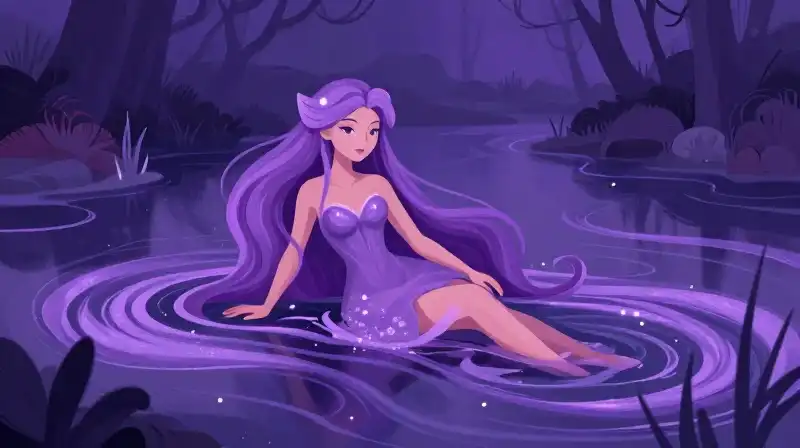
Imagine a promise so powerful, so sacred, that its violation isn’t just a betrayal—it’s a fundamental alteration of reality. This is the core premise of Melusine, the myth of the secret water spirit. Far more complex than a simple fairy tale character, Melusine embodies the delicate, often fierce, boundary between the wild, magical self and the structured world of the human world. In the story, she is a spirit of fresh water, typically appearing as a beautiful woman who transitions into a serpent or fish from the waist down [1]. But her legend isn’t just about a beautiful transformation; it’s about a covenant of privacy. Melusine and her husband are bound by a strict rule: the man must never see her in her bath or when she gives birth [1]. When this privacy is breached, usually on a specific and fated Saturday, Melusine undergoes a profound change. This shift can lead her to transform into a powerful dragon, or simply vanish back into the wilderness [1]. For parents and educators, Melusine offers a rich, multi-layered subject, moving beyond the simple narrative of a wicked curse to explore profound themes of agency, power, and respect.
The Legend of the Secret Saturday
 Melusine’s legend follows a specific and dramatic trajectory, rooted in European folklore but highly personalized in its variations. The core conflict hinges on the sanctity of her form.
The Forbidden Glimpse
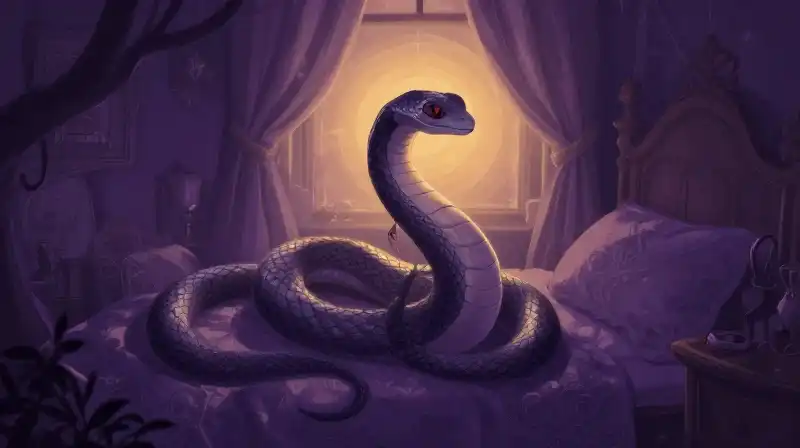
The classic tale centers on the Count Raymondin of Poitiers. This is where the legend often finds its most dramatic flare.Raymondin, curious or perhaps heedful of a strange compulsion, violates the marital oath by peeking into Melusine’s chamber on a Saturday [1]. He witnesses her half-serpent form, the hidden self of the creature [1]. The betrayal of this privacy oath is the central tragic catalyst. In response to the breach, Melusine’s rage and heartbreak are immense. Her departure or transformation is usually permanent, often resulting in her fleeing into the wilderness or turning into a dragon [1]. This tale, documented early on by figures like Jean d’Arras in *Le livre de Mélusine* (1478), establishes her initial nature as a “beautiful fay” [1].
From Fay to Dragon: The Spectrum of Consequences
While the violation is the trigger, the consequences for Melusine’s transformation vary across different cultural adaptations:
- The Flight: In many versions, betrayal leads to her simply flying away or vanishing into the deep water. This signifies a retreat into the inaccessible, wild places of her own nature.
- The Dragon: Some accounts see her transform into a creature of immense power and scale, like a dragon, symbolizing a destructive rage resulting from her boundaries being crossed.
- The Trapped Spirit: In the Luxembourgish variation, her spirit is connected directly to the creation of the Castle of Luxembourg. She remains trapped in the rock, returning every seven years to attempt to win her freedom [1].
Water Spirits: Decoding Melusine’s Symbolic Identity
Melusine is more than just a dramatic character; she is a personification of the powerful, untamed aspects of nature. Her identity draws from several different pools of folklore.
Water Nymph and Changeling
Scholarly and regional interpretations identify Melusine with various water spirits. She is often linked to nymphs, Naiads (freshwater nymphs), and pre-Christian water-faeries associated with changelings in Britain [1]. This connection ties her to the primordial power of water—life-giving, yet dangerous and mysterious. Some early observers, such as Martin Luther, viewed the figure with fear, interpreting her as a succubus or the devil [1]. However, later, more nuanced readings recast her as a protective guardian spirit (*genius loci*) of a place or water source [1].
A Symbol of Prosperity and Boundaries
Beyond the romance, Melusine holds a unique place in medieval socio-economic mythology. Jacques Le Goff interpreted her as a fertility figure—a “fairy of medieval economic growth” [1]. This is because the tales often involve her bestowing great wealth or helping her husband construct magnificent castles [1]. Interestingly, Melusine’s myth provides a potent, if tragic, commentary on gender and power dynamics. Her rage and subsequent departure serve as a powerful, tangible consequence for a man who fails to respect the boundaries of a woman. While the story is often packaged as a romantic woe, it functions as a narrative warning about the importance of respecting a private, sacred space [1].
| Creature | Primary Domain | Key Theme | Associated Action |
|---|---|---|---|
| Melusine | Fresh Water / Boundaries | Agency and Consequence | Transformation (Serpent/Dragon) |
| Mermaid | The Sea / Romance | Desire and Sacrifice | Temptation/Love |
| Lamia | Land / Consumption | Predation and Danger | Captivity/Consumption |
Melusine in Modern Storybook Worlds
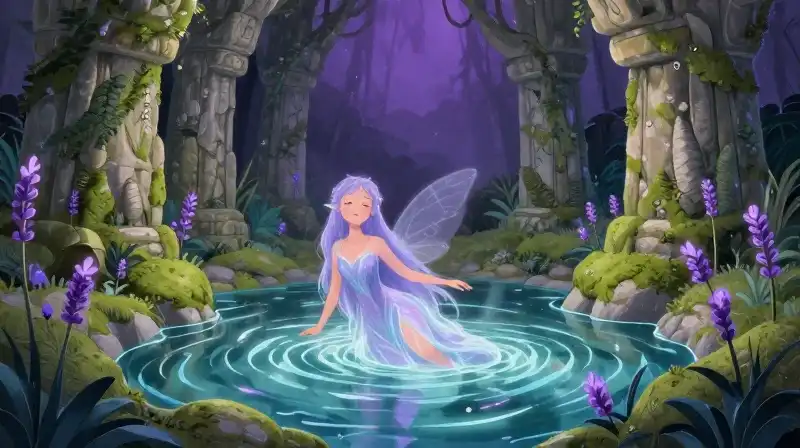 The archetypes Melusine established—the powerful, shapeshifting female spirit who is tied to both nature and human settlements—have had a lasting influence on later magical figures.
- The Enchantress Archetype: Her powerful, transformative nature influenced later figures like the enchantress in Hans Christian Andersen’s *The Little Mermaid* (1837) and the themes present in the opera *Rusalka* (1901) [1]. These adaptations carry the echoes of a forbidden, powerful magic inherent in her legend.
- The Guardian of Place: As seen in the Luxembourgish version, she evolved into a literal spirit of a locale, serving as a powerful, trapped guardian, demonstrating how folklore attaches these creatures to physical geography [1].
Addressing Questions About Winged Water Spirits
Given the related searches focusing on “mermaids with wings,” it is worth noting that while Melusine herself is primarily serpentine or fish-like, the concept of a powerful water spirit transitioning between forms or gaining flight connects to the broader mythical tradition of winged mermaids.
Can a mermaid have wings?
The concept of a “mermaid with wings” is a delightful modern amalgamation of several mythological elements. Melusine embodies the concept of shapeshifting and flight from an oath-breaking husband [1]. While she is usually serpentine, her ability to transform or fly away aligns her with the archetype of a powerful, winged sea or fresh-water entity. In art and modern myth, a winged mermaid symbolizes unbound potential, freedom of movement, and the merging of aquatic power with aerial freedom.
What is a winged mermaid?
In a narrative sense, a winged mermaid often serves as an extreme version of the mythical “spirit of the boundary.” If Melusine’s story explores the power of a spiritual boundary (the oath), a winged mermaid often represents the triumph of untamed freedom over the constraints of a single form. They are creatures of incredible majesty, bridging the gap between the deep, watery world and the airy, celestial world.
A Parent’s Guide: Using Melusine’s Themes for Bedtime and Classroom
Melusine offers much more than a “dark cautionary tale.” Her story provides powerful lessons in communication, boundaries, and the respect for the whole person.
For Bedtime Stories: The Power of Privacy
Instead of dwelling on the tragedy of Melusine’s loss, focus on the power of boundaries and the importance of respecting privacy.
- The Theme: Boundaries are not punishments; they are necessary for safety and selfhood.
- The Discussion: You can ask your child, “Why is it important for Melusine and her husband to respect each other’s private space?” This translates directly to teaching children the importance of personal space and respecting secrets.
- Visual Tone: Focus on the quiet moments before the violation, emphasizing the beauty and peace of Melusine’s normal state. Use colors associated with fresh water (cool blues, deep greens) to create a sense of serenity.
For Educators: Gender, Transformation, and Agency
In a classroom setting, Melusine is an excellent way to explore complex themes like identity and transformation.
- The Lesson: The concept of the “Saturday curse” functions as a specific narrative constraint—a unique rule that changes the outcome of the story [1]. Use this to teach how specific rules (social, physical, or magical) influence the course of events.
- Discussion Points: Explore how Melusine’s transformation is not merely physical, but psychological. Her rage is a powerful response to the disrespect of her core identity.
- Creative Prompt: Ask students to design a spirit whose “hidden form” is something that represents their greatest strength, teaching them that true identity is multifaceted.
Conclusion: The Myth as a Mirror
Melusine’s legend is a sophisticated mirror held up to human desires and fears. She reflects our anxieties about uncontrollable nature (the dragon or wild forest), our longing for prosperity (the wealth she grants), and our need to respect the delicate, often invisible boundaries of others. She reminds us that the most powerful magic—whether in a story, a fairy tale, or a child’s life—comes not from the grand flourish, but from the quiet, sacred agreements we make and the profound respect we show for the different, private selves of those we love.
Sources
- Wikipedia — en.wikipedia.org
Frequently Asked Questions
Can a mermaid have wings?
Yes, the concept of a "mermaid with wings" is a modern amalgamation of several mythological elements. Melusine, though typically serpentine or fish-like, embodies the concept of shapeshifting and flight from an oath-breaking husband, aligning her with the archetype of a powerful, winged water spirit.
What is a winged mermaid?
In narrative terms, a winged mermaid often serves as an extreme version of the mythical "spirit of the boundary." These creatures represent the triumph of untamed freedom over the constraints of a single form, bridging the gap between the deep, watery world and the airy, celestial world.
Related Articles