Atargatis: The Myth of the Powerful Mermaid Goddess and Her Sacred Symbols

Introduction
In the vast, sprawling landscapes of old myth, few creatures inspire as much wonder and quiet mystery as the figure that bridges the realm of human feeling with the deep, primal forces of nature. Before mermaids became purely folkloric creatures found in tropical shores, there were figures like Atargatis—a powerful, ancient goddess whose identity is wrapped in the ebb and flow of the tides and the intensity of emotional transformation. For parents and educators looking to delve into the rich roots of children’s stories, Atargatis offers a profound look at how we first understood the immense power of nature, love, and change. She is not merely a character; she is a symbol of the cycles of life itself, a magnificent bridge between the land and the sea [2].
Who was Atargatis? The Goddess of Transformation
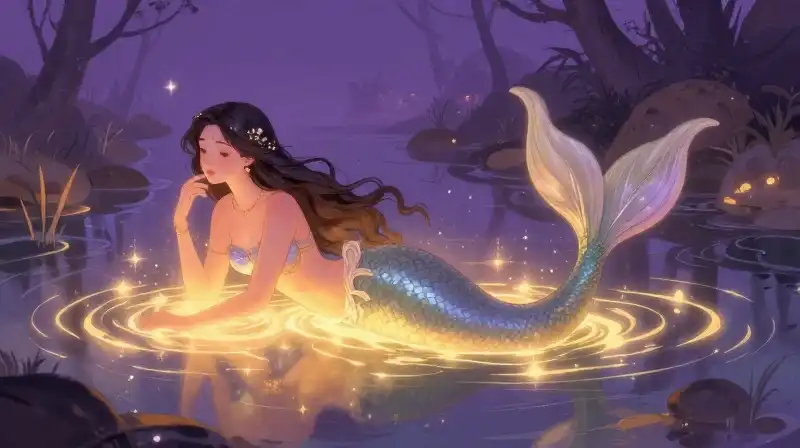 Atargatis was revered as a powerful deity in ancient Northern Syria, often holding the titles of a goddess of fertility and protection [1, 2]. As the “mistress” of her city, Hierapolis, she embodied a strong, protective feminine power that speaks to themes of community and care. However, it is her striking transformation—her shift between human and fish—that has captured the imagination of artists and storytellers alike. The stories surrounding her are marked by drama, despair, and profound change. One version of her origins suggests she was discovered as an unusual egg floating upon the waters of the Euphrates, hatching to reveal a woman’s head upon a fish-like body [2]. A more sorrowful, poignant narrative recounts how Atargatis willingly drowned herself in a lake near Ashkelon after experiencing intense emotional despair [2]. Perhaps the most resonant tale involves forbidden love. Legend says that Derceto fell for a man named Simios, a name that translates to “fish.” The shame of this union prompted a dramatic change, causing her to transform into her powerful fish body and becoming known as the “Great Fish Mother” [1, 2]. Whether through divine birth, a tragic fall into despair, or the weight of an illicit romance, Atargatis is a character defined by massive, irreversible change [2].
Decoding the Mermaid: Appearance and Iconography
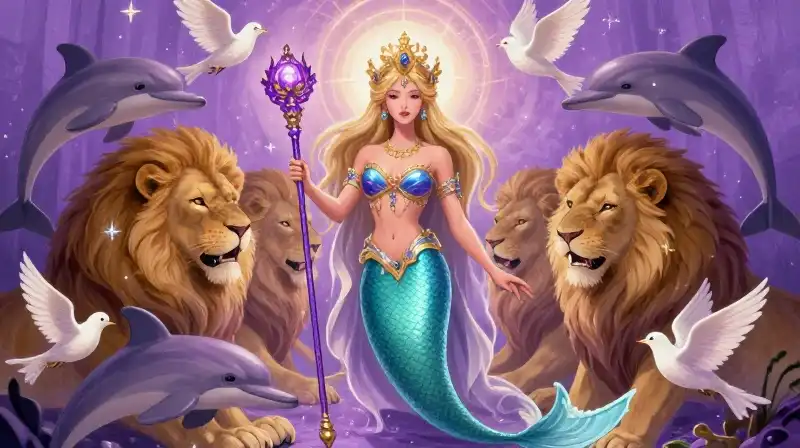
When we imagine Atargatis in a storybook, it is important to move beyond the simple image of a tail. Her ancient iconography suggests a figure of great authority and majesty. In depictions, she is often shown with a woman’s face but entirely the body of a fish [1, 2]. Her presentation is often regal and deeply symbolic:
- The Posture of Power: She is frequently portrayed as a seated figure, positioned between powerful lions, a pairing that instantly communicates her dominion over the forces of nature and her inherent strength [1, 2].
- Regalia and Symbolism: She often carries a scepter or spindle, signifying her role as a leader or a weaver of fate. She wears a mural crown, denoting her royal status [1].
- Sea Connections: Beyond the typical depiction, some ancient art linked her to dolphins and whales, and a dolphin crown was even used in her representation, further grounding her in the wild, immense power of the sea [2].
The Power of the Scales: Sacred Animals and Meaning
In children’s literature, animals are rarely just decorative; they are often messengers or mirrors of the character’s spirit. Atargatis is surrounded by powerful symbols that give insight into her character and her domain. The animals most sacred to Atargatis represent a balance of power and grace:
- The Dove: This bird is her primary sacred animal, serving as a beautiful symbol of love and compassion [1, 2]. This adds a layer of gentle emotion to her often stormy, elemental nature.
- The Lions: As mentioned, lions represent raw strength and her authority over the natural world [1, 2].
- The Sea Creatures: Dolphins and whales reinforce her connection to the ocean’s immense power, illustrating her role as a mistress of the waters [2].
Atargatis in the Storybook World: Themes for Families and Educators
Atargatis offers children, and the educators who guide them, rich material for discussing complex themes that are much deeper than simple good versus evil. Her story teaches us about:
The Wisdom of Cycles (Birth, Death, and Rebirth)
Atargatis is the ultimate symbol of transformation. She experiences everything—despair, love, loss, and eventual divine rebirth as a goddess—all within the framework of the waters. In a classroom setting, this can be used to explain how nature relies on cycles: the water feeds life (fertility), but it can also be destructive and overwhelming (drowning, despair) [2]. This duality allows for rich conversations about acceptance—that change is an ongoing, powerful process.
The Vital Importance of Water
Atargatis fundamentally represents the sea as the source of all life and renewal [2]. When using her in bedtime stories, the focus should be on the sea not as a scary monster, but as a vast, life-giving force. This theme reminds young listeners that even the biggest, most powerful elements in the world are connected to giving us the chance to grow and renew ourselves.
Navigating Forbidden Love and Shame
The story of Derceto and Simios provides a poignant, gentle entry point into understanding emotions like shame, yearning, and the consequences of choices. While the transformation into a fish is dramatically powerful, the core lesson is about the intense pressure felt when two lives or desires clash, eventually leading to a dramatic, life-altering change [1].
| Theme | Atargatis’s Representation | Lesson for Children |
|---|---|---|
| Transformation | Shifting between woman/fish, mortal/goddess | Change is a powerful force and a natural part of life. |
| Power | Seated between lions, mistress of Hierapolis | True strength comes from both grace and authority. |
| Nature’s Cycles | Birth from an egg, life, death, rebirth | Life is an endless cycle of growth and renewal. |
Answering Common Story Questions
What did Atargatis look like?
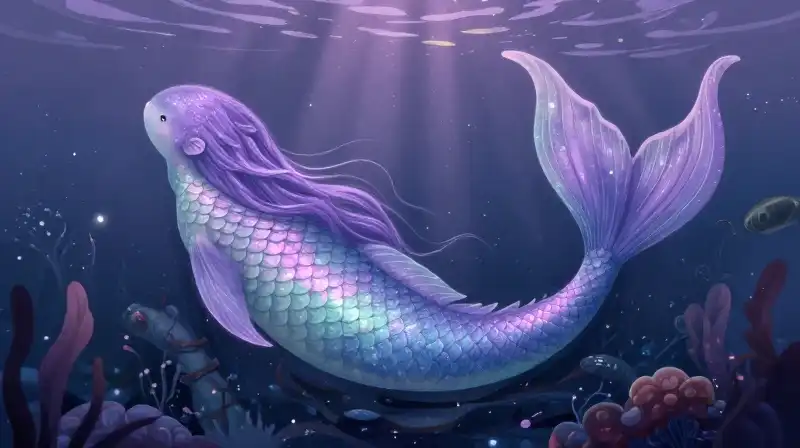
Atargatis was depicted with the graceful face of a powerful woman, but her entire body was that of a fish [1, 2]. She was not always depicted in a casual state; her iconography shows her as a majestic and powerful figure, often seated regally amidst lions, wearing a mural crown, and holding symbols of power or creation, like a scepter or spindle [1].
What animals were sacred to Atargatis?
Two of her primary sacred animals are the Dove, symbolizing love and grace [1, 2], and the Lions, which represent strength and her dominion over the elements [1, 2]. She was also associated with other majestic sea creatures like dolphins and whales, reflecting her mastery of the water [2].
Synthesis: The Enduring Myth of the Mermaid Goddess
Atargatis is far more than a myth about a fish-woman; she is a foundational symbol of the deep, life-giving, and sometimes terrifying power of the natural world. She reminds us that the most profound changes—the ones that move us from despair to grace, or from one form to another—are often connected to the raw, magnificent force of nature. By exploring the stories of goddesses like Atargatis, we give our children a window into the vast, imaginative depth of ancient human understanding, showing them that even in the wildest, most ancient tales, the lessons of strength, love, and profound change remain perfectly clear.
Sources
- Atargatis — en.wikipedia.org
- Atargatis, the Mermaid Goddess by Judith Shaw — feminismandreligion.com
Frequently Asked Questions
What did Atargatis look like?
Atargatis was depicted with the graceful face of a powerful woman, but her entire body was that of a fish. In her ancient iconography, she was often portrayed as a seated, majestic figure wearing a mural crown and holding symbols of power like a scepter or spindle. Furthermore, she was frequently shown positioned between powerful lions to denote her inherent strength.
What animals were sacred to Atargatis?
The primary sacred animal of Atargatis is the Dove, which serves as a symbol of love and compassion. Lions are also sacred to her, representing raw strength and her authority over the natural world. Additionally, sea creatures such as dolphins and whales reinforce her connection to and mastery of the ocean.
Related Articles