
Finding Your Place: The Story of Thumbelina and Tom Thumb

Introduction
Imagine being so small that a single forest becomes an entire, impenetrable kingdom. Or, as Thumbelina is, finding yourself misplaced between the impossibly grand and the hilariously mundane—a tiny princess lost in a colossal circus [1]. The tale of Thumbelina and Tom Thumb is more than a whimsical journey of scale; it is a profound exploration of identity, the bittersweet longing for belonging, and the universal desire to find where we truly fit in the vast tapestry of the world [1]. This story, particularly the cinematic version produced by Hyperion Animation [1], invites parents and educators into a rich world where the search for ‘home’ is synonymous with the search for ‘self.‘
The Kingdom of Small Wonders: Scale and Identity
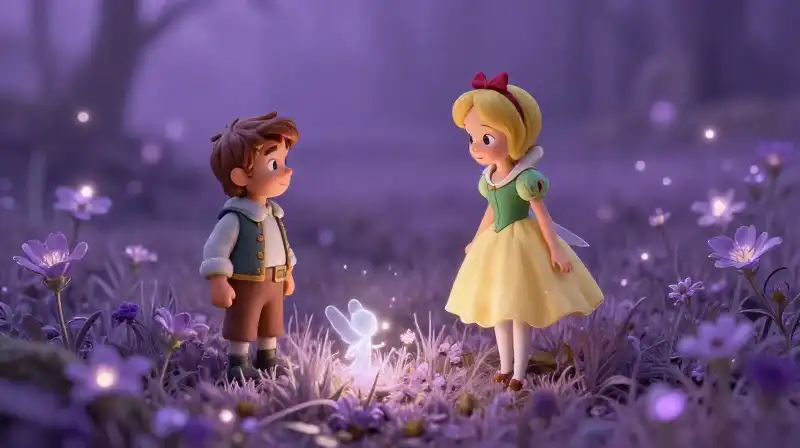
At its heart, the narrative is built upon the contrast of sizes. Thumbelina and Tom Thumb are defined by their diminutive stature—often described as “small” or “tiny” [1]. This inherent smallness immediately sets them apart from the conventional world: the “normal-sized man” who takes Tom Thumb in, and the “terribly sinister Mole King” who looms over their existence [1]. This contrast is not just visual; it creates a profound power dynamic where the miniature characters must navigate an adult world that either threatens to swallow them or tries to confine them.
Thumbelina: The Search for Regal Self
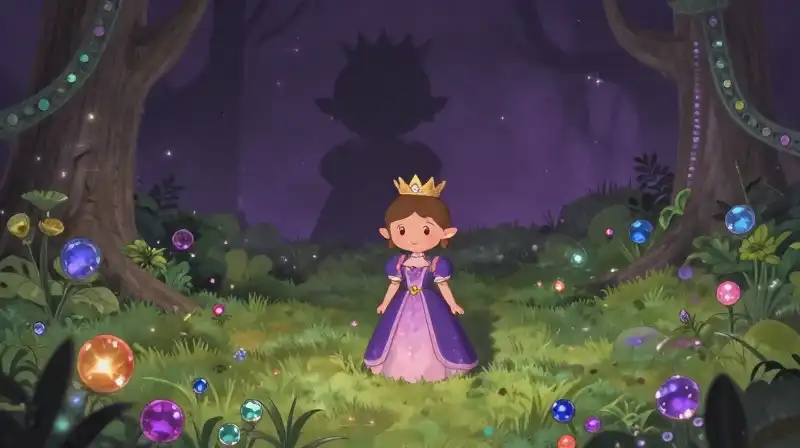
Thumbelina, originating from the magnificent and magical realm of Gemworld, possesses a royal lineage. She is the daughter of a King and Queen, a fact which establishes her as a figure of immense dignity and specific purpose [1]. Her initial kidnapping from the circus serves as a wrench thrown into her identity, forcing her to begin a search for her true home and the family she was born to [1]. Her journey, therefore, is a quest for validation—a need to reconcile her magical, regal origins with the chaotic, unfamiliar environment she is currently in.
The motif of Gemworld itself is vital. As the kingdom of her parents, it represents not just a physical location, but the perfect convergence of her identity. The quest to return there is the quest to reclaim her narrative, a powerful early lesson for children that we all have a prescribed place, a “place of belonging” that we must, through a courageous search, locate [1].
Tom Thumb: The Hope of Community
Tom Thumb offers a counterpoint to Thumbelina’s royal destiny. He is also a figure of diminutive scale, but unlike Thumbelina, his upbringing is with an “ordinary-sized man” [1]. While he shares her longing to find a community of those like himself, his story leans heavily into the practicalities of finding a collective rather than reclaiming a kingdom. His desire to find other “small” people underscores a common fairy tale trope: the realization that a person’s true comfort often lies in shared experience and community, mirroring the human need for kinship [1].
The Antagonism of Size: The Mole King
No story is complete without a force that challenges the protagonist’s quest. In this version, the antagonist is the “terribly sinister Mole King” [1]. The Mole King serves a dual function within the narrative: he is a person of immense physical power and “normal” size relative to the heroes, representing a clear visual and physical threat [1].
The Villain as Oppressor
The Mole King’s desire is not merely malice; it is possessive. He attempts to claim Thumbelina as his bride, a role that suggests a desire to restrict her freedom and incorporate her into his world, rather than allowing her self-determined path home [1]. This makes him a classic storybook villain—a figure who seeks to possess or confine the protagonist rather than accept their individual trajectory [1]. For young children, the Mole King embodies the “force of the world” that resists the delicate spirit of the miniature heroes. Analyzing him helps parents understand that even the scariest monsters in fairy tales are often representations of something more abstract, like the fear of being owned, restricted, or losing one’s self in a powerful system.
The Core Themes: Belonging and the “One’s Own” Place
If Thumbelina’s journey is about recovering a predetermined identity (her princess status in Gemworld), Tom Thumb’s journey is about constructing an identity through found family (community). Taken together, the narrative powerfully explores the theme of “finding one’s own” place [1]. This theme is one of the most resonant and soothing for children because it addresses their own developmental milestones: the constant struggle to understand where they fit—in the classroom, on the playground, or within the complex family unit.
The Journey as Metaphor
The film follows a linear progression of escape, reunion, romance, and conflict [1]. This structure is a perfect emotional map for a child’s life: we are often born into a state of confusion (the circus/Kidnapping), we navigate our initial relationships (romance/Tom Thumb), we confront our fears (the Mole King), and we reach a defined place (Gemworld/Community). By viewing the characters through this lens, parents can help children translate the high drama of the story into the manageable emotional arc of their own lives—that every challenge, like the Mole King’s tyranny, is a step toward self-actualization.
Analyzing the World of the Adventure
The settings in *The Adventures of Tom Thumb and Thumbelina* are crucial for understanding the emotional state of the characters. The transition from the chaotic, loud, and restrictive environment of the circus (the place of kidnapping) to the magical, defined borders of Gemworld showcases the emotional spectrum of the journey [1]. This contrast allows the audience to see the stark difference between being ‘lost’ and being ‘found.‘
| Location | Emotional State | Role in Narrative |
|---|---|---|
| The Circus | Alienation, Dislocation | The starting point; the place of kidnapping and temporary residence [1]. |
| Tom Thumb’s Home | Temporary Security, Hope | A middle ground; where community begins to form despite size difference [1]. |
| Gemworld | Identity, Belonging | The origin and destination; the validation of Thumbelina’s true self [1]. |
Bringing the Story to Bedtime and the Classroom
For educators and parents, the beauty of this tale lies in its accessibility. While it deals with a sinister threat—the Mole King—the film is also noted for being a “fun tale with enough constant action and snappy dialogue” to engage audiences of both ages [1]. It doesn’t linger in dread but utilizes the threat as a mechanism to drive the plot toward resolution and reunion [1].
The Thematic “Why” for Children
The central takeaway is not merely that ‘big guys are scary,’ but that ‘home is an internal state.’ Whether Thumbelina finds it in the throne of Gemworld or Tom Thumb finds it in a small circle of friends, the story teaches that the need for belonging is innate. Using these stories can help children process their own feelings of being ‘different’ or ‘small’—whether they feel they are not big enough, not clever enough, or not part of the popular group. The characters demonstrate resilience in the face of vast, imposing worlds [1].
A Practical Bedtime Anchor
The story works exceptionally well for winding down because the ultimate victory is one of homecoming and reunion. Instead of an ending marked by total destruction, the conclusion focuses on the protagonist’s alignment with their true environment, providing a soothing sense of closure. It allows a child to mentally ‘check in’ to their own safe places—their room, their family, or their favorite activity—before sleep. The narrative structure moves from external displacement to internal certainty [1].
Synthesis: The Power of the Small
The Adventures of Tom Thumb and Thumbelina is a foundational story about the dignity of the small and the complexity of belonging. By pitting the inherently delicate and purposeful nature of Thumbelina against the overwhelming, possessive force of the Mole King, the tale invites us to consider the fragility of individual identity when faced with large, impersonal systems. It remains remarkable not because of its magical setting alone, but because it uses the whimsical contrast of size to explore a deeply adult concept: the search for authentic self within a world that is often trying to define or confine you. It is a reminder that no matter how small you feel, your specific place in the world—your ‘Gemworld’—is waiting to be reclaimed and recognized.
Sources
- The Adventures of Tom Thumb and Thumbelina — en.wikipedia.org
Related Articles