
Little Red Riding Hood: Understanding Themes of Caution and Innocence


Introduction
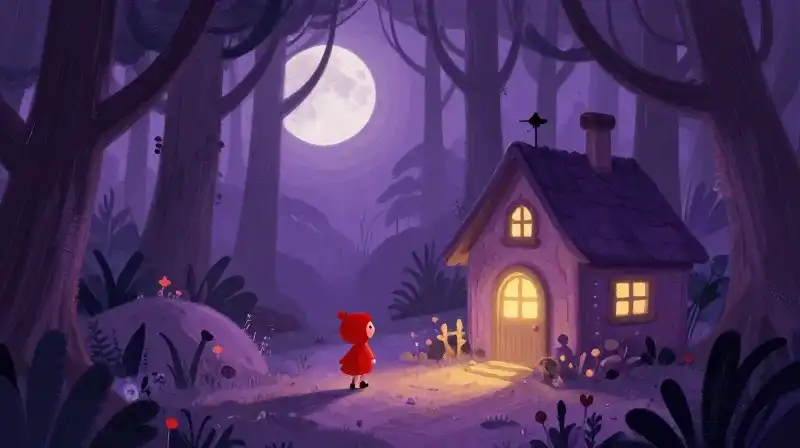
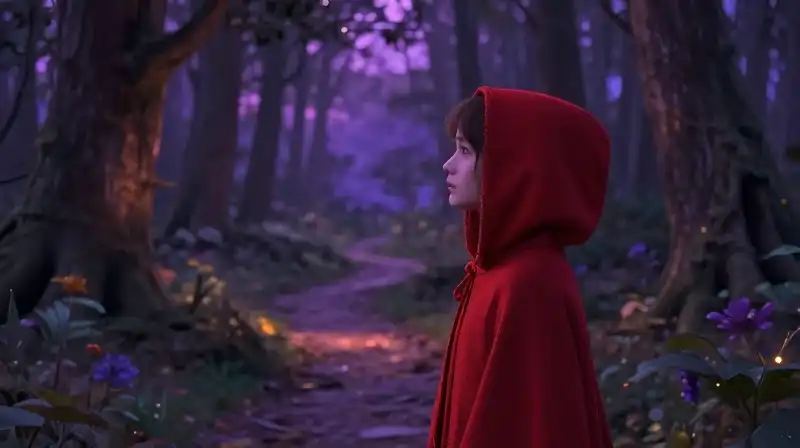
Little Red Riding Hood has remained one of storytelling’s most resilient and complex figures. While we often recall her tale as a simplistic cautionary fable, the deep green forest, the bright scarlet cloak, and the deceptive cunning of the Wolf hold layers of symbolism and thematic weight that deserve careful exploration. For parents and educators, the narrative offers far more than a simple warning; it is a rich text for discussing innocence, the nature of deception, and the importance of boundaries. By moving beyond the nursery recitation, we can better understand how this tale functions—as a gentle prompt for conversations about safety and as a timeless celebration of simple goodness.
The Fabric of Red: Symbolism and Identity
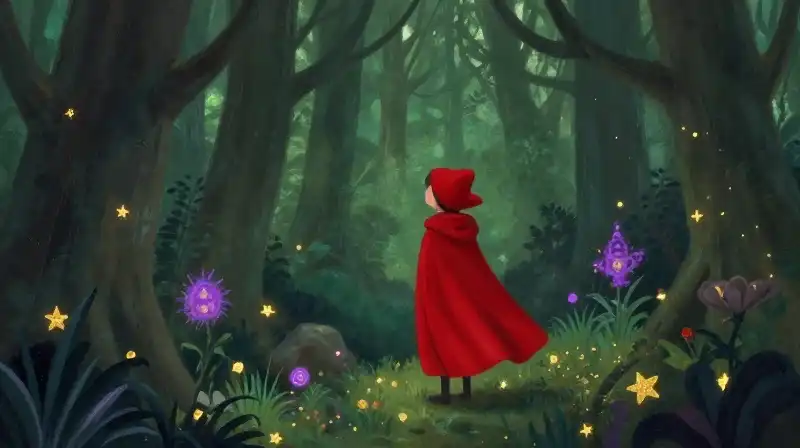 The most immediate visual element in the tale is the red cloak, but its role goes far beyond merely adorning the girl. Within the storybook world, the cloak is a powerful marker, defining both Little Red and the landscape she traverses.
The Power of the Scarlet Cloak
The “bright red hooded cloak” or “little scarlet cloak” [1, 2] immediately establishes the protagonist’s visibility against the backdrop of the “deep green forest” [1, 2]. Red, in storytelling, often symbolizes life, passion, and innocence, but here, it serves a dual purpose. While it makes her stand out as a sign of her sweet, “kind” nature [1, 2], it also marks her presence in a dangerous space. The contrast between the vivid red and the deep, encompassing green of the woods emphasizes the thematic tension: the bright, vulnerable innocence of the child versus the creeping, enveloping danger of the wild. The cloak is not just a garment; it is a character that sets the tone, guiding the reader toward a journey of both warmth and peril [1, 2].
Mapping the Journey: Bedtime Stories and Caution
This tale functions beautifully as a guide for mindful storytelling. Its structure offers a perfect blend of calming imagery and thematic focus, making it an effective choice for bedtime discussions.
Establishing a Calm Atmosphere
Many versions of the tale utilize a gentle, whimsical entry point, providing a “calming, imaginative entry point before introducing the creeping danger” [2]. We see Red singing as she gathers wildflowers [2], or walking through an idealized, colorful path. This initial “calmness” is crucial, as it allows the child to feel secure within the story’s world before the introduction of the conflict. This creates a dynamic of rising tension that is engaging without being immediately frightening.
A Guide to Safety: The Heart of the Lesson
At its core, the story is a masterclass in caution, but its message is delivered through gentle parental framing. The tale heavily emphasizes explicit boundaries, beginning with “stay on the path” and “never talk to strangers” [1, 2]. This transforms the story from a vague warning into a concrete, actionable conversation.
- The Danger of Deviation: The wolf cunningly diverts Red by suggesting a “sunny patch full of colorful wildflowers” [1]. This teaches the tangible lesson that straying from a safe path, even for something tempting, has consequences.
- The Power of Obedience: Little Red’s eventual resolution of her fears is marked by a promise to “never wander from the path again and never spoke to strangers” [1]. This reinforces the concept of personal agency and the importance of trust in established rules.
Deception and Transformation: The Antagonist
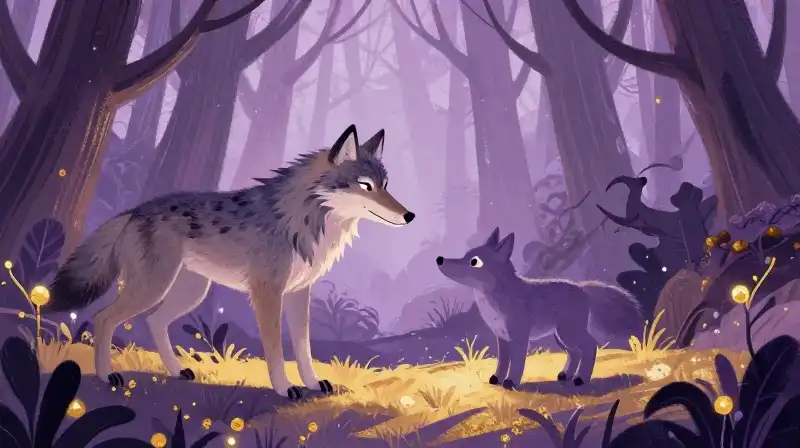
 The Wolf is often reduced to a single symbol of fear, but his narrative function in the story is far more nuanced: he is a highly calculated antagonist who employs “deception” [1].
The Wolf’s Strategy of Softness
The Wolf’s effectiveness stems not just from his physical menace but from his “cunning” and his initial approach. He does not rush Red with a roar; instead, he speaks “in a friendly way” [1] or “very gently” [2] to lure her off course. He uses the language of helpful suggestion, making the initial deception believable. His subsequent transformation—either by locking Grandma in a closet and adopting her cap and glasses [1] or by dressing himself in her nightcap [2]—is a brilliant piece of magical sleight of hand. He is exploiting the familiar comfort of the grandmother’s space, turning a sanctuary into a trap. This highlights how threats often hide not in the outside world, but within spaces we feel safe in.
Thematic Questions for Educators and Parents
The story provides natural discussion prompts for educators. For instance, discussing how Little Red “helped make Grandma feel better when she was sick” [2] allows for a wonderful pivot to discussing kindness and empathy before transitioning to the theme of safety.
The Climax: Versions of Rescue and Courage
The central moment of tension—Little Red’s sharp observations: “what big eyes,” “big ears,” and “big teeth” [1, 2]—is the pivot of the tale. However, the resolution varies across different versions, offering a valuable look at how cultures handle the ultimate confrontation between innocence and malice.
| Version Detail | The Resolution | Core Theme Emphasized |
|---|---|---|
| Woodsmen Intervention ([1]) | A brave woodsman appears and uses an axe to scare the wolf away. | The importance of external aid/Justice. |
| Combined Effort ([2]) | A great dog (Trim) and a woodman (Hugh) work together to defeat the beast. | The necessity of teamwork and courage. |
| Whether the climax features a solitary hero or a coordinated effort, the story ultimately underscores the theme of consequence. The resolution is the final promise from Little Red to the wolf: her resolve to adhere to the path and avoid strangers [1]. |
Addressing Common Queries About the Tale
Is Little Red Riding Hood actually scary?
While the tale contains elements of danger—the wolf, the dark forest, the deception—its structure makes it suitable for thoughtful bedtime reading. The “creeping danger” is manageable, and the emphasis is placed on caution and the eventual “rescue” or resolution, which is a powerful, though sometimes violent, lesson in boundary setting [2]. The focus should remain on the “calming, imaginative entry point” before the conflict arises.
Is this story the “original” Little Red Riding Hood?
In folklore, versions of the story evolve continuously. The versions presented, such as those featuring the interaction with Grandma or the specific details of the Wolf’s disguise [1, 2], represent well-documented variations across different story collections. Rather than one “original,” the story is a living reflection of different cultural concerns regarding safety and obedience.
Synthesizing Caution and Connection
Little Red Riding Hood is far more than a relic of “stranger danger” folklore. It is a rich tapestry woven with the threads of innocence (the red cloak), wisdom (the warning of the path), and the nuanced threat of cunning (the wolf’s disguise). For parents and educators, the story is a perfect vehicle not for fear, but for conversation. It allows us to explore the vital difference between external threats and the subtle, gentle forms of deception—whether it’s a suggestion to stray into a field of wildflowers or the sly way a wolf adopts a grandmother’s nightcap. By reading the story with a “warm, imaginative” eye, we find not just a tale, but a blueprint for fostering mindful awareness in our children.
Sources
- Little Red Riding Hood — readthetale.com
- Little Red Riding Hood — storyberries.com
Related Articles