
Peter Pan Bedtime Story: The Magic of Staying Forever Young

Introduction
For a bedtime story to truly resonate, it must be more than a simple list of magical events; it needs to whisper a profound truth about the human heart. Few tales achieve this delicate balance between exhilarating adventure and gentle emotional depth as Peter Pan. At its core, this classic narrative is not just about flying over London’s rooftops or battling swashbuckling pirates—it is a rich, imaginative exploration of the fundamental struggle every child faces: the relentless pull of magic and eternal play against the heavy, undeniable call of growing up. This tale, steeped in the wonder of Neverland and the melancholy of childhood, offers parents and educators far more than a simple plot; it provides a lens through which to examine the complex desire to remain young, the fears of adulthood, and the enduring power of memory.
The Core Conflict: Permanence Versus the Passage of Time
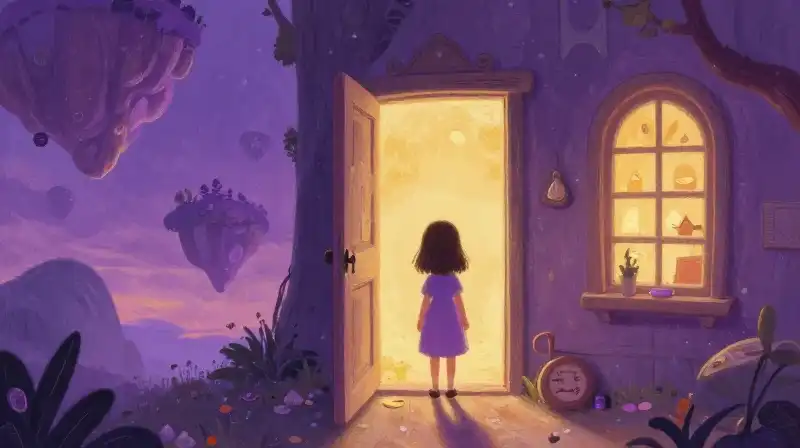 The heart of the *Peter Pan* narrative is its fascinating tension between staying eternally young and the inevitable transition toward adulthood. Peter Pan, the boy who refuses to age, embodies the perfect, unyielding state of childhood. However, the story shows this permanence is not just a joyous state; it is often a state of denial. Wendy Darling, however, acts as the narrative’s bridge, representing the transition from one world to another [2]. Her journey into Neverland is an adventure, but her emotional reality is complex; she experiences profound moments of homesickness, expressing a deep wish to return to the comforting reality of London. This single emotional arc is pivotal, prompting Peter to feel “deeply disappointed” by the prospect of her aging or leaving his world [2]. The story suggests that while the magical worlds are beautiful, they are ultimately transient, and the eventual growth of the Darling children highlights that the memories of Neverland remain as potent and vivid as any physical adventure [1].
Character Deep Dive: The Motivations Behind the Magic
Analyzing the Key Figures in Neverland
To understand the “magic” of this tale, we must look past the glitter and the pixie dust and examine the specific motivations driving these unforgettable characters.
Peter Pan: The Resistance to Responsibility
Peter Pan is not merely a charming, carefree boy; he is a master of resistance. He actively rejects the responsibilities, anxieties, and inevitable aging that comes with adulthood. His initial visit to the Darling nursery is telling, occurring specifically to retrieve his lost shadow [1, 2]. The shadow, in this literary context, often symbolizes the self and the consequences of one’s actions. By losing and avoiding his shadow, Peter is implicitly trying to escape a definition of himself that requires maturity. He exists in a state of perpetual youth, which serves as a powerful, albeit complex, metaphor for avoiding the complexities of adult life.
Captain Hook: The Bitterness of Loss
Captain Hook functions as the primary antagonist, but his motivations are far more personal and grounded than simple villainy. His persistent grudge against Peter Pan is driven by a specific, tangible history: a past battle in which he lost his hand [1, 2]. This specific injury—the severed limb—is a potent symbol of Peter’s power over his life and his sense of self. Hook’s relentless pursuit of the children is fueled not by abstract evil, but by the very real, painful consequences of past defeats and physical loss, making him a tragic figure defined by his resentment of the unending youth Peter embodies.
Wendy and Tinker Bell: The Spectrum of Loyalty and Jealousy Wendy Darling embodies the emotional intelligence of the reader, navigating the extremes of wonder and the sorrow of home. While Peter represents perpetual youth, Wendy represents the capacity for emotional growth and eventual integration into the real world. Tinker Bell presents a far more complex portrait. Initially serving as a whimsical fairy helper, she evolves into a character whose jealousy begins to sow discord between Peter and Wendy [2]. This shift demonstrates that even in a world of pure magic, emotions like insecurity and possessiveness are profoundly human—or fairy-human—forces.
The Lost Boys: A Community Without Chronology
The Lost Boys provide a fascinating community structure. Like Peter, they are a group of children who, much like him, have chosen to refuse the timeline of aging [1]. They form a cohort of peers united by an shared lifestyle of adventure, emphasizing the story’s theme of a chosen community that exists outside the constraints of time and societal expectations.
The Setting and Symbols of Adventure
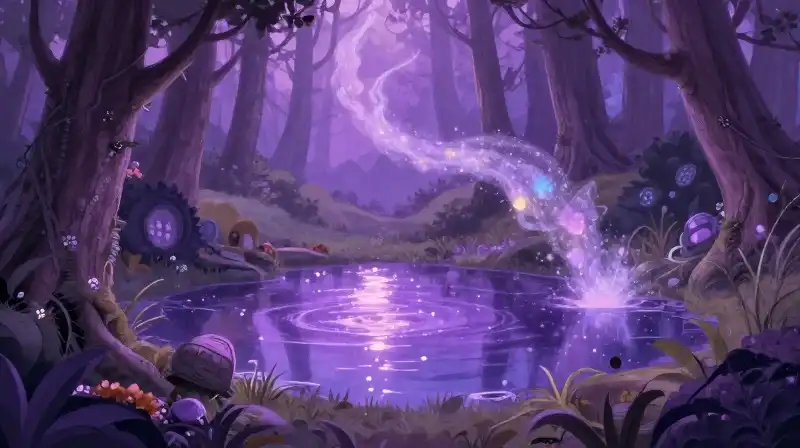 Neverland is not just a backdrop; it is a meticulously crafted symbol of unrestrained freedom. The environment itself is part of the story’s narrative of escaping the mundane.
Neverland: The Land of Infinite Possibility
Neverland is described as a realm of intense wonder, featuring sparkling small lakes, mysterious caves, and magical forests [1]. The ability to travel between London’s rooftops and this enchanting realm is facilitated by Tinker Bell’s pixie dust [1, 2]. This mechanism—the magical intermediary—allows the reader to understand how the boundary between the ordinary world and the imaginative world can be momentarily crossed.
The Magical Encounters: Lagoon and Village
The adventures undertaken by the children expand the thematic scope of the story beyond mere flight. Encounters like the exploration of Mermaid Lagoon and befriending Princess Tiger Lily in the Indian village offer glimpses into the world’s inhabitants and their own internal lives [1, 2]. These specific encounters ground the fantastic elements of Neverland in moments of genuine human connection, suggesting that magic thrives not just in the fantastical, but in the acceptance and exploration of one another.
Themes of Fate and Conflict Resolution
The grand conflicts in the narrative serve not just as exciting action, but as thematic resolutions to the story’s central tensions.
The Destruction of the Antagonist
The ultimate confrontation is a dramatic test of Peter’s guardianship and the children’s resilience. When Hook attempts to capture the children, Peter must rescue them from his pirate ship [1, 2]. The climax culminates in the decisive intervention of the crocodile, a powerful force of nature, which ultimately consumes Captain Hook after Peter forces him overboard [1, 2]. This resolution signifies that while human conflicts (the grudge, the ship) are intense, the chaotic forces of nature or fate often deliver the final, irreversible conclusion.
The Aftermath: Memory as a Form of Staying Young
While the children eventually grow up, the story does not allow the magic to simply vanish. The theme of transience is handled gently: the memories of Neverland remain vivid and indelible [1]. This suggests that the enduring magic of childhood is not a physical state, but a mental and emotional one—the internal capacity to remember wonder and possibility. In some versions, a clever subplot involving a bomb package intercepted by Tinkerbell demonstrates that even in danger, the whims of coincidence and friendship play a crucial role in survival [2].
Practical Guide: Peter Pan for Parents and Educators
When using Peter Pan as a bedtime story or classroom aid, focusing on the following aspects can yield deeper insights.
Why This Story Works for Bedtime
This tale is ideal for bedtime because it balances high stakes (pirates, danger, the crocodile) with high comfort (flying, never growing old, the safety of the Lost Boys’ community). It allows a child to process their own fear of the “next stage” (growing up) by seeing the characters navigate that struggle. The warmth of the Darling family and the clear distinction between the adventure and the eventual return to safety provide a soothing emotional resolution [1].
Addressing Common Questions About the Tale
The *Peter Pan* narrative prompts several questions for readers of all ages.
- Why did Peter lose his shadow? His search for his shadow emphasizes his desire to maintain a certain idealized, untainted self, avoiding the darker or more reflective parts of his identity and the burdens of consequence [1, 2].
- What does the Crocodile symbolize? In this narrative, the crocodile is a chaotic and destructive force of nature. Unlike Hook, who is driven by human grudges, the crocodile represents an unstoppable, decisive external force that ends the conflict [1, 2].
- Is Peter Pan a good influence? He provides thrilling adventure and freedom, but his refusal to grow up also means he refuses responsibility, which is a crucial, nuanced lesson for children to understand.
The Remarkable Legacy of Eternal Childhood
The enduring power of the *Peter Pan* story lies in its refusal to offer a simple answer to the question of growing up. It illuminates the delicate space between the safety of eternal play and the bittersweet reality of moving forward. The magic of Neverland is not just in the flying, but in the powerful, remembered *potential* of the characters to choose adventure and friendship even in the face of impending change. For any child, the tale of Peter Pan is a gentle permission slip—a permission to embrace the wonder and the wild heart they sometimes feel, even when they know the clock is ticking toward morning.
Sources
- Peter Pan — readthetale.com
- Peter Pan Short Story by J.M. Barrie – Read Free Online — ririro.com
Related Articles