
Why Cinderella’s Story is the Ultimate Bedtime Lesson in Kindness


Introduction
For a young child navigating the world, tales of extreme disparity—of lives sharply divided between endless labor and effortless magic—can feel both frightening and profoundly hopeful. Cinderella, perhaps more than any other classic heroine, serves as a narrative bridge across that gap. She is a story that acknowledges the difficulty of the real world—the cold chores, the unfair rules, the sting of unkindness—yet insists that there is a powerful, structural mechanism for ultimate resolution. When reading Cinderella at bedtime, the goal is often less about predicting the future and more about offering a reassuring perspective on the present. The tale is not just a lovely set of illustrations; it is a carefully constructed moral argument for the strength of a gentle heart, making it a bedrock lesson in perseverance and hope.
The Dichotomy of Hardship and Wonder: Setting the Stage for Transformation

The core emotional power of Cinderella stems from the stark contrast between two worlds. On one side is her reality: the domestic life defined by manual labor and the weight of servitude, where she is tasked with duties like cooking and keeping the fire going [2]. On the other side exists the rarefied air of the palace and the Prince’s ball—a world of opulence and undeniable magic [1, 2]. This narrative juxtaposition does not exist merely for aesthetic beauty; it functions as a vital source of dramatic tension. It allows the story to explore the idea that genuine value is not determined by the luxury of one’s surroundings.
The Symbolism of the Cinderella Staircase
The motif of the staircase is a potent piece of symbolism, representing the journey, the ascent, and the precarious nature of happiness. The most critical event in the tale occurs on this steep climb, the moment the glass slipper falls from her foot as she desperately flees the palace [1, 2]. This single, tumbling piece of footwear is not a random accident; it marks the precise moment her secret identity begins to intersect with the public sphere. It transforms her physical struggle into a literal, tangible piece of justice.
Kindness as a Force of Nature: The Power of Inner Character
Cinderella’s enduring virtue lies in her refusal to allow her circumstances to define her spirit. Despite the relentless jealousy and cruelty of her stepfamily—a cruelty so extreme that the stepmother would bitterly ask, “You call that a dress?” while demanding she create gowns for her stepsisters [2]—Cinderella’s core remains intact. She “never letting her stepmother’s unkindness change who she was” [1].
This resilience is highlighted by her remarkable capacity for forgiveness. Even after being treated poorly, Cinderella does not sink into bitterness. The narrative explicitly shows that she “forgave them for their unkindness, as she believed that kindness was the most important thing in the world” [1]. For the reader, particularly a child, this is a profound instruction: that true power is found in emotional stability and grace, rather than in retaliation or spite. This theme reinforces the ultimate moral: “being kind and forgiving are very important” [1].
The Prince’s Vision: Seeing the Unseen Worth
The Prince’s attraction is not immediate or superficial; it is rooted in a discerning eye. The contrast between the stepmother’s judgment and the Prince’s connection to Cinderella is stark. While the Queen might look upon the general scene and believe the Prince “could not ask for finer maidens than these” [2], he is drawn to something more fundamental. The text confirms that in Cinderella’s eyes, he “did not see the cinders in her hair or the ashes on her face” [2]. He sees the human spirit beneath the soot, making his attraction a powerful endorsement of her hidden worth.
The Practical Magic: Time, Transformation, and Safety
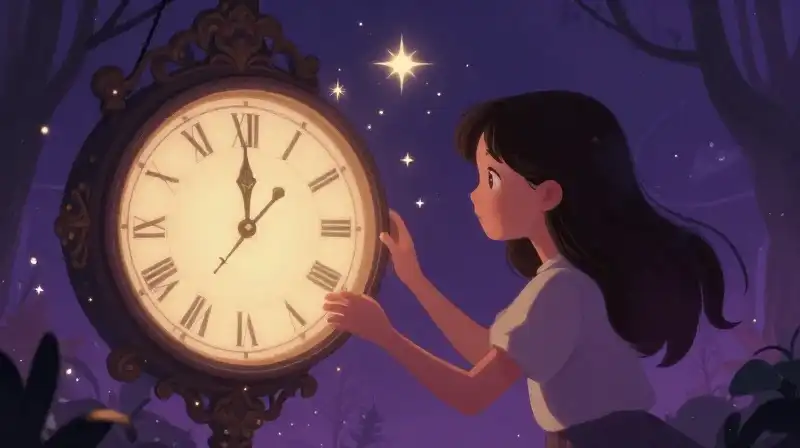
One of the most effective elements of the story for a bedtime narrative is the management of emotional tension through the explicit ticking of time. The Fairy Godmother’s warning—that the magic will “only last until midnight” [1, 2]—is crucial. This limit is not arbitrary; it serves a dual purpose. First, it heightens the suspense of the climax. Second, and critically for bedtime reading, it provides a reliable mechanism for ultimate safety and resolution. The temporary nature of the transformation suggests that while challenges (the ‘rags’ life) are real, hope and magic are cyclical, providing a powerful, comforting sense of ultimate resolution after the inevitable hard times.
Symbols of Transformation and Justice
The fairy tale utilizes transformation—the transformation of a humble pumpkin into a carriage, mice into beautiful horses, and rags into a magnificent gown [1]—to visualize the sudden, overwhelming nature of hope. This mirrors the cyclical nature of hope and despair found in the story’s arc. The glass slipper itself serves as the perfect symbol of justice and fit [1, 2]. It is a mechanism of precision that bypasses the subjective, malicious lies of the stepsisters, allowing objective truth (her perfect fit) to prevail over constructed deceit. This appeals deeply to a child’s sense of fairness.
When the Magic Fades: Using Cinderella for Bedtime Reading
To utilize Cinderella effectively at bedtime or in the classroom, educators can focus on three key thematic takeaways:
- The Reliability of Hope: Present the journey from rags to palace as a reminder that even the most profound changes can occur, provided a source of strength (like kindness) exists.
- The Strength in Patience: Emphasize that Cinderella does not rush her happiness or demand immediate change; she sustains her kindness through the difficult years, waiting for the alignment of external circumstances (the ball, the Prince) with her internal character.
- The Power of Self-Acceptance: The story teaches that true beauty is invisible to surface judgment; the Prince is captivated by her spirit rather than her appearance, offering a gentle lesson in inner value.
By focusing on these concrete themes—the symbolic fall of the slipper, the strength of the midnight deadline, and the specific instances of her forgiveness—the story becomes far more than a pretty tale. It becomes a reliable, soothing framework that allows children to process themes of unfairness and cruelty through the ultimate lens of transformative hope.
Sources
- Cinderella Story — readthetale.com
- Cinderella (Classic) — worldstoriesbank.org
Related Articles