
Lost Dragon: Gentle Bedtime Stories Teaching Courage and Kindness

Introduction
There are stories that are grand, echoing with battles of immense scale and the roar of ancient power. And then there are stories that arrive softly—tales designed not to challenge a child’s sleep, but to settle it. For parents and educators seeking stories that go beyond simple entertainment, “The Lost Dragon” offers a profoundly gentle entry into the realm of magic. This narrative doesn’t present the dragon as a terrifying force of nature; instead, it positions Drako as a small, vulnerable creature whose journey home becomes a deeply relatable quest for belonging. This guide delves into the comforting architecture of this specific tale, exploring why a small, green dragon navigating an enchanted valley makes for a perfect, illuminating bedtime story, and how its symbols of kindness and courage can be gently woven into the fabric of your child’s evening routine.
The Gentle Heart of Drako: A Character Study
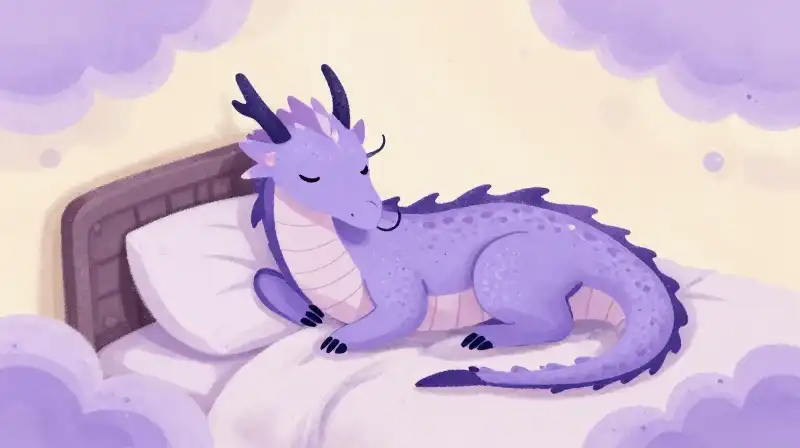
 When we think of dragons, the imagination often drifts to massive, fire-breathing legends. The beauty of “The Lost Dragon” lies in its intentional subversion of this archetype. Drako is not a beast of overwhelming scale; he is portrayed as a small, relatable entity, no larger than a cat [1]. This scale is crucial to his effectiveness as a bedtime character. By diminishing his physical size, the story transforms him from an intimidating apex predator into a vulnerable protagonist deserving of human kindness and help [1]. Drako’s visual design contributes significantly to this gentleness. He is described with shimmering green scales and golden eyes, wings that catch the light like sparkling emeralds [1]. These specific, vibrant details serve a dual purpose: for an illustrator, they provide clear, tactile imagery; for a child, they ground the magic in beautiful, comforting color. His nature is defined by need—he is searching for a way back to the authority and warmth of his homeland, symbolized by Queen Seraphina [1].
The Role of the “Small” Protagonist
Choosing a small, approachable creature allows the young reader to invest in Drako’s emotional journey without the accompanying “fear response” often triggered by colossal mythical beings. His initial vulnerability is not a plot hole, but the engine of the story. The tale validates the need for support and companionship, proving that even the most magical of beings require friendship and help to find their way [1].
The Enchanted Valley: A Canvas of Calm
The setting of the story, The Enchanted Valley, is more than just a backdrop; it is a carefully constructed environment of wonder and safety. This mystical forest is defined by elements that are fundamentally soothing: sparkling lakes, lush green fields, and the Enchanted Stream that offers cool, fresh water [1]. These sensory details are vital for a narrative designed for relaxation. The “cool, fresh water” offers a tangible, grounding experience that roots the high fantasy in comforting, physical realities [1]. The environment itself is populated by gentle guides, such as a family of friendly fairies and a wise old owl. These encounters enrich the worldbuilding, providing small, reassuring magical moments that reinforce the safe, benevolent nature of the valley [1].
| Setting Detail | Visual/Sensory Effect | Bedtime Purpose |
|---|---|---|
| Shimmering Green Scales | Bright, life-affirming color; vibrant texture. | Engages the imagination with rich, restful color palettes. |
| Enchanted Stream | Cool, fresh, tangible sensory experience. | Ground the magic in comforting, real-world sensations. |
| Mystical Forest/Valley | Lush greenery, sparkling lakes. | Creates a safe, expansive, yet contained, landscape. |
The Quest for Home: A Gentle Arc of Courage
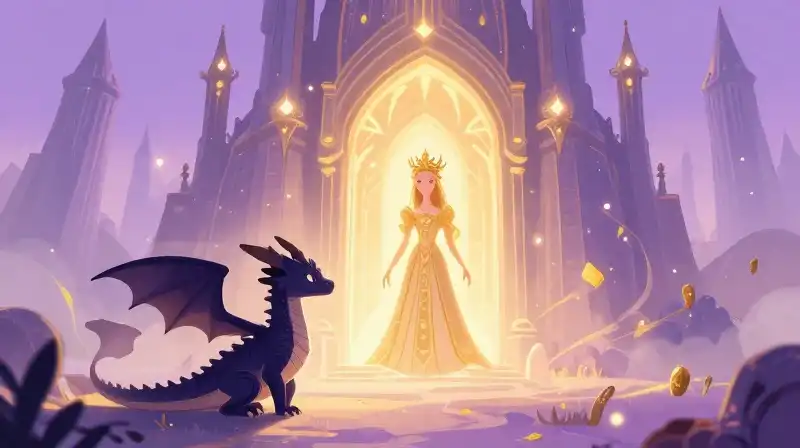 The plot structure of “The Lost Dragon” skillfully utilizes the concept of the quest—a narrative device that can be both adventurous and profoundly soothing. The journey Drako undertakes is not one of war, but of exploration and problem-solving [1]. The climax, though a moment of dramatic relief, is ultimately one of reunion and resolution. Drako’s parent, Queen Seraphina, appears, representing established authority, safety, and a hopeful return to a powerful, magical homeland [1]. This arc is designed to be a comforting cycle: a small creature seeks safety, finds it through effort and kindness, and ultimately returns to a place of belonging [1].
Problem-Solving Through Teamwork
One of the most practical lessons in the narrative comes during the physical challenge of the journey. Drako solves a hurdle—the need to cross a chasm—by building a bridge from fallen branches and vines [1]. This concrete action is a vital narrative beat because it teaches teamwork and positive problem-solving without invoking danger. The solution is built through cooperation with the world around him [1].
The Symbolic Weight: Guidance and Connection
In “The Lost Dragon,” magic is not defined by spells and blasts, but by objects and emotions. The most potent symbol is the “Dragon’s Heart Crystal” [1]. This glowing artifact represents several deeply comforting themes:
- Guidance: It acts as a beacon, helping the lost creature navigate the mysterious forest [1].
- Everlasting Connection: It symbolizes the enduring bond between the dragon and its home and family [1].
- Memory of Courage: It serves as a living reminder of a brave act, even in a small creature like Drako [1].
Furthermore, the human character, Liam (the young boy involved in the quest), is used to validate the virtues that parents want to instill. He is described as a brave knight with a kind heart and a courageous spirit [1]. This pairing of Drako (vulnerability requiring kindness) and Liam (kindness enabling a journey) provides a perfect mirror for children to understand that true strength lies in both grit and empathy [1].
A Bedtime Guide: Applying the Lesson of Kindness
For educators and parents, “The Lost Dragon” is a powerful tool for fostering emotional intelligence without being heavy or preachy. The core lessons—friendship, empathy, and perseverance—are delivered through experience rather than instruction. The narrative structure, utilizing the quest to lead to a peaceful reunion, lends itself perfectly to a soothing bedtime routine. The “promise to return” upon his homecoming reinforces a crucial concept for young minds: hopeful continuity. Even when something feels lost or distant, there is always a possibility of a warm return [1]. Here is how to use the tale to deepen your discussion with young listeners:
- Focus on Vulnerability, Not Ferocity: When discussing Drako, gently guide children to focus on his smallness and his need for help. This shifts the focus from “what the dragon might do” to “what the dragon is feeling,” encouraging empathy [1].
- Highlight Active Kindness: Rather than simply saying “be nice,” point out the specific actions: the family of friendly fairies, the act of building the bridge with kindness [1].
- Discuss the Meaning of the Light: Use the Dragon’s Heart Crystal as a way to discuss guidance. It is the glowing memory of a good deed, teaching that even small acts can have long-lasting, warm effects [1].
Resolving the “Lost Dragon” Search Intent
The central curiosity behind searching for a “Lost Dragon” bedtime story is the search for narrative safety—a story that is adventurous enough to captivate, but gentle enough to invite slumber. This tale succeeds by refusing to treat the dragon as an object of fear. Drako’s small stature, his shimmering green beauty, and his ultimate journey based on a need for connection rather than conflict, make him a perfect anchor for a soothing evening story. This narrative does not offer shallow clickbait; it offers a genuinely illuminating exploration of how kindness, problem-solving, and hope can guide even the most vulnerable creature back to where he belongs [1].
Sources
- The Lost Dragon — readthetale.com
Related Articles