Unicorn Bedtime Stories: Exploring Magic, Family, and Virtue

Introduction
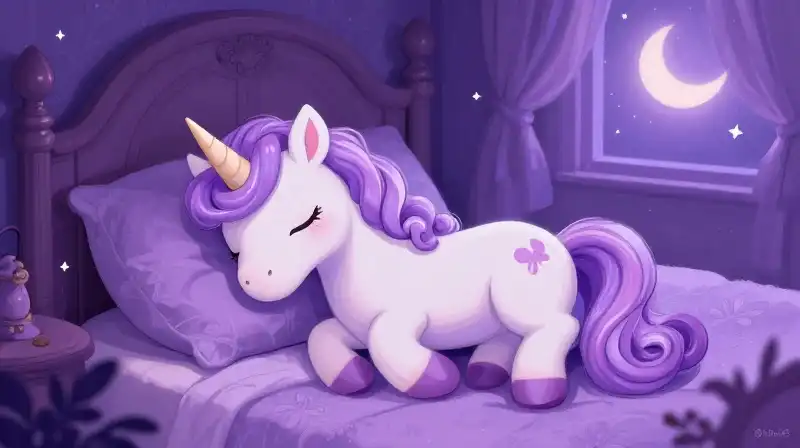
In the quiet hour when the moon climbs high and the world settles into a gentle hush, children often seek out the comforting chaos of pure imagination. Few elements capture this longing for the sublime quite like the unicorn. More than just a beautiful, horned equine, the unicorn stands as a powerful symbol of the impossible made possible—a gentle promise that wonder exists even in the deepest corners of the night.
When exploring unicorn bedtime stories, we are not just browsing a list of tales; we are tapping into a rich subgenre where the concepts of “Magic,” “Unicorn,” and “Sleep and Bedtime” converge to create a perfect narrative balm [1]. These stories invite young hearts into realms where flying is a natural state and true courage can often be found in the quiet strength of kindness. For parents, educators, and story lovers, diving into these narratives offers a chance to understand the deep visual motifs, the essential moral structures, and the subtle emotional arcs that make these ancient myths so soothing, and so profoundly meaningful.
Unlocking the Symbols: Why the Unicorn Works at Bedtime
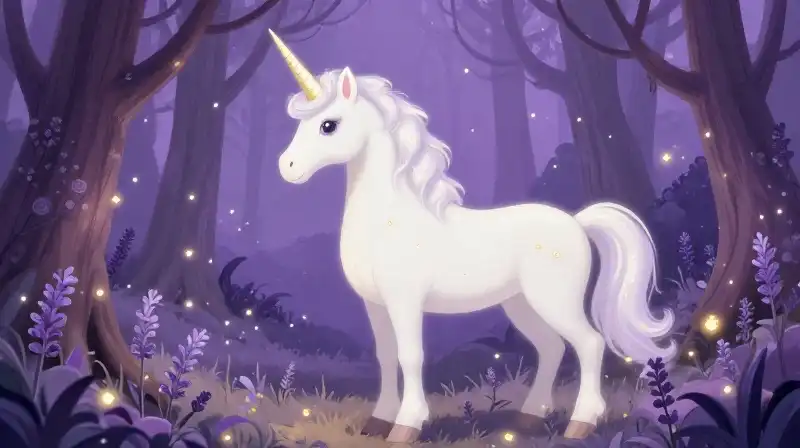
The primary appeal of the unicorn in a story context is its inherent ability to represent the pinnacle of childhood ideals: purity, grace, and untouchable magic. These elements are particularly effective for the bedtime ritual, where the goal is often to soothe the anxieties of the day by introducing a sense of safety and enchantment [1]. Unicorn stories lean heavily into themes of wonder and the belief in the impossible, offering a quiet space for children to dream of mystical existence [1].
At its heart, the unicorn serves as a moral barometer within the narrative. Its purity is often juxtaposed against the encroachment of darker elements. For instance, in tales like the one featuring Euno, the unicorn’s innate goodness is challenged by “wicked men trying to capture the unicorn for profit” [2]. This dynamic provides an essential but gentle moral framework, allowing early readers to clearly delineate the concept of good versus evil without resorting to frightening stakes that might undermine sleep. The clear focus on virtue makes the tales a reliable source of emotional comfort.
The Architecture of Safety: Worldbuilding and Setting
The settings in these tales are rarely mundane; they are vividly realized worlds that engage the child’s imagination and provide a psychological sense of security. One recurring and profoundly effective worldbuilding element is the “magical castle glistening in golden light” [2]. This place functions as a powerful visual and emotional anchor. It is more than just a backdrop—it is a sanctuary. Following moments of danger, like the hunt for the unicorn, the castle represents family, belonging, and the steadfast safety of home [2].
The immersive atmosphere is further amplified by specific sensory details. When a unicorn descends into a place of “very bright light,” as seen in tales like Euno’s journey, the visual contrast creates an immediate sense of awe and enchantment [2]. This strong visual palette—gold, brilliant light, shimmering landscapes—is not just aesthetic; it is a tool for immersion, creating the enchanting environment required for effective, calming storytelling [2].
Character Deep Dive: The Guardians and the Gentlemen
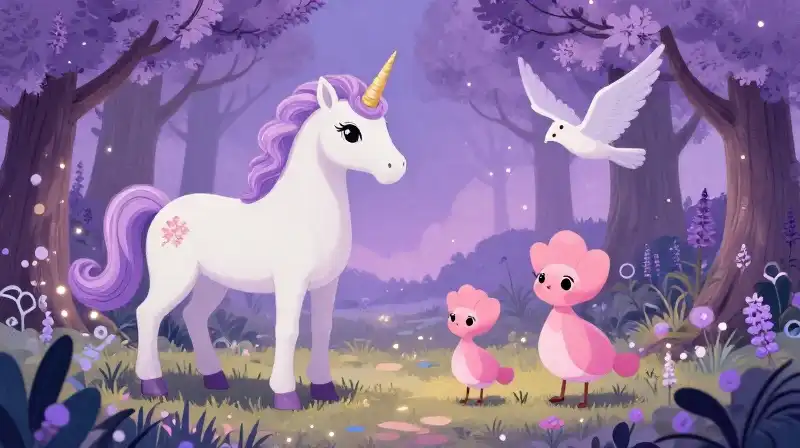
Unicorn stories are as much about the supporting cast as they are about the magical central figure. These secondary characters embody key virtues—friendship, loyalty, and wit—proving that even the most extraordinary beings rely on the common strengths of those who help them.
The Heart of the Story: Key Figures
- Euno (The Pure Symbol): Euno represents the idealized, untainted spirit. He is portrayed as a magnificent magical being with the noble ability to fly very high and far [2]. His journey is often centered on preserving his inherent magic and seeking the comfort of his familial origins.
- Poppy and Isotopia (The Force of Virtue): These characters exemplify the power of human (or non-magical) connection and resourcefulness. They are the practical agents of kindness, working to ensure Euno’s safety and escape from hunters through clever planning, such as adding a sleeping potion to food [2]. Their presence assures children that cooperation and intellect can overcome power.
- The Wicked Men (The Shadow): While these characters provide the conflict, their role is usually confined to representing greedy external threats. By pitting the pure unicorn against “wicked men” motivated by profit, the tales reinforce a simple, straightforward moral structure suitable for young minds [2].
Moral Arc and Emotional Growth in Myth
The emotional core of these narratives is centered on the resilience found in kindness and the deep-seated comfort of family. The story of Euno’s arc, for example, is defined by the journey from peril to restoration. The ultimate emotional reward is the reunion of the unicorn with his mother and father [2]. This resolution emphasizes a fundamental truth for children: the enduring value of belonging and the safety found within family bonds.
The narrative structure often moves through a classic rescue motif. The non-magical characters use “clever plans” to save the creature, demonstrating that bravery is not always about wielding a sword; it can be about strategic thinking, compassion, and clever aid [2]. This subtle lesson in active empathy is deeply engaging and highly age-appropriate. Furthermore, the strong visual imagery, like the unicorn descending into the “very bright light,” provides a sensory experience that is both beautiful and reassuring, effectively setting a tone of tranquil resolution for a bedtime reading [2].
Choosing Your Unicorn Tale: An Age and Theme Guide
Selecting a story for a young child is as crucial as the reading itself. Because the “Unicorn” subgenre is expansive, story libraries offer content spanning wide developmental ranges, from “Age 0-3” up to “Age 7-12” [1]. Here is a simple guide to matching the narrative complexity to your child’s stage of understanding:
- The Comfort Reader (Age 0-3): Look for tales that focus purely on the visual spectacle and gentle movement of the unicorn. The primary theme should be wonder, safety, and bright, uncomplicated images—like a shiny castle in golden light [2]. These stories provide the initial, soothing sense of magic.
- The Virtue Explorer (Age 4-6): At this age, children are ready for clear conflicts and simple lessons. Stories focusing on Euno vs. the wicked men work perfectly here, highlighting the clear difference between kindness and greed [2]. The emphasis is on the moral choices of the characters.
- The Empathic Investigator (Age 7-12): Older children thrive on internal character dynamics and complex worldbuilding. Tales that focus heavily on the rescue mission, the clever planning of Poppy and Isotopia, and the symbolism of the magical castle as a safe haven provide rich material for discussion about teamwork and loyalty [2].
Unicorn stories offer something for everyone—a gentle, powerful lesson wrapped in shimmering gold. They teach that courage can come from a quiet heart, that home is the greatest treasure, and that even in the shadows of wicked threats, pure magic and steadfast friendship can always prevail.
Sources
- Unicorns | Bedtime Stories — storyberries.com
- The Unicorn and His Friends — shortkidstories.com
Related Articles