
Dahls Little Red Riding Hood: When The Wolf Meets Resistance

Introduction
In the vast library of classic childhood tales, some stories feel timeless, while others feel utterly rebellious. Roald Dahl’s “Little Red Riding Hood and the Wolf” is the latter—a dark, comic, and fiercely modern subversion of a story that traditionally concludes with a moral lesson about caution. This 1982 poem, explicitly derived from his controversial collection *Revolting Rhymes* [1], invites us to set aside the classic imagery of the docile hunter and the sweetly oblivious girl. Instead, we are greeted by a tale of radical agency, where the supposed victim becomes the one holding the power, and the predator finds himself facing a reckoning far sharper than any traditional resolution allows.
The Clash of Class: Subversion and Resistance
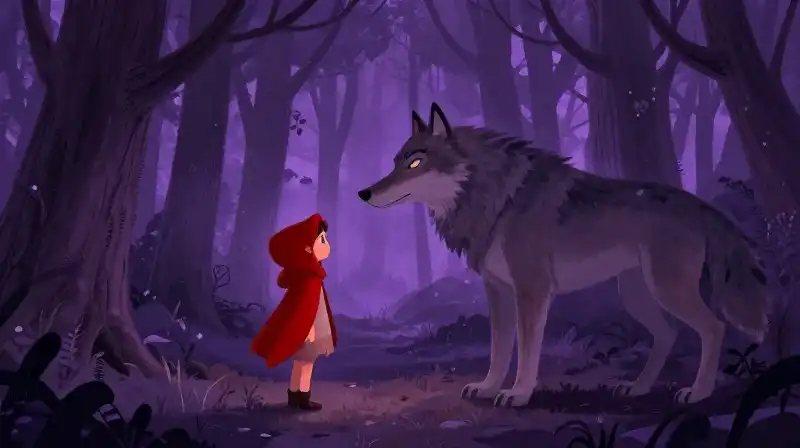 Before we delve into the characters, it is essential to understand the story’s thematic root. Roald Dahl’s inspiration for twisting such power dynamics stemmed from his own real-life observation of older people abusing children at school [1]. This personal friction against institutional or adult power is the driving engine of his retellings. In “Little Red Riding Hood and the Wolf,” this theme reaches its dramatic peak through the subversion of the final encounter with the predator.
The Traditional Trap vs. The Poetic Payload
In the traditional folk tales, Red Riding Hood’s vulnerability allows the Wolf to execute his plot. In the poem, however, the narrative quickly shifts. Red Riding Hood’s encounter with the Wolf is not one of innocent trust but of escalating confrontation. The traditional, soft warning is replaced by violent, direct action. The climax is famously sudden and brutally efficient: Red Riding Hood “whips a pistol from her knickers” and executes the wolf [2]. This act fundamentally changes the tale from a cautionary fable into a story of armed resistance.
Character Deep Dive: Little Miss Red Riding Hood (The Agitator)
Red Riding Hood in this version is not merely a “Little Girl”; she is a proto-feminist agent of change. Her decision to respond to a monstrous threat with lethal force is not a rash act of madness but a reclamation of agency. The poem illustrates her shift through both her actions and her ultimate metamorphosis.
From Innocence to Icon
The most striking element of her transformation occurs in the poem’s conclusion. After the confrontation, Red Riding Hood abandons the gentle symbolism of her signature red cloak and instead dons a “furry wolfskin coat” [2]. This detail is profoundly significant. It suggests that she has successfully transcended the narrative dichotomy of victim versus predator. By adopting the beast’s status and strength, she has taken control of the very power that sought to devour her, symbolically claiming the beast’s territory and authority [2].
Character Deep Dive: The Wolf (The Frustrated Monster)
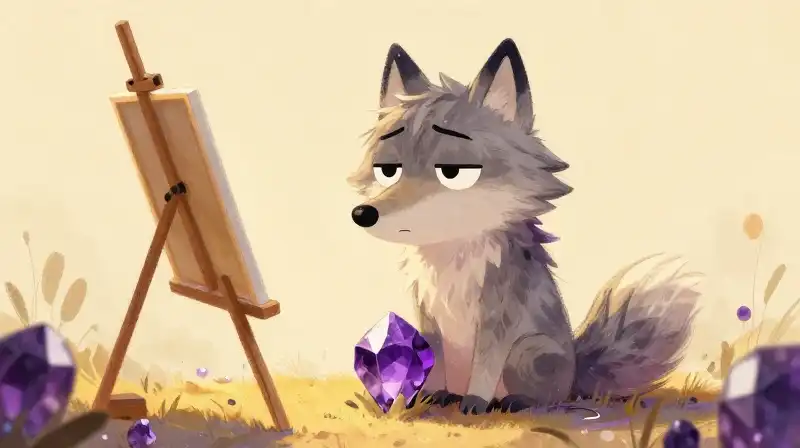 The Wolf in *Revolting Rhymes* is a complex, almost pathetic antagonist. He is not a noble, gothic beast, but a ravenous, frustrated villain whose desires are constantly thwarted by the world—and by Red herself.
The Demands of the Glutton
The Wolf functions as a figure of unending appetite and unchecked entitlement. His hunger is immediate and absolute, evidenced by his consumption of Grandma “in one big bite” [2]. However, his villainy is rooted in his need for control and a second chance at dominance. He relentlessly tests Red Riding Hood with sharp, descriptive dialogue, asking if she “forgot To tell me what BIG TEETH I’ve got?” [2]. This questioning is less a genuine inquiry and more a dramatic taunt, a desperate attempt to assert traditional predator dominance over her. When Red subverts him with the pistol, the wolf is not merely defeated; he is rendered irrelevant by a force—modern firepower—that he could never anticipate.
Thematic Analysis: More Than Just a Red Cloak
The “Little Red Riding Hood” keyword often leads to simple summaries. However, the true narrative power of Dahl’s version lies in its exploration of power structures.
Stories That Teach Strength
Dahl’s central message in this tale is about the necessity of standing up to superior forces. He positioned his retellings specifically to inspire children to “stand up to those more powerful than they are” [1]. This is not just a story about violence; it is a potent literary statement on resistance. The Wolf represents the established, dominant, and corrupt power (the Big Guy, the Older Man, the Threat), while Red represents the necessary resistance that refuses to be consumed.
Is Little Red Riding Hood Roald Dahl?
This is a common question for researchers and students of children’s literature. While the name “Little Red Riding Hood” is a global archetype rooted in older European folklore (like the version by Charles Perrault or the Brothers Grimm), this specific, highly charged version that concludes with armed combat is a creation of Roald Dahl [1]. The poem “Little Red Riding Hood and the Wolf” (1982) is an intentional departure from the source material, deliberately created to challenge expectations. It is Dahl taking a well-known figure and giving her a radical, modern, and fiercely independent voice.
The Resilience of the Tale
The poem’s creation, copyrighted by The Roald Dahl Story Company Limited (1982) [1], marks it as a modern commentary on classic forms. By providing a tale that is both darkly comic and intensely empowering, Dahl offers parents and educators something truly special. Rather than offering a sanitized list of dangers to avoid, he offers a character who possesses the will and the means to defeat danger. Red Riding Hood is not the girl who is rescued; she is the girl who demands her own rescue, establishing a new precedent for strength and resistance in children’s literature.
Sources
- Poetry By Heart | Little Red Riding Hood and the Wolf — poetrybyheart.org.uk
- Little Red Riding Hood and the Wolf — childrens.poetryarchive.org
Frequently Asked Questions
Is Little Red Riding Hood Roald Dahl?
While the name 'Little Red Riding Hood' is an archetype rooted in older European folklore, the specific version concluding with armed combat is a creation of Roald Dahl. His 1982 poem, 'Little Red Riding Hood and the Wolf,' was an intentional departure from the original source material. Dahl developed this version to give the well-known figure a radical, modern, and fiercely independent voice.
Related Articles