

Oscar Wilde Fairy Tales: The Lessons of Sacrifice and Wisdom


Introduction
Oscar Wilde’s *The Happy Prince and Other Tales*, a collection first published in 1888, is far more than a set of decorative children’s bedtime stories. These tales possess a rich, complex moral architecture, disguised beneath the beautiful, sometimes melancholic veneer of Victorian fairytales. While some might see them merely as whimsical narratives of a statue or a demanding giant, a deeper look reveals a profound exploration of the human heart, the true cost of selfishness, and the ultimate triumph of quiet, sacrificial love. If you are looking for a collection that doesn’t just entertain but genuinely illuminates character and theme, Wilde’s work offers a window into a moral universe where beauty and suffering are inextricably linked.
The Central Heart: Sacrifice as the Ultimate Virtue
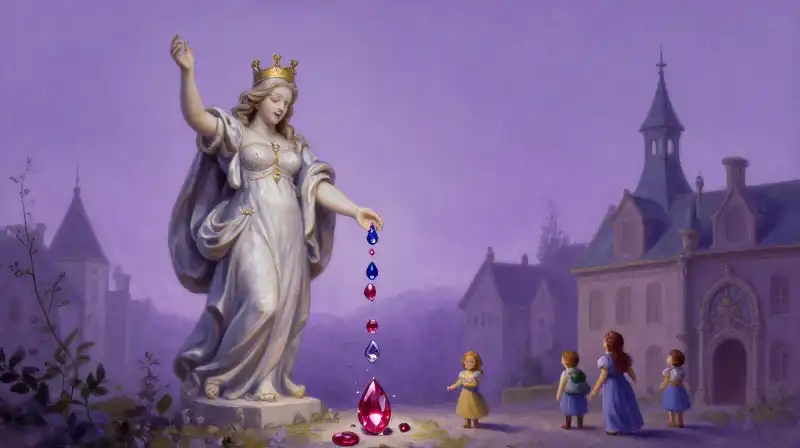 The most resonant theme running through the collection is the power and necessity of selfless giving. Wilde consistently contrasts the superficial beauty of outward appearances with the enduring, meaningful value of internal compassion. This theme reaches its zenith in “The Happy Prince.” In this tale, the Happy Prince is initially defined by his physical splendor—the ruby, the sapphires, and the gold leaf that make him so renowned. However, his true character is revealed only when he sees the suffering in the town. His decision to shed these precious, beautiful adornments onto the impoverished people who need them transforms him from a glorious monument into a vessel of grace. This journey culminates in his ultimate sacrifice: the acceptance of his own end, symbolized by a dying “lead heart.” The fact that he dies with a “lead heart” while wrapped in a broken heart given to a celestial angel highlights that the highest form of life is often found in the act of pouring oneself out for another [1]. Across the other tales, this moral logic is mirrored. In “The Selfish Giant,” the Giant’s initial resistance to sharing his beautiful, fenced garden results in a state of “perpetual winter” [1]. The barrier he places between himself and the children serves as a metaphor for emotional isolation. It is only when he breaks down this wall and accepts the humanity and joy offered by the children—and ultimately recognizes the Christ Child among them—that life and warmth return to his world [1].
Characters and the Cost of Vanity
Wilde uses his characters as detailed studies in motivation and the devastating consequences of choices—especially the choice to be selfish. Understanding these characters helps children (and parents) navigate complex moral landscapes.
The Cost of Selfishness
Some tales function as clear, gentle warnings, while others offer more biting satire. * The Selfish Giant: This tale is perhaps the clearest lesson for younger readers. It shows that even immense physical wealth or beautiful surroundings are useless if they are guarded and separated from connection. The Giant’s downfall is not a punishment, but a gradual, necessary awakening to the necessity of community and love [1]. * The Devoted Friend: This story serves as a tragic exploration of friendship built on conditions. Hans, the miller’s son, embodies the ideal of unconditional care when he nurtures the devotions of his friend. The tragic irony in the story lies in the fact that the miller’s fundamental unwillingness to share or help fundamentally compromises the entire relationship, leading to a painful and destructive ending for both characters [1]. * The Remarkable Rocket: This tale takes on a satirical edge, mocking the dangers of excessive vanity and self-importance. The Rocket is a classic example of a “pompous” character who denigrates everyone else until his own extreme self-regard causes him to burst into tears. His ultimate fate—being used as common fuel for a campfire—is a surprisingly harsh, yet instructive, fate for a character who so belittled others [1].
Critiquing Materialism
The story “The Nightingale and the Rose” provides a powerful critique of an era obsessed with status and material wealth. The protagonist’s sacrifice for true love is heartbreaking, yet the commentary is sharp. Her efforts are ultimately mocked by her daughter, who dismisses the woman’s profound gesture because “jewels cost far more than flowers” [1]. This tale brilliantly uses the contrast between the ephemeral beauty of a flower and the perceived, hollow value of gold to ask what truly constitutes worth in life.
Why Oscar Wilde Wrote Fairy Tales: Social Commentary and Moral Development
 To address the question, “Why did Oscar Wilde write fairy tales?”, one must look beyond mere entertainment. Wilde was not writing simple bedtime stories; he was crafting sophisticated allegories for his Victorian contemporaries, even while writing material meant for a younger audience. His stories address the societal pressures of the 19th century, using fantastical settings to explore adult moral dilemmas: 1. Challenging Social Judgment: The decision of the people to tear down the Happy Prince, because his once-regal appearance has become “shabby,” is a direct commentary on society’s obsession with status and surface appearance [1, 2]. The people, who initially scorn the statue, are the ones who ultimately must accept its final, sacrificial state. 2. The Power of the Inner Life: Wilde suggests that true nobility resides not in inherited wealth or appearance but in deeds. The emotional climax of the Happy Prince—the Angel taking the broken lead heart and the dead swallow to live forever—is a beautiful affirmation of the power of selfless acts, regardless of the earthly consequence [1]. 3. Creating a Space for Imagination: For children, the tales offer a contained world where abstract concepts like mercy, sacrifice, and integrity can be visualized through concrete imagery—the contrasting settings of “his palace where sorrow was not allowed to enter” versus the “town full of suffering poor people” [1]. This allows children to engage with deep philosophical questions in a way that is accessible and visually arresting.
A Child’s Guide to Oscar Wilde’s Most Famous Short Stories
For readers looking for a specific tale, or wondering “What are Oscar Wilde’s most famous short stories?”, the following list provides a curated selection based on their thematic depth and emotional impact.
The Essential Tales for Bedtime
The best tales to choose depend on whether you are aiming for a soothing meditation or a sharp moral lesson.
- The Happy Prince: This is arguably the most famous tale and is perfect for stimulating discussion after bedtime. The story’s gradual decline—from glittering gold to a broken lead heart—provides a powerful, gentle example of how giving one’s beauty leads to true spiritual wealth [1].
- The Selfish Giant: Ideal for older children (7+) who are ready to understand redemption and forgiveness. The story’s “perpetual winter” and subsequent rebirth offers a powerful lesson that love is a necessary prerequisite for life and joy [1].
- The Devoted Friend: Excellent for exploring the nuances of loyalty and mutual respect. It gently teaches that even the most sincere devotion requires a balanced exchange and shared empathy to remain healthy [1].
Sensory Landscapes: Colors, Imagery, and Atmosphere
Wilde is a master of concrete sensory details, using color and setting not just as background, but as symbols of moral states.
The Palette of Transformation
| Color / Detail | Associated Tale | Symbolism & Meaning | | :--- | :--- | :--- | | The Rubies & Sapphires | The Happy Prince | The initial outward wealth and perceived beauty; the things society values. | | Lead / Tarnished Metal | The Happy Prince | Inner emptiness or a hardened, uncaring heart; the consequence of superficiality. | | Perpetual Winter/Frost | The Selfish Giant | Isolation, stagnation, and emotional barrenness resulting from refusing connection. | | Primroses & Delicate Flowers | The Devoted Friend | The fragile, living beauty of unconditional care and human connection. | | “City of Gold” & “Garden of Paradise” | The Happy Prince | The ultimate reward of selflessness, representing eternal spiritual peace and celestial joy [1]. | Wilde expertly employs these contrasting visual elements. Consider the shift in “The Happy Prince,” where the “palace where sorrow was not allowed to enter” is described in sharp contrast to the “town full of suffering poor people” [1]. This juxtaposition isn’t just a setting change; it’s a moral confrontation.
Synthesis: Why These Tales Matter Today
*The Happy Prince and Other Tales* end not with a simple happy ending, but with a profound, earned peace. Wilde shows us that wisdom is found in looking past the shiny surface—past the ruby and the polished gold—to see the beating heart beneath. These stories offer more than simply a “list” of morals; they offer a complex mirror for the reader to reflect upon their own values. They encourage the child to recognize the profound strength in a broken heart and the lasting power of a simple, honest kindness. In a world constantly urging us to value what we can see, Wilde reminds us that the greatest value is found in what we can sacrifice.
Sources
- The Happy Prince and Other Tales — en.wikipedia.org
- The Happy Prince, and Other Tales by Oscar Wilde — gutenberg.org
Frequently Asked Questions
Why did Oscar Wilde write fairy tales?
Wilde was not writing simple bedtime stories, but rather crafting sophisticated allegories for his Victorian contemporaries. His stories address the societal pressures of the 19th century by exploring complex adult moral dilemmas and challenging the obsession with surface appearance.
What are Oscar Wilde's most famous short stories?
The article provides a curated selection of tales based on their thematic depth and emotional impact, including The Happy Prince, The Selfish Giant, and The Devoted Friend. The Happy Prince is specifically mentioned as arguably the most famous tale in the collection.
Related Articles