
The Ugly Duckling: The Power of Finding Your True Self

Introduction
Every storybook holds a mirror to some aspect of the human experience. Some mirrors reflect bravery, some reflect courage, and some reflect the sting of not being seen. Hans Christian Andersen’s 1843 tale, *The Ugly Duckling*, is perhaps one of the most profound examples of the latter. It is not merely a whimsical tale of a bird who grows taller and finer; it is a deeply felt meditation on the profound pain of social exclusion and the resilience required to find one’s authentic self.
The duckling’s journey is a roadmap for every child, and parent, who has ever felt too large, too different, or too misunderstood. From the initial confusion in a muddy farmyard to the majestic realization of belonging among the swans, the tale explores a vital, painful theme: that true worth is not dictated by superficial judgment. For those looking for a story to share at bedtime that is both beautifully evocative and genuinely meaningful—a story that allows a child to feel the weight of misjudgment and the sheer relief of being truly recognized—the Ugly Duckling offers a complex, rich emotional landscape.
The Weight of the Farmyard: An Analysis of Rejection
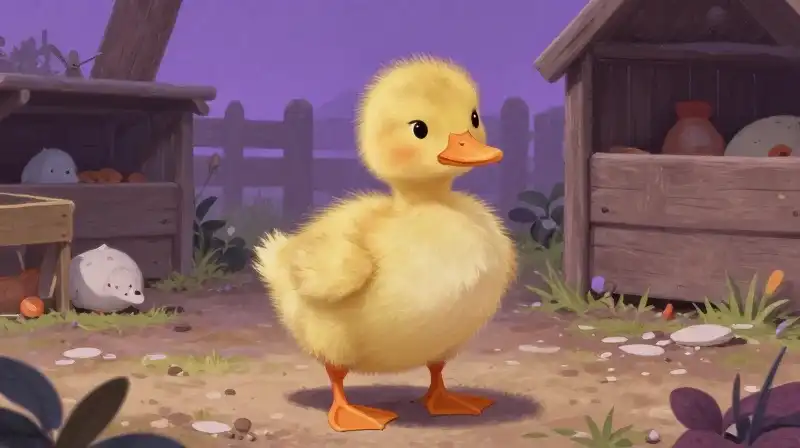
The initial setting of the farm represents the world of immediate, recognizable norms. Here, beauty and fitness are judged by the standards of the mundane, and the duckling immediately fails to meet them. The story begins not with a grand threat, but with quiet, persistent social friction. The young duckling is constantly criticized for being too large and too awkward, a trait that leads to his mother’s initial dismissal of his existence [1].
The Language of Dismissal
Perhaps the most poignant moment of early rejection comes when the mother duck, after the hatching of her other chicks, looks at the oversized egg and asserts, “It is a drake, and therefore not of so much consequence” [1]. This line is not just a biological categorization; it is a perfect illustration of superficial judgment. By immediately reducing the duckling to a male who is of “no consequence,” the story establishes a motif of social exclusion. The duckling’s suffering is relentless, involving physical harm—being bitten and kicked by a girl—and the constant whispering of inferiority from his own family [1].
This rejection is mirrored when the duckling seeks acceptance from wild ducks. They dismiss him entirely, noting that his appearance “will not matter if you do not want to marry one of our family” [1, 2]. This moment is crucial, as it proves that the duckling’s struggle is not merely a misunderstanding by his peers; it is a systemic pressure for conformity—a pressure to be “in the box” or to be conventionally beautiful to be accepted by the group [1, 2].
The Journey as Transformation: From Mundane to Majestic
Driven away from the familiar comforts of the farm, the duckling embarks on a journey across the moors. This migration serves as more than just a geographical movement; it is a narrative transition, a passage out of the world that no longer recognizes his inherent value. The open, wild landscape becomes a space of radical possibility, stripping away the tight social constraints of the farm.
The Harbinger of Change: The Wild Geese
One might expect the wilderness to be a cruel, indifferent place. Instead, it offers unexpected kindness. While initially facing ridicule from wild ducks, the duckling encounters wild geese, who offer a surprising form of acceptance. They tell him, “you are so ugly, that we like you very well,” granting him a chance to be a “bird of passage” [1].
These geese function as potent narrative harbingers. They are the first creatures to see past the perceived flaw—the “ugly” exterior—and see something new and promising. This encounter shifts the duckling’s focus from seeking validation from conventional beauty to seeking genuine acceptance and a new identity [1]. Interestingly, the description of the two wild geese falling dead on the moor is a moment of high-action drama, further surrounded by the figures of sportsmen and gunfire [1]. This vivid scene contrasts with the quiet, internal struggle the duckling has endured, providing a sharp, momentary break in the story’s emotional rhythm.
Internal Beauty vs. External Perfection
The true crux of the duckling’s arc lies in the central conflict of mistaken identity. The duckling spends his formative months living in a world where he is defined by what he is not—he is the wrong color, the wrong size, the wrong type of bird. Yet, his inherent goodness and capacity for excellence—it is noted he “has a very good disposition, and swims as well or even better than the others” [1]—are constant undertones of his nature. He is intrinsically good, even if he does not look the part.
This theme suggests that external perfection is a poor measure of worth. The tale champions the idea of “the unseen soul,” where what resides inside—kindness, resilience, and potential—is far more important than the coat one is born into. The realization of his true form is not merely a physical change; it is a psychological one, a realization that his past suffering was a prologue to his authentic self [3].
Comparing Tale Versions: Andersen vs. Cinematic Interpretation
It is important for parents and educators to recognize how *The Ugly Duckling* has been adapted over time, as different versions emphasize different emotional registers. The full, 1843 original text by Hans Christian Andersen is a deeply dramatic and sustained account of suffering [3]. The transformation is earned through a period of protracted hardship.
| Feature | Andersen’s Original Tale | Popular Cinematic Versions (e.g., Disney, 1939) |
|---|---|---|
| Duration of Suffering | Protracted; defined by a long period of consistent rejection and wandering [1]. | Drastically shortened; ordeal often compressed to just a few minutes [3]. |
| Thematic Focus | Social commentary, existential angst, and the arduous path to self-discovery [3]. | Faster resolution, focusing on the sweetness of eventual transformation and acceptance. |
| Tone | Complex, deeply melancholic, and highly symbolic of inner potential. | Warmer, more sentimental, and focused on visual spectacle. |
The original text uses suffering as a literary device to elevate the final triumph. To understand the depth of the duckling’s eventual joy, one must appreciate the years of neglect and torment he endures [1]. The shortening of the ordeal in other versions can sometimes strip the story of its vital commentary on prejudice, turning a profound lesson about perseverance into a simple lesson about growth.
The Anatomy of the Swan: Symbolism and Potential
The swans represent not just a different species of bird, but a specific state of grace and inherent nobility. The moment the duckling reaches maturity and recognizes himself in the flock of swans is the moment the metaphor crystallizes. The transformation into the swan symbolizes two things simultaneously: the uncovering of inner beauty and the validation of secret potential [3].
Some scholars suggest this rich symbolism was influenced by biographical speculation regarding Andersen himself, who was a tall, “ugly” boy with a prominent nose—a man who likely navigated his own world of “misunderstood” physical form [3]. This adds a layer of resonance, suggesting that the duckling is not just an animal character, but a proxy for any person who has felt the weight of being judged by appearances.
Pondering the Questions: Why do I feel this way?
When a child or parent asks questions like “Why does the duckling feel so bad?” or “What does the suffering mean?”, the answer lies in the tale’s potent commentary on superficiality. The duckling’s pain is the natural consequence of a world prioritizing conformity over character [1].
What does the story teach about appearance?
The most immediate lesson is that physical appearance is fleeting and arbitrary. It is a narrative critique of judging others by a single glance. The duckling, who was judged purely on his awkward, youthful form, eventually asserts his identity based on his inherent nature and grace, regardless of his original shell [1].
How does the wild environment help the duckling?
The wild moor and the subsequent meeting with the geese act as a necessary catalyst. They are a sanctuary, offering a reprieve from the suffocating social expectations of the farm. The wilderness provides the space for the protagonist to shed his identity as the “ugly farm chick” and begin adopting the “true self” before he even knows what that self looks like [1].
Finding Comfort and Clarity: A Parent’s Guide
For parents and educators, *The Ugly Duckling* is a rich text, but its raw depiction of prolonged suffering requires thoughtful guidance. It is not a story to be told superficially, nor is it appropriate for the very youngest listeners without a framework for the themes.
-
The Lesson for Resilience (Ages 6-10+): Focus on the duckling’s ability to keep swimming and moving forward despite the insults. The key is not the ending, but the persistence through the rejection. Use the duckling’s journey as a discussion on emotional endurance.
-
The Lesson of Inherent Worth (All Ages): Reinforce the fact that the duckling was always, at his core, good (having a “very good disposition”) [1]. The external change (becoming a swan) is merely a reflection of his internal truth finally being recognized.
-
Processing the Hardship (Guidance for Younger Kids): When reading the parts involving the biting or the mother’s dismissive words, pause. Validate that the feelings of rejection are painful, but frame the world of the story as “different” or “changing,” rather than the duckling being truly worthless. The change is always a positive path toward acceptance.
The Enduring Resonance of Self-Discovery
Ultimately, Hans Christian Andersen’s *The Ugly Duckling* remains one of the most vital stories in children’s literature because its message is universal, transcending the world of fowl and ponds. It is a quiet, powerful assertion that belonging is not something you earn by fitting in; it is something you recognize when you finally cease trying to fit in and simply embrace who you are. The beauty of the swan is merely the final, graceful expression of the potential that was always there, waiting for the suffering to pass and the truth to emerge. This tale gives children permission to be wonderfully, awkwardly themselves while they grow.
Sources
- Hans Christian Andersen: The Ugly Duckling — hca.gilead.org.il
- The Ugly Duckling by Hans Christian Andersen | Full Text — americanliterature.com
- The Ugly Duckling — en.wikipedia.org
Related Articles