The Mermaid of the North: A Tale of Maternal Love and Finding Home


Introduction
Some characters in children’s stories are just faces; others are deeply rooted in the very soil and tides of the world they inhabit. The Mermaid of the North, standing 10 to 11 feet tall against the rugged coast of Balintore, Scotland, is far more than just a magnificent statue. She is a powerful piece of world-building—a physical embodiment of Scottish heritage and a profound whisper of maternal love carried on the sea breeze [1, 2, 3]. Located dramatically upon ‘Clach Dubh,’ or the black rock of the Gaelic language, this mythical figure invites us not just to look, but to listen to a timeless tale of identity, captivity, and the fierce loyalty of a mother’s heart.
The Geography of the Myth: Balintore and Clach Dubh
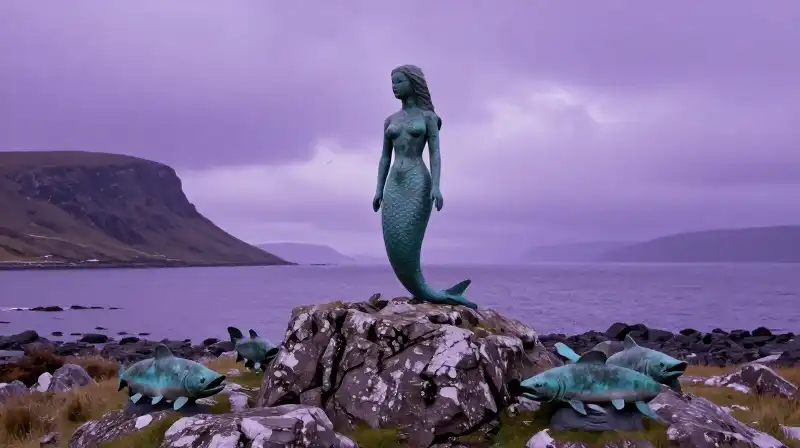
To understand this mermaid, one must first understand her stage. The statue sits prominently on Clach Dubh in Balintore, positioned as a centerpiece within the wider Seaboard Sculpture Trail [1, 3]. This placement is crucial; it links the mythical creature directly to the natural, weathered beauty of the Scottish Highlands. She is flanked by other elemental artworks, such as giant bronze salmon and slate monuments, creating a powerful collection that celebrates local themes including Folklore, Faith, Fortitude, and the Four Corners of the World [1, 2, 3]. The Mermaid of the North serves as a guardian figure, bridging the gap between the ancient legends of the Gaelic coast and contemporary artistry [1, 3].
From Concept to Bronze: A Story of Preservation
The origins of this powerful imagery are tied to local celebration and art. Initially sculpted in 2007 by Steve Hayward of Hilton as part of the Highland Year of Culture, the Mermaid was a vibrant creation from the outset [1, 3]. Yet, her physical journey reflects the enduring spirit of Balintore itself. Due to the fragility of her original materials—wood and resin—she sustained significant damage during a severe storm in 2012 [1, 3]. Rather than losing her powerful presence, she was brought back, recast in a durable bronze model in 2014, with support from SSE grant funding [1, 3]. This transition from a temporary piece to a permanent landmark speaks to the community’s desire to secure the tale for future generations, ensuring her story endures against the harsh elements of the sea.
A Tale of Deep Bonds: The Core Narrative of the Mermaid of the North
At the heart of every mermaid legend is the tension between the wild freedom of the ocean and the desire for human connection. The tale surrounding the Mermaid of the North follows this exact emotional arc. According to local folklore from the Balintore Peninsula, her story began when a fisherman took her and kept her as his wife, concealing her true nature by hiding her magnificent tail [3]. This captivity represents the forced separation from her home, the inherent lack of belonging that often defines mythological beings who cross the threshold between worlds.
The Promise of Return: Maternal Love as a Bridge
The narrative reaches a critical, emotional turning point with the mermaid giving birth. This act of creation marks her shift from a captive object to a powerful, autonomous mother. After the birth, the mermaid discovers her tail and the true weight of her identity. She escapes back into the sea, choosing her own fundamental nature and life [3]. However, her story is not one of complete severance. She promises to return to the shore regularly to care for her family. This is where the tale deepens into a powerful allegory of maternal duty. These regular returns are not merely visits; they are vital acts of nourishment, as she brings sustenance—specifically fish—to feed her hungry children [3].
The legend thus transforms from a simple folk tale about an elopement into a deeply moving story about responsibility. The mermaid, having found her freedom, still chooses connection through the lens of nurturing. She returns to the shore not as a prisoner, but as a devoted provider [3].
Thematic Analysis: Belonging, Freedom, and the Home Shore

For young readers and educators, the Mermaid of the North offers potent thematic material that is both accessible and sophisticated. The story is not just about magical creatures; it is about the universal human (and mythical) need to belong. The conflict is external (the fisherman’s captivity) but the resolution is internal (the mermaid choosing her own path while retaining her familial ties).
- Maternal Love: The decision to return for sustenance highlights that the most powerful bond is often not about ownership, but about providing for one’s family. The ocean represents her wild birth, but her return to the shore represents the warmth and safety of her chosen family life.
- Redefining Freedom: The mermaid’s discovery of her tail and subsequent escape symbolizes the reclamation of self. Her freedom is not absolute isolation; she achieves it by accepting who she fundamentally is while still choosing to maintain meaningful connections.
- The Power of the Threshold: The shore, Clach Dubh, represents the “threshold”—the boundary between two worlds. The mermaid’s ability to move between the deep, unknown sea and the human, nurturing land provides a rich, tangible symbol of balance and duality.
Navigating the Myth: Answering Common Story Questions
The search interest surrounding this creature often sparks broader curiosity about mythical figures. Here, we address the common questions through the lens of this particular Scottish embodiment:
What is the Mermaid of the North?
She is a tangible symbol of Scottish folklore, specifically a magnificent bronze sculpture (10ft to 11ft) situated on Clach Dubh in Balintore, which serves as a living narrative of resilience and maternal duty [1, 2, 3].
What city is called the mermaid city?
The provided lore does not identify a city specifically by that title; however, the Balintore Peninsula is the home to this notable Mermaid figure [3].
Who is the mermaid in Norse mythology?
The Mermaid of the North is unique to Scottish folklore and not tied directly to the established pantheon of Norse mythology, serving instead as a powerful local creation celebrating the Gaelic coast [1, 2, 3].
Beyond the Statue: Why This Tale Resonates at Bedtime
This tale offers a soothing blend of magic and tangible human emotion, making it perfect for children. Unlike tales focused on tragedy or epic combat, the Mermaid’s story is fundamentally about belonging. It provides a safe space for a child to explore themes of “home” without the fear of permanent loss. For parents and educators, the focus on the mermaid’s regular returns offers a gentle rhythm to a story—a reliable cycle of nurturing that can ground a child as they drift off to sleep. It is a narrative of cyclical commitment, teaching that even the wildest spirits find their purpose in connection.
Planning Your Enchantment Tour
If you wish to experience this enchantment firsthand, the Mermaid of the North is designed for easy access. It is conveniently located on the Seaboard Sculpture Trail, easily reached via a short, accessible walk from the car park at the Seaboard Centre [1, 2]. Visiting Balintore allows you to connect the imaginative depth of the tale with the stunning, authentic environment that inspired it.
The Enduring Significance of the North
The Mermaid of the North, anchored on a steadfast black rock, is a powerful testament to how local culture imbues physical space with symbolic meaning. Her tale reminds us that magic isn’t always found in faraway mythical lands, but often in the quiet, enduring bonds of family and the willingness of a spirit to navigate both captivity and freedom. She is a reminder that even when we escape the life that is forced upon us, our most fundamental drive often remains: the need to return home, to those we love, and to fulfill the deep, beautiful calling of the heart.
Sources
- Mermaid of the North — seaboardcentre.com
- Mermaid of the North - All You SHOULD Know Before Going (2026 Reviews) — tripadvisor.com
- Mermaid of the North — easterrosspeninsula.com
Frequently Asked Questions
What is the mermaid of the north?
The Mermaid of the North is a magnificent bronze sculpture, standing 10 to 11 feet tall, situated on Clach Dubh in Balintore. It serves as a tangible symbol of Scottish folklore, representing resilience and maternal duty.
What city is called the mermaid city?
The provided lore does not identify a city specifically called the 'mermaid city.' However, the Balintore Peninsula is the location where this notable Mermaid figure resides.
Who is the mermaid in Norse mythology?
The Mermaid of the North is unique to Scottish folklore and is not tied directly to the established pantheon of Norse mythology. Instead, she functions as a powerful local creation celebrating the Gaelic coast.
Related Articles