Legendary Mythical Artifact: What Powers Excalibur and the World?


Introduction
When children grow up with storybooks, they don’t just encounter plot; they encounter symbols. An ornate sword, a shimmering cloak, or a mysterious glowing stone is often more than just a prop—it is a crystallization of an entire idea: bravery, ultimate knowledge, justice, or fate itself. These legendary objects, known as mythical artifacts, serve as the conduits through which characters wield extraordinary power and through which storytellers explore the deepest questions of our world. Whether we are reading about the mighty Thor wielding Mjolnir, or Arthur drawing Excalibur from the mystical Lady of the Lake, these magical items allow the abstract concepts of governance, chaos, and protection to take a palpable, storybook form.
Symbols of Command: When an Object Bestows Rightful Authority
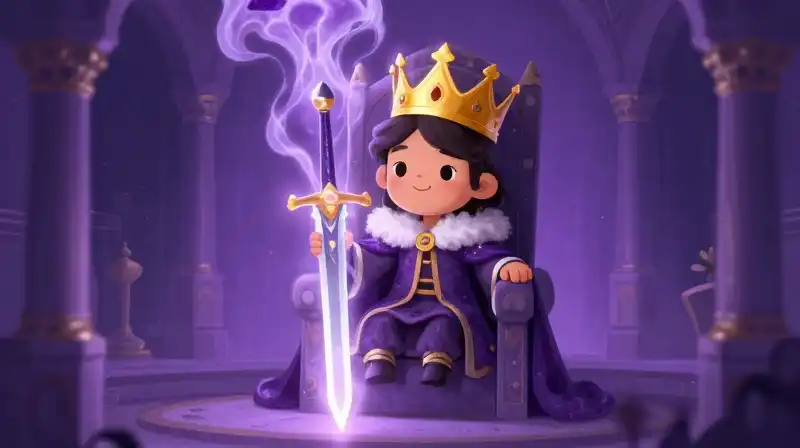 Many of the most powerful artifacts exist to solidify the relationship between a character and their status. They are not just weapons; they are titles. The quest for an artifact often mirrors the quest for a hero to fully embrace their destiny.
The Weight of Kingship: Excalibur
Excalibur is perhaps one of the most iconic examples of an object tied to rightful rule. In Arthurian legend, Excalibur serves as the ultimate symbol of kingship. The narrative doesn’s just claim Arthur is a great fighter; it posits that his right to rule is divinely or magically sanctioned, whether he receives the sword from the Lady of the Lake, or acquires it after his first blade is lost in battle [3]. The sword, therefore, represents more than just a weapon; it symbolizes a divinely ordered destiny and the burden of leadership.
Command and Connection: The Seal and the Spear
Beyond the kingship of Arthur, other items grant absolute dominion over nature or the spiritual realm. For Solomon, the Seal (or Ring of Solomon) was an artifact of profound authority, allowing him to command spirits and converse with animals [3]. Similarly, the Spear of Destiny is a potent relic, often linked in Christian folklore to significant historical claims and ancient legends of power [3]. These objects represent the pinnacle of a character’s influence over forces both physical and spiritual.
The Archetypes of Power: Classification of Mythical Artifact Functions
To appreciate these incredible treasures, it helps to categorize them by the fundamental purpose they serve in a tale. Do they protect, transform, or simply bend the rules of reality?
🛡️ Instruments of Protection and Defense
Sometimes, the greatest power isn’t in attacking, but in surviving. Defensive artifacts allow heroes to overcome overwhelming odds.
- The Aegis (Medusa’s head): This artifact grants divine protection against evil, making it a symbol of sacred defense [2]. It is an object that shifts the narrative balance from threat to safety.
- Pridwen (Wynebgwrthucher): As King Arthur’s shield, Pridwen embodies divine defense and status, signifying a warrior’s sacred bond to their king [1].
- Vidal’s Sandles: In Norse mythology, specific footwear provided the god Vidar with unparalleled foot protection, demonstrating how mundane items can grant powerful, specific physical advantages [1].
🧪 Agents of Transformation and Quest
These items drive the narrative forward, usually through the promise of a “better” self or a “better” world.
- The Philosopher’s Stone: This legendary alchemical substance is a classic narrative driver, as it represents the ultimate quest for knowledge and wealth—turning base metals into gold and granting eternal youth [3].
- The Golden Fleece: A staple in adventure tales, the Fleece is a powerful motivator, representing both wealth and the achievement of an impossible goal [3].
- Járngreipr (Iron Grippers): These gauntlets demonstrate power used through physical mastery, such as the ones used by Thor [1, 3], symbolizing strength and might.
🔮 Tools of Guidance, Control, and Chaos
Not every object seeks glory; some simply navigate the impossible or unleash the unimaginable.
- Ariadne’s Clue: The ball of string provided to Theseus was not a weapon, but a precise, navigational tool used to guide him through the overwhelming complexity of the Labyrinth [2]. It represents clarity in confusion.
- Saci’s Red Cap: In Brazilian folklore, Saci, a trickster creature, derives all his magical abilities from this specific piece of clothing [1]. This highlights how a small, specific item can be the source of a character’s entire identity and power.
- Pandora’s Box: Epitomizing unstoppable chaos, this artifact releases misfortunes and plagues into the world, serving as a powerful cautionary tale about curiosity and the price of knowing too much [2].
Comparative Artifact Catalog: From Asgard to the Nile
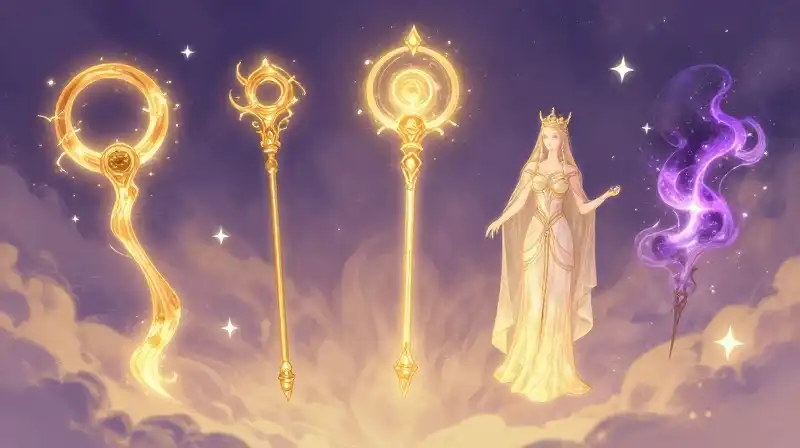 The search for the “most powerful mythical item” [User Query] reveals that power itself is defined by the culture holding the object. Here is a look at how different traditions conceptualize immense magical objects:
| Artifact | Cultural Origin | Type of Power | Narrative Function |
|---|---|---|---|
| Mjolnir | Norse | Elemental Control | Embodiment of controlled, divine power [3]. |
| Aphrodite’s Cestus | Greek | Social/Emotional Influence | Enhances beauty and creates romantic infatuation [1]. |
| Hagoromo | Japanese | Traversal/Mobility | Allows a tennin to fly, but with the caveat of needing it to return to Heaven [1]. |
| Ruyi Jingu Bang | Chinese | Physical/Scale Manipulation | A staff that shrinks to a needle yet possesses immense weight [3]. |
| Veil of Isis | Egyptian | Spiritual Concealment | Represents the inaccessibility of nature’s and spiritual truths [1]. |
Navigating the Storybook Labyrinth: What to Watch For in Artifact Tales
Understanding mythical artifacts provides parents and educators with powerful themes to discuss with children. These objects help readers grapple with complex ideas in a digestible, imaginative way.
The Symbolic Language of Objects
A recurring pattern in children’s literature is the idea that power is often temporary or comes with a cost. The Hagoromo, for instance, granted flight but ensured that the wearer could not simply leave it behind without risking an inability to return to Heaven [1]. Similarly, while Pandora’s Box released misfortunes, the narrative suggests it also contained hope, demonstrating that even the greatest sources of chaos hold a single, crucial element of light.
Bridging Folklore and Science: The Power of Belief
In many cases, the incredible power attributed to artifacts relies on the belief of those who wield them. Járngreipr, or Thor’s Iron Grippers, are often symbols of disciplined strength [1, 3]. The power they grant is tied to the character’s virtue and intent. This is a wonderful lesson for children: just as a specific story allows us to explore great concepts, our own focused intent allows us to achieve remarkable things.
The study of mythological objects, from the ancient Egyptian Veil of Isis, representing the mystery of nature [1], to the futuristic Cap of Invisibility, allowing someone to turn unseen [1], shows us that the “power” an artifact holds is less about its physics and more about what it represents in the hearts of the people who tell and hear the tales. It is an invitation to look past the gleam of the sword and find the deeper meaning of a hero’s journey.
Synthesis: Why Mythical Artifact Analysis Matters for Children’s Literature
Mythical artifacts teach children that the greatest powers are often those of the mind and the spirit—justice, curiosity, resilience, and courage—which these objects brilliantly symbolize. By exploring Excalibur’s meaning of earned authority, or Pandora’s Box as a lesson in the balance of risk, we help children find stories, colors, and ideas they can actually use to interpret the world around them. They move beyond simply “seeing” a magic sword and begin to understand what it means to be a leader, a protector, or an explorer.
Sources
- List of mythological objects — en.wikipedia.org
- What are the quintessential mythological items? : r/mythology — reddit.com
- Eight of the Most Powerful Mythical Objects in History — ancient-origins.net
Frequently Asked Questions
What is the most powerful mythical item?
The article does not name a single 'most powerful mythical item.' It notes that the concept of ultimate power is defined by the culture that holds the object, as different traditions conceptualize immense magical items in varying ways.
Related Articles