More Than True: What Dragons in Fairy Tales Really Symbolize

Introduction
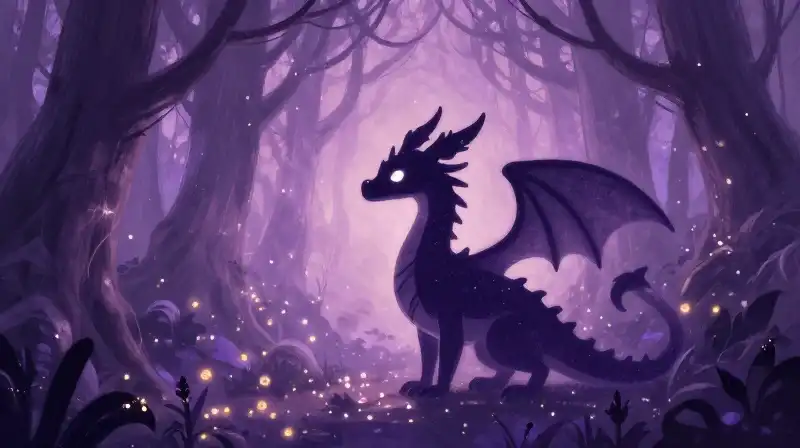
A dragon’s silhouette against a bruised twilight sky is immediately striking. Its wings, leathery and vast, hold a promise of ancient power, and its roar echoes the primal alarm in our imaginations. Yet, for parents and educators diving into the rich tapestry of storybook worlds, the dragon is rarely just a beast of fire and fang. It is a profoundly symbolic figure, a magnificent, monstrous cipher for the very ideas we use to make sense of our own world. If we look closely at classic tales—the knights, the soaring castles, the enchanted forests—we discover that these winged nightmares are, in fact, “more than true.” They are not merely villains; they are maps.
When we ask what a dragon represents, we often find ourselves falling into the trap of simple identification: fire-breathing, destructive, a clear obstacle. But the deepest magic of the creature lies in its function. The dragon is the physical embodiment of the “bogey,” the shapeless shadow that a child’s imagination holds even before the tale begins.
The Dragon as Embodiment of the “Bogey”
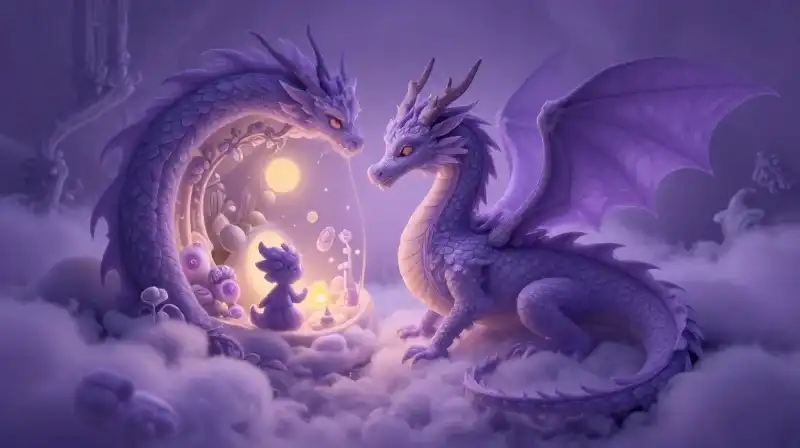
To understand the symbolic weight of the dragon, we must first understand the unique psychological landscape of the child. For a child, monsters are not typically arbitrary creations of plot; they are the collective distillation of every unknown, every uncertainty, and every scary experience—real or imagined. G.K. Chesterton brilliantly observed that the dragon in fairy tales represents the “bogey” or evil that already exists in a child’s world before they ever encounter a story [1]. The monster does not come out of a dusty storybook; it comes out of the child’s own internal processing of fear.
This is why dragons are such potent figures in children’s literature. They are the perfect external vessel for an internal landscape. They are the tangible representation of a fear that is already rooted in the heart. Instead of telling a child that the dragon is a new, external threat, fairy tales use the beast to address what the child already knows: the dragon exists in their imagination [1]. It is a narrative mirror reflecting the child’s innate sense of peril.
”Fairy Tales Are More Than True”: The Philosophy of Defeat
The truly illuminating aspect of the dragon, however, is not its existence, but its eventual fate. If the dragon were purely a representation of the external monster, the story would simply be a depiction of external conflict. But this is not what the “More Than True” philosophy teaches. Fairy tales, and specifically the confrontation with the dragon, offer the first powerful and concrete idea of the “possible defeat of bogey” [1].
As G.K. Chesterton and later echoed by Neil Gaiman, the magic of the tale is not in proving that dragons actually exist in a magical world, but in demonstrating that dragons can be beaten [1]. The presence of the dragon is the starting point, the raw fear; the presence of the heroic figure—St. George, the valiant knight, the clever heroine—is the proof of possibility. The primary purpose of these stories is thus symbolic empowerment, transforming innate fear into a tangible challenge that can be overcome through courage, wisdom, or skill [1].
The St. George Archetype: From Shadow to Solution
The classic motif of St. George to kill the dragon serves as the foundational archetype for this concept of “possible defeat.” St. George is not just a warrior; he is the embodiment of the world’s ability to find a hero capable of standing up to the darkness. When a child reads or hears this tale, they are internalizing a narrative blueprint: the darkness is great, but the power to counteract it is also within reach. The dragon represents the massive problem; the hero represents the innate human potential to solve it.
This pattern is why these stories are so soothing for young minds. They do not minimize the fear, but they provide the framework for understanding how that fear can be approached, challenged, and eventually neutralized. The child is given a clear visual and narrative tool to process their own “bogey.”
Beyond the Scales: Understanding the Dragon’s Symbolism
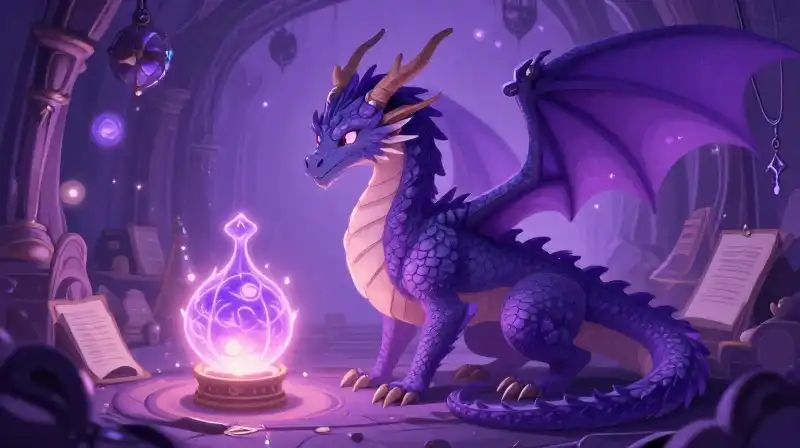
To give your analysis or storybook more depth, it is useful to view the dragon through various symbolic lenses, moving beyond the simple “evil” label. Depending on the cultural tale, the dragon can shift its meaning, often acting as a guardian or a source of vital energy, rather than just a destroyer.
The Dragon as the Guardian of Knowledge
In some traditions, the dragon is not malicious but fiercely territorial. It guards ancient treasures, lost magical artifacts, or hidden knowledge. Here, the dragon represents the great mysteries of the world—the things we do not yet understand, the massive problems that require immense bravery or ingenuity to solve. To “defeat” this dragon is not to kill a monster, but to achieve a breakthrough in knowledge or wisdom.
The Dragon as the Embodiment of Raw, Chaotic Power
Conversely, in many western versions, particularly the Grimm variations, the dragon represents unchecked, chaotic power. It is often linked to greed, excessive desire, or untamed nature. When a character defeats this dragon, they are often demonstrating not just physical bravery, but moral fortitude—the ability to prioritize good and community over selfish, chaotic impulse. The tale becomes a profound lesson in the triumph of structured virtue over untamed impulse.
Addressing the “Graveyard Book” Question
The related search query, “What is the quote from the graveyard book?” often reflects a deeper curiosity about the stories that confront profound existential darkness. While there isn’t one specific “graveyard book” quote associated with the dragon’s symbolism, the general sentiment captured by the “More Than True” philosophy aligns with the confronting of ultimate mystery. In the context of mythology, the dragon is frequently depicted as the “keeper of the underworld” or the “threshold creature”—the one that guards the passage between life and death. These are the tales that feel “beyond” the usual nursery rhyme comfort, dealing with the existential scale of the unknown.
Using the dragon as a literary device is a way of making that existential horror manageable. By giving the “fear of death” a shape (the dragon), you give it a narrative structure that allows for conflict and resolution, rather than leaving it as an undefined, paralyzing darkness.
Using These Symbols in Storytime and Education
For parents and educators, the symbolic weight of the dragon offers more than just a fun creature to talk about; it provides a framework for discussing complex emotional states with children. Rather than simply saying, “Don’t be afraid of the dark,” you can introduce the concept of the “bogey” within a story structure.
- Identify the Internal Conflict: Before reading a tale with a dragon, ask your child: “When you think of a monster, what does it feel like?” Use the dragon as a proxy for the generalized feeling of worry or fear.
- Focus on the Action, Not the Creature: When a hero faces the dragon, zoom in on the action—the planning, the courage, the choice to act. The real lesson is not in the killing of the beast, but in the *courage of the act* itself.
- Discuss “Possible Defeat”: Reinforce the idea that the story is a message of hope. Even if the “dragon” (a fear, a big test, a scary new situation) seems insurmountable, the tale always offers a pathway toward victory, simply because the heroic impulse exists.
Synthesis: The Enduring Power of the Myth
What makes the dragon in fairy tales so remarkably enduring is that it remains fundamentally a story about potential. It is a narrative technology that allows us to hold our deepest, most primal fears in the hand of a spectacular, scaled beast, and then watch the story prove that the fears themselves are conquerable. The dragon is not the end of the tale; it is the starting point of the journey toward self-assurance. Through the lens of the “More Than True” philosophy, we realize that these magnificent creatures are not simply monsters to be vanquished, but powerful metaphors for the possibilities of human courage, for the inevitability of overcoming internal darkness, and for the boundless, beautiful power of a well-told story.
***
Sources
- Neil Gaiman, GK Chesterton, and the origins of the quote on fairy tales and dragons being beaten. : r/ChristiansReadFantasy — reddit.com
Frequently Asked Questions
What is the quote from the graveyard book?
The article states that there is no specific quote from the graveyard book associated with the dragon's symbolism. Instead, the general sentiment captured by the "More Than True" philosophy aligns with confronting ultimate mystery and the existential unknown.
Related Articles