
Decoding Rapunzel: Isolation, Symbolism, and the Power of Love


Introduction
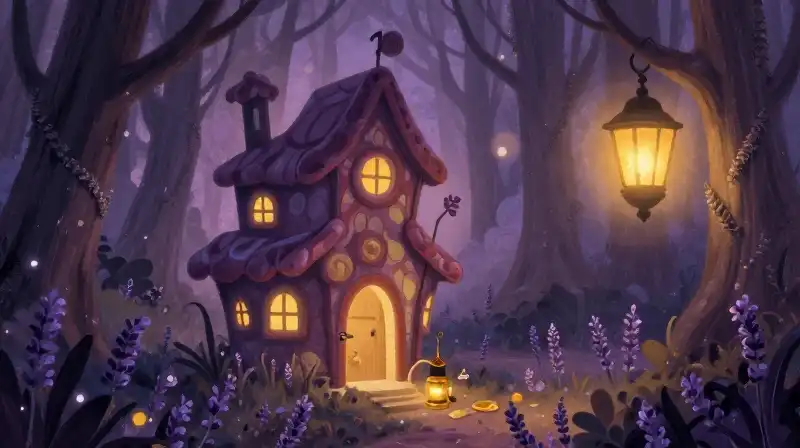
The tower is one of the most iconic structures in the history of children’s literature—a vertical cage suspended in a whimsical forest. But beneath the “happily ever after” and the shimmering strands of golden hair lies a profound and moving tale of isolation, internal life, and the radical power of genuine human connection. Rapunzel is more than just a girl with impossibly long hair; she is a symbol of potential waiting to be realized, a character who teaches us that even when physically confined, the human spirit can find its own vibrant world. This classic story, which has many variations across different cultures, offers parents and educators a rich opportunity to discuss themes of freedom and self-worth. We will look past the sparkling surface to decode the deeper meanings behind the tower, the roles of the characters, and the transformative magic of love in this unforgettable tale.
The Prison of Confinement: Deconstructing the Tower
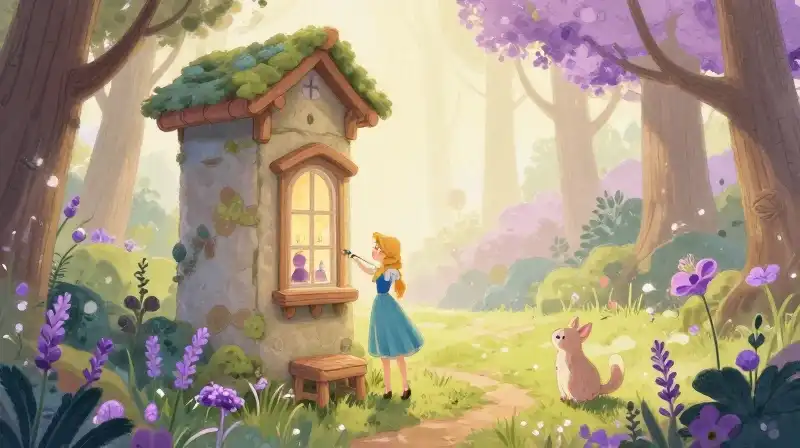 The tower in Rapunzel’s story is not a romantic folly; it is a literal manifestation of enforced restriction. This specific version emphasizes her utter lack of escape, describing the structure as having “no door and no stairs, only a single window at the very top” [1]. This detail is crucial for understanding the narrative’s emotional weight. The tower serves as a physical manifestation of a character’s psychological state—a place where opportunity and outside influence are deliberately cut off. Yet, despite this rigid confinement, Rapunzel’s days are far from stagnant. Her inner life, her capacity for artistic joy, becomes the engine of the story. She fills her isolated days through reading, painting, and the gentle cultivation of friendships with the forest creatures, such as Whiskers the rabbit [1]. This highlights a powerful theme: even when trapped by external forces, agency and contentment can be found within the self.
The Golden Hair: A Conduit to the Outside World
Rapunzel’s famous long, golden hair is far more than a picturesque feature; it is the story’s most significant magical and symbolic element. It acts as the sole conduit connecting her isolated existence to the broader world of the kingdom [1]. In the narrative, the hair serves as the primary climbing mechanism, a rope for both the selfish witch and, eventually, the kind prince [1]. This symbolism suggests that beauty and uniqueness, though sometimes viewed as a burden or a cage, can also be the means of connection and escape. Her hair is the bridge—the link that allows the “distant forest” and the hope of the “white horse” to eventually reach her [1]. The physical presence of the hair represents her potential; it is the part of her that could lead to freedom, even if her surroundings attempt to keep it contained.
The Witch and the Core Conflict: Possessiveness Versus Autonomy
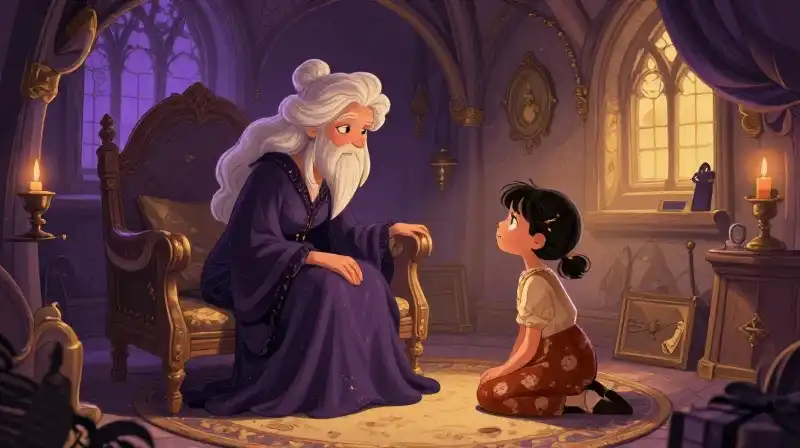 To understand Rapunzel, we must understand her antagonist. The witch’s motivation is rooted not in simple malice, but in a twisted form of intense possessiveness and deep loneliness [1]. She is explicitly described as “lonely and selfish,” becoming furious and fearful of losing Rapunzel when her control is questioned [1]. This portrays the witch as a character driven by an urgent need for ownership and a desperate fear of abandonment, which is a far more complex psychological driver than simple wickedness. The true climax of the narrative hinges on a seemingly innocent exchange. When Rapunzel innocently asks the witch, “Why are you so much heavier to pull up than the prince?” [1], she unintentionally challenges the witch’s possessive hold on the girl. This challenging moment, which highlights Rapunzel’s developing autonomy, triggers the witch’s violent and irreparable reaction—the cutting of her hair [1]. The witch, fearing the loss of control and the possibility of Rapunzel choosing a life outside the tower, chooses destructive cruelty.
The Cycle of Cruelty and Restoration: Sight, Tears, and the Power of Emotion
The narrative transitions from the cruelty of the tower to the pain of separation, offering profound symbolic weight to Rapunzel’s exile. After her hair is severed, the prince falls into a “bed of sharp thorns” [1]. This fall and subsequent blindness are a devastating consequence of the witch’s choice—a powerful metaphor for how fear and cruelty can lead to the loss of innocence and perception in life. However, the tale offers a classic example of magical healing rooted not in spells, but in genuine human emotion. The prince’s sight is not restored by a medicinal tonic, but only when he is touched by Rapunzel’s tears [1]. This symbolizes the transformative and restorative power of genuine, selfless emotion. Rapunzel’s tears represent profound empathy and sorrow for his plight, an internal goodness that triumphs over the physical and emotional damage wrought by the witch’s violence [1].
Rapunzel’s Journey: From Captivity to Freedom
The entire structure of the story—from the intense captivity of the tower to the devastating separation, and finally to the joyful restoration—is a journey from limited existence to full self-actualization [1]. * **Isolation (The Tower):** The initial state of forced confinement. * **Separation (Exile and Blindness):** The painful stage of loss and the consequences of being forced to grow up before one is ready, losing perspective. * **Restoration (The Reunion):** The triumph of enduring affection and self-discovery. The distant forest and the vision of the white horse represent the ultimate spaces of freedom and hope [1]. The tale concludes with the focus on lasting love, where Rapunzel and the prince live “happily ever after,” affirming that genuine connection and self-worth are ultimately more powerful than any malicious obstacle [1].
What is the oldest Rapunzel story?
While many versions of the tale exist across various medieval cultures, this specific narrative, utilizing the symbols and conflicts described, is part of the wide body of “popular bedtime stories” and folklore that have been preserved and retold over centuries [1]. Folk traditions often differ from popularized modern versions, meaning the “original” story is often found in regional variations rather than a single book.
Rapunzel story in English for kids: Age and Themes
Because the story contains dark elements—the imprisonment, the betrayal, and the resulting blindness—it is best read for slightly older children or younger readers who are sensitive to complex themes. Parents can use the story to introduce discussions about:
- Empathy: Asking children why they think the prince was blind and how Rapunzel’s sorrow helped him.
- Agency: Discussing how Rapunzel found joy and purpose in painting and reading even when she couldn’t leave.
- The Difference Between Captivity and Contentment: Exploring what it means to be safe versus what it means to be truly free.
The tale doesn’t just give the kids a plot; it gives them colors and ideas—the vibrant colors of the forest representing hope, contrasting with the stark, rigid confinement of the tower. It shows them that even in the darkest corners, genuine kindness can bring the brightest light.
Sources
- Rapunzel Story — readthetale.com
Frequently Asked Questions
What is the oldest Rapunzel story?
While many versions exist across various medieval cultures, the story described is part of a wide body of popular bedtime stories and folklore that have been preserved and retold over centuries. The text notes that because folk traditions often differ, the 'original' version is typically found in regional variations rather than a single book.
Related Articles