
The Different Roles of Witches in Childrens Fairy Tales

Introduction
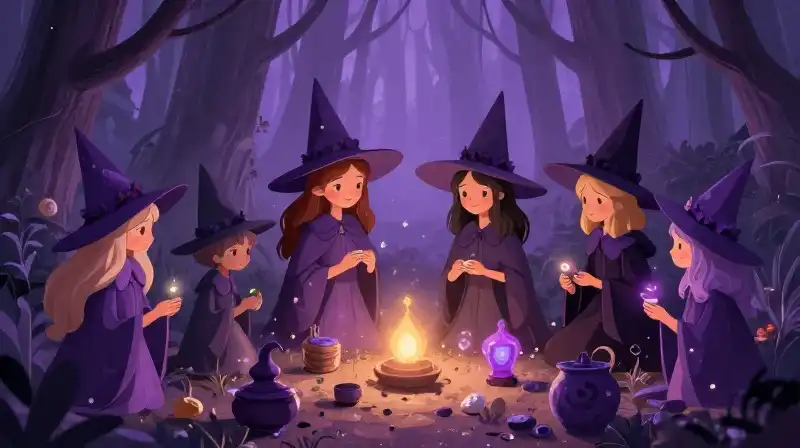
The witch in children’s literature is a figure constantly shifting, never content to be reduced to a dusty cloak and a crooked finger. Whether she is stirring a bubbling cauldron in the shadows, solving a baffling mystery, or simply holding a forgotten memory, the witch serves as a powerful symbol of the unknown—a place where the familiar rules of the world bend and break. For children and their families, understanding the witch is often about understanding the boundaries between good and strange, between certainty and mystery. They are not monolithic; they are a vast gallery of archetypes, from the kind, helpful mentor to the cunning, manipulative sorceress.
The Spectrum of Power: From Kind Spellcasters to Mischievous Sorceresses
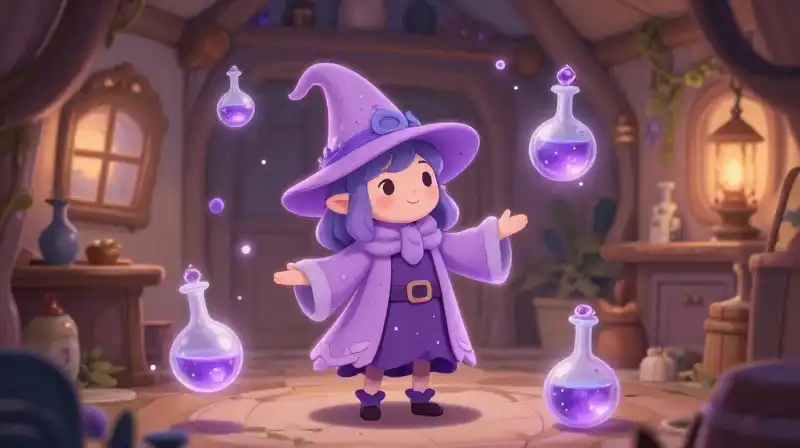
When analyzing witches in storybook worlds, the most immediate realization is the sheer variety in their nature. They exist not just as antagonists, but as nuanced figures whose intentions define their role in the narrative. We encounter “kind-hearted spellcasters” who possess gentle magic and helpful guidance, and the highly entertaining “mischievous enchantresses and sorceresses” whose actions are often designed more for humor and harmless chaos than true malice [1].
This range allows storytellers to use the witch as a tool for different emotional goals. While some tales feature a classic, dastardly figure, others employ the archetype in a more localized and humorous manner. For instance, tales like the one featuring Luna Altoona and the “Toothache Potion” offer a playful take on the antagonist, where the villain’s schemes are exaggerated and kept within a light, comedic sphere for younger readers [1].
The setting of these tales is often just as critical as the character itself. Many witch stories utilize enchanted spaces—a classic “old house at the end of their street” [1]—or wild, isolated landscapes like the mystical groves and springs found in the Andes Mountains. These places are rarely just backdrops; they are vital elements of the plot, acting as places where the “invisible wall” of a spell can be cast or broken [2].
The Manipulator and the Memory Keeper: Analyzing the Antagonistic Witch
When the witch is portrayed as a true antagonist, the most compelling versions are rarely those that rely on overt, brute-force evil. Instead, they operate through subtle, insidious magic. This is beautifully illustrated in tales like *The Witch’s Magic Ball*, where the “old witch of the Andes Mountains” does not simply attack; she uses a seductive magic ball to manipulate the protagonists and lead them toward specific, seemingly innocuous locations—berry bushes or crystal-clear springs [2].
The thematic conflict here is particularly rich: the magic creates a powerful illusion of freedom while simultaneously establishing insurmountable odds. The spell establishes an “invisible wall” that separates the protagonists and the world, allowing connection but preventing passage (“I can see you but I cannot pass through”) [2]. This isn’t simple imprisonment; it is a sophisticated psychological trap where the power of the antagonist is subtle and highly localized. Furthermore, the witch’s motivations are often tied to specific temporal or environmental conditions—the Andean witch, for example, was only active during “winter was her hunting time and her eating time” [2], suggesting her power is tied to the rhythms of nature itself.
The Witch as a Vessel for Identity
Beyond the classic villain, the witch can take on a profound, internal role. One striking example is the memory-loss scenario, such as Winifred the Witch in *The Witch’s Scrapbook*. In this story, the witch’s struggle with her own identity and her role within her mystical existence becomes the core theme [1]. By exploring a witch who doesn’t know who she is, the tale invites children to contemplate the nature of identity within a powerful, often frightening, role. This variation shifts the focus from external conflict to internal discovery.
Thematic Symbiosis: Witches, Nature, and the Forces of Change
A recurring thread in the more adventurous witch tales is the relationship between the magic and the natural world. In *The Witch’s Magic Ball*, the entrapment is built on a foundation of natural elements—the springs, the berry bushes, and the mountains themselves [2]. The resolution, when it comes, is rarely achieved through pure sorcery alone. It requires a combination of heroic action and the overwhelming power of nature.
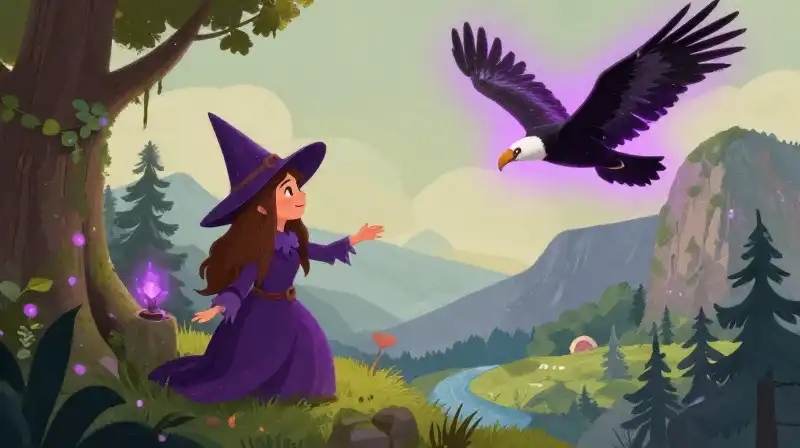
Nature acts as both the tool of the entrapment and the instrument of release. The protagonists receive crucial guidance from “the Andes condor” and “the Andes flamingo”—creatures that are not merely random wildlife, but active, magical facilitators [2]. The condor, for instance, provides the necessary speed to break the spell and is the voice that delivers the final, powerful truth: even the darkest magic can be conquered by fundamental forces, such as “Fire,” which the condor proclaims will “conquer frosted death” [2].
This dynamic offers children a powerful lesson: that even the most formidable powers—whether a chilling winter spell or a mysterious barrier—can be overcome by courage, guidance, and the enduring, transformative power of the natural world.
Answering the Questions: Understanding the Archetype
What are some famous witch stories?
The great variety of the witch means “famous” stories can be categorized by their themes. If you are looking for a tale where the witch represents external, localized mischief, *Luna Altoona and the Toothache Potion* provides a fun, accessible entry point [1]. If you seek a deep exploration of the relationship between magic and the wild, *The Witch’s Magic Ball* is a profound narrative model [2]. For those who prefer a classic, atmospheric tale of mystical setting and archetypal characters, broad categories of “Mystery Witch” stories or tales of the “old house at the end of their street” offer timeless comfort [1].
What is the story of the 13 witches?
In the context of children’s literary history, there isn’t a singular, universally accepted tale of “the 13 witches.” However, the archetype itself has evolved into numerous variations, allowing for endless collection and categorization. The number 13, when applied to the witch, often suggests a collective power or a sequence of tests. The true “story of the 13 witches” is perhaps the accumulation of all the smaller narratives—the good, the bad, the mischievous, and the deeply empathetic—that children encounter as they grow, learning that power, like magic, takes many different forms [1].
Conclusion: Why the Witch Matters for Children
Ultimately, the witch functions as an essential narrative mirror for young readers. By placing a figure capable of great power—and great trickery—at the heart of a story, educators and parents allow children to safely explore their own fears, boundaries, and the nature of change. The resolution of tales like *The Magic Ball*, where elemental forces triumph over imposed boundaries, doesn’t teach children to fear the unknown, but rather to recognize that even the most intricate or “frozen” struggles can be overcome through courage and connection. The witch, therefore, is not just a villain or a caster; she is a powerful symbol of the transformative mystery that lies just beyond the edge of the ordinary.
Sources
- Witches | Bedtime Stories — storyberries.com
- The Witch’s Magic Ball — worldstoriesbank.org
Frequently Asked Questions
What are some famous witch stories?
The article highlights *Luna Altoona and the Toothache Potion* as a playful example of localized mischief and *The Witch’s Magic Ball* for its profound look at the relationship between magic and nature. It also notes that categories like general "Mystery Witch" stories or tales of the "old house at the end of their street" offer timeless comfort.
What is the story of the 13 witches?
The article clarifies that there isn't a singular, universally accepted tale of "the 13 witches" in children's literary history. Instead, the number 13 often symbolizes a collective power or a sequence of tests, reflecting the countless variations of the archetype.
Related Articles