
Bedtime Story Ideas: Classic Fairy Tales Sorted by Age and Theme

Introduction
There is a profound, quiet magic that settles over a room when the last light fades, transforming a simple reading into a transportive journey. A bedtime story is more than just a narrative delivered before sleep; it is a gentle anchor, a carefully chosen landscape designed to guide a young mind toward calm and wonder. But how do you choose the right journey? The classic tales—from the opulent halls of *Beauty and the Beast* to the perilous adventures of *Jack and the Beanstalk*—are sprawling treasures, and their brilliance often lies in their complexity, which can sometimes be intimidating for a little one just learning to settle down.
At Magic Stories, we believe every story, regardless of age, holds a unique spark. Our goal is to move beyond simple reading lists and offer a thoughtful guide: a framework for finding not just a story, but the perfect match for your child’s current emotional landscape and developmental needs. Whether you are looking for a concise moral from Aesop’s Fables or the sweeping wonder of a Chinese story, this guide analyzes classic and diverse narratives, helping you find ideas that are both imaginative and genuinely soothing [1].
Navigating the Arc: Story Selection by Age and Developmental Stage
The “perfect” story is one that meets the reader exactly where they are. The concepts and length that captivate a seven-year-old may be too dense for a three-year-old, yet the thematic lessons in each tale are universal.
0–3 Years: The Rhythm of Safety and Simplicity
At this stage, the primary goal of the story is soothing. Attention spans are short, and the focus must be on rhythm, repetition, and sensory experience. These early readers are perfect for *rhyming stories* and *lullabies* [1], providing a predictable structure that calms the nervous system. Instead of deep conflict, look for tales centered on soft textures, comforting characters, and simple color palettes. The magic here is the predictable comfort of the known.
3–7 Years: Discovering the Basics of Good and Evil
This age group thrives on clear archetypes, adventure, and the solid recognition of moral boundaries. They can manage more complex character dynamics but still benefit from stories with definitive heroes and clear consequences. Classic tales like *Snow White and the Seven Dwarves*, with its vivid distinction between the loving dwarves and the wicked Queen, provide a perfect framework for understanding good versus evil [2]. The initial adventure of *Jack and the Beanstalk* offers a perfect balance of high-stakes action and imaginative scope, fostering a sense of brave exploration without overwhelming the child with existential dread [2].
7–12 Years: Exploring Nuance, Identity, and Internal Magic
As children enter the “reading years,” their cognitive abilities allow them to handle complexity, allegory, and character depth. They are ready for stories that question the surface. *Beauty and the Beast* excels here; the magic isn’t just external—it is an internal transformation of the protagonist. They are ready to consider themes of independence, the nature of appearances, and complex emotional connections [1]. This is also the age where you can introduce broader cultural narratives, such as Japanese Stories or Indian Stories, to broaden their definition of a “famous” tale [1].
| Age Range | Focus / Theme | Example Story / Element | Practical Use |
|---|---|---|---|
| 0–3 | Comfort, Rhythm, Sensory Input | Lullabies, Picture Books | Soothing pre-sleep routine |
| 3–7 | Moral Clarity, Adventure, Opposites | Snow White, Jack and the Beanstalk | Bedtime storytelling, classroom introduction to morals |
| 7–12 | Internal Struggle, Culture, Identity | Aladdin, Beauty and the Beast, Chinese Stories | Thematic discussion, longer reading assignments |
Thematic Anchors: Finding the Lesson Beneath the Magic
The true value of classic narratives for educators and parents lies not just in the plot, but in the thematic resonance—the deep human concepts they touch upon. Many fairy tales serve as powerful vessels for teaching crucial social and emotional intelligence.
The Magic of Kindness and Worth
Stories involving magic often hinge on how power is wielded. In *Aladdin and the Magic Lamp*, the power granted by the lamp is immediately contrasted with the internal value of Aladdin. The theme isn’t just about wishes, but about the inherent worth of character, contrasting the effortless power of a genie with the humble, hard-earned growth of the protagonist [1]. Similarly, the concept of *The Golden Touch of King Midas* serves as a potent, early cautionary tale: power is only valuable if it is used wisely and with a compassionate understanding of its consequences [2].
The Power of Perspective: Villains and Shadows
Analyzing a villain is often more instructive than analyzing the hero. The wicked Queen in *Snow White* represents the danger of envy and the devastating cost of insecurity. She is a stark reminder that a fixation on external perfection can lead to profound malice [2]. Conversely, figures like the Pied Piper, forced into revenge by villagers [2], allow us to explore the devastating power of societal judgment and misunderstanding. These dark elements are crucial for older children, providing a nuanced view of human failing, but require careful mediation for the younger ones.
Cultural Breadth: Expanding the Definition of a “Fairy Tale”
To give a child a rich tapestry of imagination, we must look beyond European folklore. While familiar tales like *Rumpelstiltskin* offer concise moral lessons [1], the global library of stories is immense. Including *Native American* tales, *Indian Stories*, and *Chinese stories* provides children with a wider lens through which to view humanity, demonstrating that themes of *Fairness* and *Kindness* are woven into every culture [1].
Creature and Entity Guides: What the Myth Says
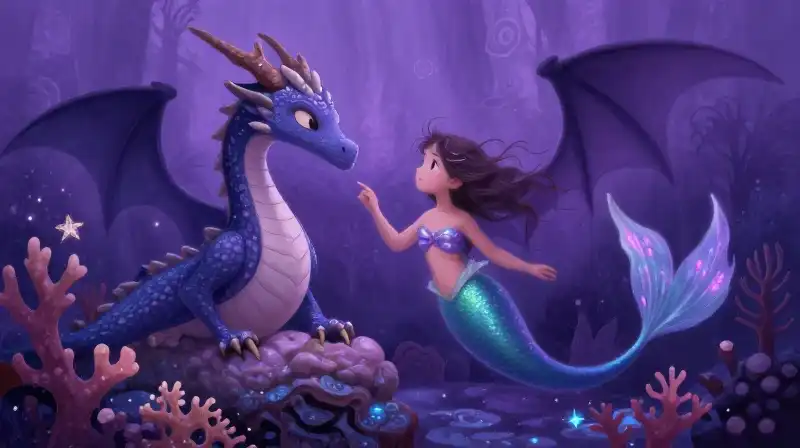
Magical creatures are the lifeblood of children’s fantasy. We can use these entities to explore character traits and symbolic representation, providing a rich layer to story analysis.
- The Unicorn and Fairies: These beings often symbolize pure, untainted innocence and grace. They are ideal for early story analysis, focusing on themes of gentle magic and inherent goodness [1].
- The Dragon: While sometimes a straightforward antagonist, dragons frequently represent powerful, untamed forces—whether fire, ancient wisdom, or primal courage. Their presence in a tale like *Jack and the Beanstalk* elevates the story from a simple adventure to a confrontation with monumental power [2].
- Mermaids: Mermaids, with their duality, are excellent subjects for discussing the difference between superficial beauty and true character. They often dwell in liminal spaces (the intersection of land and sea), perfect for discussing boundaries and transitions [1].
- Rumpelstiltskin: This small, powerful entity exemplifies the dangers of shortcuts and the power of genuine, sustained effort. His enchantment highlights the high stakes of deception and the value of honest labor [2].
A Parent’s Guide to the “Magic” of Bedtime Story Ritual
To make a story truly magical, the environment is just as important as the content. Using categories like *Sleep and Bedtime* [1], the focus shifts from reading *about* magic to cultivating a state of relaxed awareness *during* the narrative.
Creating the Soothing Environment:
- The Ritual Transition: Use the story selection to signal the start of a wind-down period. A change in pace—from an exciting adventure to a quiet, descriptive tale—helps the child recognize the shift from “play time” to “sleep time.”
- Focus on Sensory Details: When choosing a story, look for evocative, tactile language. Instead of “the castle was big,” try “the ancient stone of the castle felt cool and heavy against the velvet air.” This grounds the fantastical elements in the real world, aiding relaxation.
- Choose Repetition and Rhythm: For true sleep support, prioritize tales with a predictable cadence, such as certain *Lullabies* or rhyming stories [1]. The auditory pattern itself can be meditative.
- Handling Dark Themes: When reading classic villains or dramatic events (like the magic lamp theft from Aladdin), pause and normalize the drama. Acknowledging the wickedness (“The villain was angry because he wanted to take away something wonderful”) and then focusing back on the positive outcome (the lamp was protected, the hero won) helps children process challenging themes without fear.
Synthesis: The Enduring Gift of Narrative
These stories are not merely relics of the past; they are living blueprints for imagination. By curating tales based on age, theme, and emotional need, we offer a gift of guidance. We teach children not just the plot of *Rumpelstiltskin* or the scope of *Jack and the Beanstalk*, but the underlying mechanisms of resilience, integrity, and the courage to face power. The true magic of “Magic Stories” is realizing that every page turned, every character met, is an opportunity to deepen a child’s understanding of the world, one vivid, well-chosen narrative at a time.
***
Sources
- Famous Fairy Tales | Bedtime Stories — storyberries.com
Related Articles