Are Fairy Folk Good or Evil? What the Mythology Reveals

Introduction
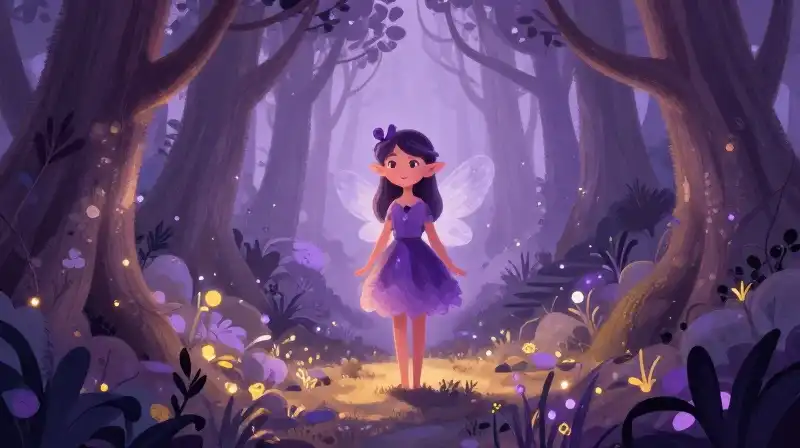
In the hushed spaces of a children’s story, a single creature can ignite a thousand different emotions. When we speak of fairy folk, perhaps no question is more enduring than this: Are they good or evil? For many parents and educators, the answer might seem binary—a choice between pure benevolence and outright malice. But the real magic of these beings lies precisely in their refusal to be categorized.
The myths and tales surrounding fairies are not just stories; they are rich cultural tapestries. They represent the bridge between the known, human world and the wild, unpredictable heart of nature. Exploring the fairy folk reveals a fascinating spectrum—one that moves far beyond a simple “good” or “bad.” They are often more mysterious, more demanding, and infinitely more complex. They are the beautiful, challenging mirrors in which we first learn about consequence and the unpredictable nature of the world. To understand the fairies is to understand the nuance inherent in all of storytelling.
The Shifting Lens: Fairies Through History
To appreciate the contemporary “magic” of the fairy folk, we must first trace their journey. These beings have changed dramatically across history, reflecting the shifting worldview of human cultures. Originally, fairies were often revered. In ancient contexts, they were sometimes viewed as divine entities, nymphs, or even deities, connected deeply to the natural world [1]. They were powerful, sacred figures.
However, this divine status underwent a massive transformation. Especially during the medieval and Puritan eras, perception soured. Some traditions began to recast them as wicked, demonic forces [1]. The idea shifted from reverence to fear. This dramatic shift highlights how closely our morality is linked to the landscapes we describe in our tales.
By the Victorian and Edwardian periods, the rise of the Celtic Revival cemented their place in modern culture [1]. They became deeply interwoven into national heritage, often possessing the “narrower, more magical” qualities that distinguish them for children’s literature today, though this is a concept unique to English folklore [1]. Their descriptions became more varied, ranging from diminutive sprites to beings as large as humans [1].
The Nature of Ambiguity: Why Fairies Can’t Be Simple
The consensus among story scholars is that the true “fairy folk” are rarely defined by a singular morality. Instead, they operate based on rules of environment and interaction. They are guardians of the unseen, and like any powerful guardian, their actions are often misunderstood.
Guardians of the Threshold and Nature
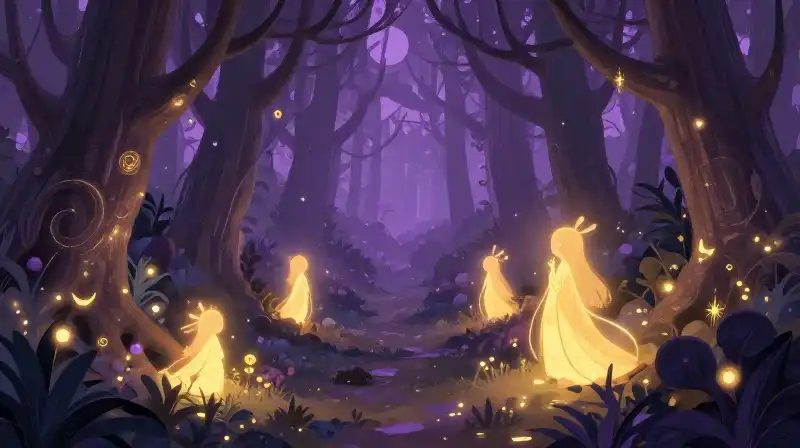
Many fairies are fundamentally linked to the natural world. They act as spirits of the places—the woods, the rivers, the ancient stones. They might be benevolent nature spirits, or they might be protective of their domain, which often means being difficult for humans to approach [1]. The association of fairies with wild, sometimes dangerous places is key to understanding their role as symbols of the untamed.
The Line Between Mischief and Malice
The difference between a “good” fairy and an “evil” fairy is often a difference in whether the encounter is benevolent or detrimental. Most folklore suggests that fairies do not act out of malice, but out of adherence to their own complex rules. They might lead a traveler astray using will-o’-the-wisps, not because they wish harm, but because the path they are on is not the one they desire [1]. This subtle distinction—acting according to unseen logic rather than human cruelty—is vital for a nuanced understanding.
Addressing Common Fairy Folk Questions
Are Fairy Folk Good or Evil?
The honest answer is: they are conditional. They are not good and they are not evil; they are powerful, whimsical, and deeply secretive. They reflect the complexities of the human condition, reminding us that beauty and danger often coexist in the same ancient woods. When they are kind, they are often linked to nature’s regenerative cycle. When they are dangerous, they represent the chaos and unpredictability that exists beyond the boundaries of polite society.
Are Fairy Folk the Same as Elves?
While often grouped together in popular culture, the term “fairy” is traditionally used to describe a broad category of mythical beings, encompassing many groups, such as goblins or gnomes [1]. In common usage, the boundaries overlap, but the “fairy” has historically been a broader, more variable concept than the more defined “elf.” Modern children’s tales often blend these types into a cohesive world, allowing us to use the term “fairy folk” as an umbrella for all these magical, miniature inhabitants [1].
Safety and Symbolism: Respect the Fairies
Because they are creatures who exist on the edge of our reality, their presence often demands respect. Traditional folklore offers us a peek into how early people tried to navigate these encounters through charms and precautions [1].
The historical need to ward off these unpredictable beings gave rise to various folk traditions:
- Protecting Against Harm: Some traditions suggest that finding a four-leaf clover could act as a charm against their influence [1].
- Disrupting Their Magic: Wearing clothing inside out was believed by some to confuse or neutralize their charm [1].
- Marking Boundaries: Church bells or other sacred sounds were sometimes used to keep them at bay, reflecting the old fear of their unpredictable influence [1].
These rituals, far from being nonsensical, reveal a deep historical respect for boundaries and the unknown.
Modern Magic and the Fairy Folk
In modern storytelling, the fairy folk are often utilized not to frighten, but to enrich. Contemporary works like the film Fairy Folk (2022) employ the creature within a framework of magical realism [2]. Here, the fairy folk encounter serves as a powerful lens, allowing the story to ground its themes in relationships and existential tension [2]. This modern approach allows us to view the creature not just as a monster or a sweet sprite, but as a vital part of a world grappling with deeper, internal truths.
The enduring power of the fairy folk, whether they are mischievous or wondrous, is that they always force us—and the children in our stories—to look beyond the surface. They demand that we question what we see and what we assume about magic, nature, and ourselves.
Synthesis: The Infinite Potential of the Myth
Ultimately, the fairy folk are one of the most remarkable archetypes in all of literature because their meaning is not fixed. They are an open canvas for interpretation. For a child, they might be a bedtime wonder, a soft presence that promises wonder. For another, they might be the symbol of the deep, ancient places of the world that hold secrets. This fluidity is their greatest gift to the storytellers. By not being easily labeled “good” or “evil,” the fairy folk grant us the freedom to explore a full spectrum of human experience—both the luminous grace and the shadowed mystery that define life.
Sources
- Wikipedia — en.wikipedia.org
- Fairy Folk (2022) — letterboxd.com
Frequently Asked Questions
Are fairy folk good or evil?
Fairy folk are considered conditional, as they are not strictly good and not evil. They reflect the complexities of the human condition, demonstrating how beauty and danger often coexist within the same ancient woods.
Are fairy folk the same as elves?
The term "fairy" traditionally describes a broad category of mythical beings, including groups such as goblins or gnomes. While the boundaries overlap in common usage, the "fairy" has historically been a broader and more variable concept than the more defined "elf."
Related Articles