Black Mermaids: Symbolism, Heritage, and Magic in Childrens Tales

Introduction
In the rich tapestry of children’s folklore, the sea holds countless secrets, from the gilded castles of sirens to the shadowy whispers of the deep. Among the most potent and resonant figures is the mermaid—a creature that has captured human imaginations for millennia. But when we look into the depths, we find archetypes that carry far more weight than just shimmering tails and iridescent scales. The Black mermaid is one such figure, a beautiful intersection of mythology, resilience, and powerful cultural heritage. This isn’t simply a colorful variant of a fairy tale; this character is a symbol of transformative power, a rich source of “African utopia,” and a potent emblem of self-discovery. For parents and educators seeking to introduce layers of identity and possibility into bedtime stories or classroom discussions, the Black mermaid offers a profound portal into worlds where history, magic, and the spirit of self-determination meet.
The Deep Roots: Heritage and Transformation
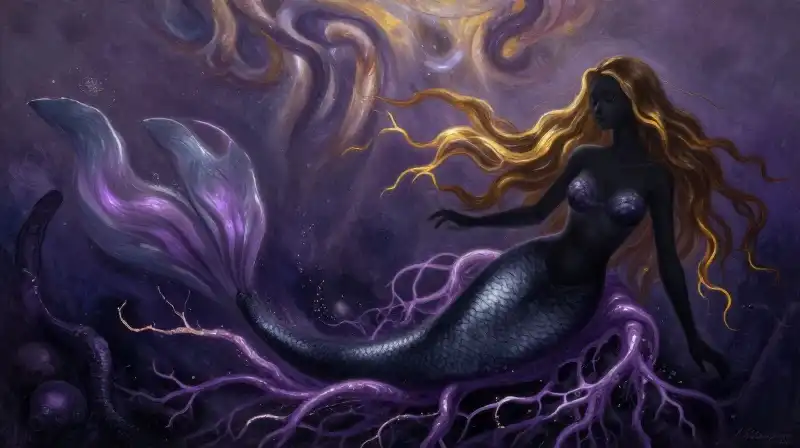
To truly understand the modern significance of the Black mermaid, we must look back to her deep mythical roots. The concept of black aquatic folklore is intrinsically linked to African origins and the transformative power of water [1]. In various African cosmologies, water is not merely a backdrop; it is a transformative force, a medium capable of renewal and change. This spiritual perspective provides the foundational layer for the Black mermaid narrative.
From Trauma to Refuge
One of the most poignant and powerful interpretations of the black mermaid is found in narratives tied to the history of the Middle Passage. Some historical researchers suggest that the imagery of merfolk narratives emerged as stories of enslaved people finding transformation or a refuge within the water [1]. This isn’t just a historical drama; it is a metaphorical one. Water becomes a site of possibility for another life, a profound refuge where a soul, burdened by external disruptions, can imaginatively find self-determination and a new form of existence [1]. The narrative thus transforms a moment of immense suffering into a potent symbol of survival and rebirth.
Imagining Utopia in the Ocean
The Black mermaid archetype allows for the imagining of sophisticated, flourishing worlds that exist outside of the established constraints of the known human society. By representing a sophisticated aquatic society, the Black mermaid often symbolizes “African utopia”—a place where intricate worlds and resilient cultures can thrive without external interference [1]. This powerful motif serves as a thematic counter-narrative, reminding us that powerful and complex societies exist beyond the boundaries of traditional definitions.
Symbolism and Thematic Resonance in Storytelling
Beyond the specific cultural history, the Black mermaid provides potent themes for both literature and creative play. Her symbol speaks to self-definition, freedom, and the radical potential for transformation.
The Body as a Realm of Magic
The very nature of the mermaid’s existence—the fusion of human and aquatic forms—supports ideas of fluid identity and freedom. Within children’s literature, this archetype is a rich source of “gender inclusivity” because merfolk tails fundamentally challenge the traditional, fixed parameters of the human body [1]. A character with a mythical tail is a character unconstrained by mundane boundaries, capable of existing in a “site of possibility for another life” [1]. This speaks directly to the concept of the child being able to be “anything” in their stories, transcending mere historical representation to embrace limitless possibility [1].
Water as a Mirror of the Soul
The deep, powerful quality often attributed to the color black—associated with depth, mystery, wisdom, and the primordial—is interwoven with the concept of water. The Black mermaid serves as a conduit for these qualities, teaching children that depth (in thought, emotion, or history) is a place of immense power [1]. Water, as a transformative element, represents the soul’s ability to adapt and change, a vital message for children navigating their own personal growth.
The Modern Spotlight: Casting, Diversity, and the Debate
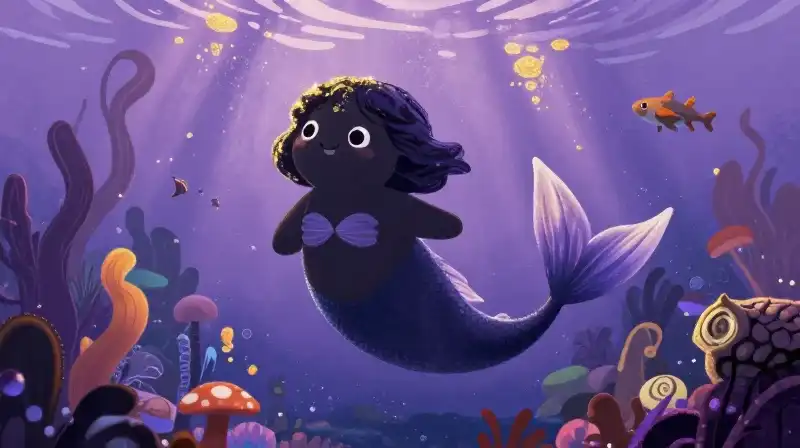
In contemporary popular culture, particularly with the release of films like *The Little Mermaid*, the discussion around the representation of the Black mermaid has become a major cultural talking point. This recent visibility brings both praise and a nuanced critique to the forefront.
Advocating for “Aquatic Diversity” vs. Market Strategy
The modern push for characters like Halle Bailey in *The Little Mermaid* highlights a vital tension in storytelling: whether mythological figures should strictly adhere to historical or traditional visual standards, or if they should embrace “aquatic diversity” to reflect the richness of the world [1]. Proponents argue that this diverse casting is a celebration of the figure’s universal potential, allowing the character to be an aspirational reflection of all children [1]. However, some critical voices caution that while the inclusion of diverse casting is a positive step, there is a danger that such moves can sometimes function as a calculated marketing ploy or a form of “moral licensing” used by large corporations [2].
Furthermore, a deeper layer of critique comes from creative advocates who suggest that rather than simply “casting a person of color in an old role,” the industry could elevate Black individuals to create entirely new, complex, and original Black characters, moving beyond merely filling a color quota [2]. This shift in focus moves the narrative from representation to innovation.
From Folklore to Fantasy: The Power of Unbound Stories
Crucially, the current discourse suggests that the Black mermaid archetype is transcending mere historical or cultural commentary. She is opening doors for a range of fantasy that is “not tied to fact or reality” [1]. She represents the imaginative potential—the ability to build worlds that are vibrant, sophisticated, and self-contained. This freedom is invaluable in children’s literature, where wonder must be limitless.
The Black Mermaid for Parents and Educators: Practical Application
How can this rich, multilayered character be utilized effectively in a child’s life, whether through bedtime or classroom exploration? The Black mermaid offers tangible, creative tools for engagement that move beyond surface-level fantasy.
Encouraging Creative Embodiment Through Play
Mermaid cosplayers often utilize a single “clothed monofin” to physically mimic the tail of the mythical being [1]. This physical act of embodying the mythical creature within a supportive, imaginative environment can be mirrored in play. It is an opportunity for children to step out of the traditional narrative of self and into a supportive, powerful, transformative role. Educators can use this as a prompt: “If you could embody any creature, what world would you create?” The Black mermaid allows the answer to be something powerful, wise, and rooted in rich cultural identity.
Navigating Diversity and Representation with Nuance
Instead of focusing only on the controversy of casting, we can use the Black mermaid as a springboard to discuss the concept of “diverse original story material.” When reading or creating stories, ask your child:
- What kind of “Black utopia” would your mermaid inhabit? (Is it a reef, a floating city, a deep-sea forest?)
- What does her power look like? (Is it the power of stillness, the power of change, or the power of ancient knowledge?)
- What color or emotion does her tail evoke? (Does she represent the quiet strength of midnight, or the deep, comforting wisdom of midnight blue?)
These questions move beyond a simple character study and encourage the development of complex narrative thought and empathetic creativity.”
Frequently Asked Questions About the Black Mermaid
What does the Black mermaid mean?
The Black mermaid is widely understood as a symbol of powerful African heritage, resilience, and profound transformation. She represents the “site of possibility” where an individual can escape limitations and find a new, powerful form of self-determination.
What is the significance of a Black Little Mermaid actress?
The inclusion of a Black actress in this role is a point of cultural significance. It reflects a modern shift toward acknowledging the diverse origins of global mythology and the desire for “aquatic diversity” in storytelling, allowing the figure to resonate with a broader spectrum of lived experiences.
Synthesis: The Untethered Power of the Merfolk Archetype
The Black mermaid is far more than a decorative character or a specific historical nod; she is an archetype of liberation. By exploring her ties to African cosmologies, her history as a symbol of survival, and her modern role in challenging traditional aesthetics, we learn that stories are most magical when they are “not tied to fact or reality” [1]. She gives children permission to dream of selves that are strong, deeply rooted, transformative, and perfectly at home in their own powerful, mythical skin. She is a reminder that the deepest depths of the ocean—and of the human imagination—hold the greatest treasures of self-discovery.
Sources
- Actually, Black mermaids have been part of mythology for a long time — nbcnews.com
- Why did they make a black little Mermaid? : r/AskReddit — reddit.com
Related Articles