Beluga Whales and Mermaids: When Nature Mimics Magic

Introduction
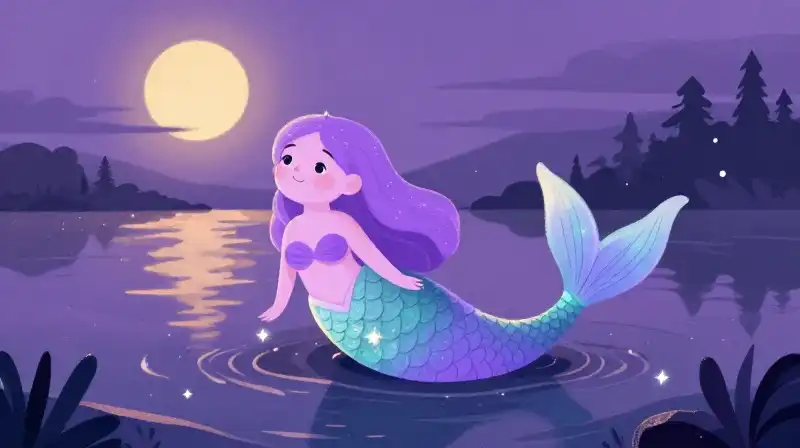
When we think of the mythical mermaid, our minds often drift to shimmering tails, ethereal voices, and deep sapphire waters. But the origins of this enchanted creature—and the allure of its elusive “sea-form” counterparts—are far more complex than a simple blend of fish and woman. Sometimes, the magic isn’t in the myth itself, but in how our human eyes perceive the natural world. The idea that sailors in past centuries mistook certain sea creatures, like the Beluga whale, for mermaids offers a captivating window into how folklore is born, how cultures blend, and how the line between natural data and imaginative wonder can become beautifully blurred.
The Mariner’s Gaze: Defining the Classical Mermaid
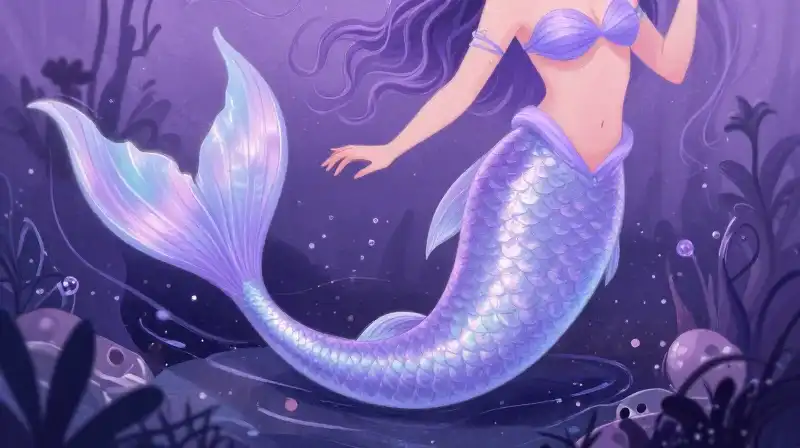
To understand the confusion, we must first look at what traditional European mermaid lore demanded. In classical mythology, the key feature defining the mermaid is not necessarily the texture of her tail or the structure of her body, but the undeniable presence of a human upper body. Whether the lower half was depicted as a serpent or a fish, the most important element was the woman’s torso, often captured from the waist up [1].
This emphasis on the “human core” is evident in historical documentation. Henry Hudson’s 17th-century journal, for example, describes the features of the sea creature encountered by his crew with an intense focus on its feminine traits, detailing the woman’s torso and breasts while describing its lower half as having a tail “like the tayle of a porposse, and speckled like a macrell” [1]. These earliest descriptions highlight a pattern: the human form served as the anchor for the mythological being, giving us a precise look at how the creature was envisioned by the first chroniclers [1].
Beluga and the Illusion of the Sea-Form
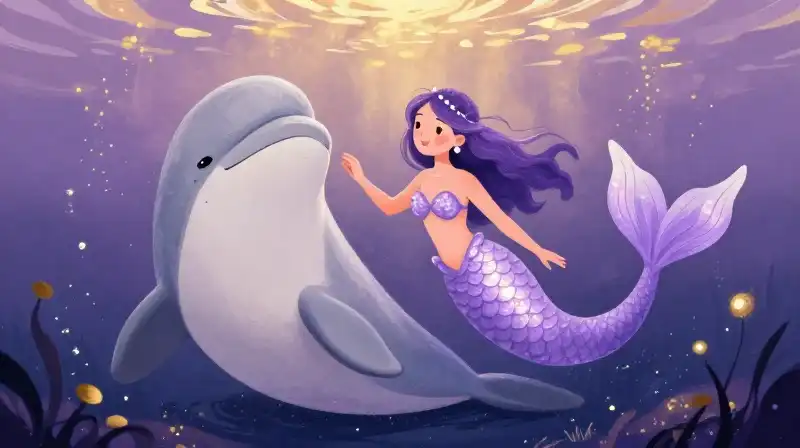
The Beluga whale, with its striking Arctic presence, is often cited in modern discussions regarding mistaken identity. While it is not typically the subject of traditional European mermaid folklore—which leaned heavily on human faces and torsos rather than animal-like features [1]—beluga whales possess body structures that can profoundly mimic fantastical elements. From certain angles, the unique curvature and form of a beluga whale can create a powerful illusion, where its body appears to possess human-like knees or joint structures [1].
This observation speaks directly to the theme of perceived versus real magic. It is a natural phenomenon—a trick of light and perspective—that feeds the human desire to see stories in the waves. The beluga’s sleek, powerful shape is so compelling that it naturally evokes the idea of a majestic, mythical sea guardian, providing rich material for themes of mistaken identity in storytelling [1].
The Convergence of Worlds: Sedna and the Thule Myth
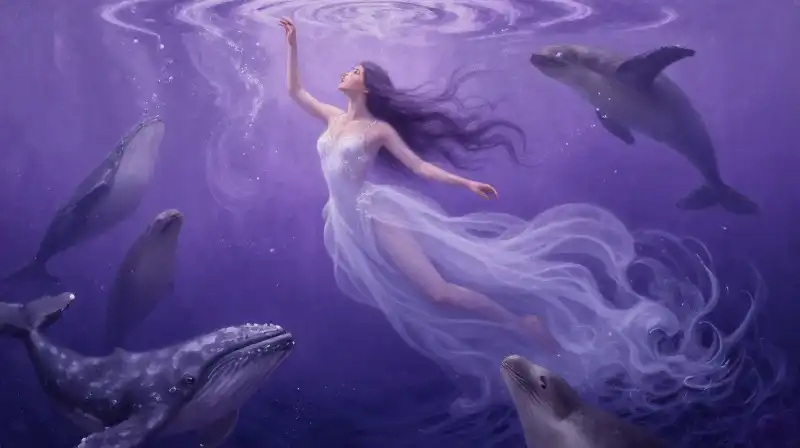
To move beyond the historical confusion of whalers and dive into a deeper vein of magical creature study, we can explore the Thule (Inuit and Yupik) ancestral mythology. This narrative offers a contrast to European folklore, presenting a figure of immense cultural depth: Sedna. She is a major sea goddess or nature spirit, fundamentally a human woman dwelling beneath the sea [1].
Sedna’s role is perhaps the most profound intersection of the human and the natural worlds. Her mythology dictates the life cycles of Arctic marine life; in many tales, seals and whales are born from her very body [1]. This makes her not just a magical being, but a vital, active part of the ecosystem. Modern artistic interpretations of Sedna often evolve into what scholars call a “composite form” of a mermaid—a development seen as a result of cultural contact and attempts to harmonize diverse beliefs [1]. Unlike the generalized European myths, Sedna’s character is defined by her intricate ties to the Arctic environment—making her a fascinating character for world-building [1].
From Form to Function: How Myth Adapts and Blends
The contrasting origins of these mermaid types—the European emphasis on the human-upper-body myth, and the Thule focus on the powerful, holistic sea-goddess—provides remarkable fodder for writers and creators. The transformation of figures like Sedna into a more generalized “mermaid” reflects how folklore is inherently fluid. Tales adapt, absorbing overlapping functions from different regional cultures to create new, blended magical beings [1].
The observation that a whale’s physical structure can mimic knees provides a concrete, real-world parallel to the “magic” of the mermaid. Both the natural illusion of the beluga and the constructed mythology of the Sedna represent powerful narratives about observation. One shows how biology can be misinterpreted by the imaginative human mind [1], while the other shows how belief can evolve to incorporate the realities of the natural world [1].
Comparing Mythological Approaches to the Sea
| Cultural Context | Primary Focus/Feature | Key Relationship |
|---|---|---|
| Classical European Lore | The human upper body (Torso/Bust) | Perceived Beauty/Creature Encounter |
| Thule (Inuit/Yupik) Lore (Sedna) | The complete convergence of human and nature | Sustenance and Ecosystem Vitality |
| Beluga Observation | Natural anatomical illusion (The “Knee”) | Perception/Mistaken Identity |
Creating Magic in the Stories: Lessons for Parents and Writers
Whether you are telling a bedtime story or building a fantastical world for your child, understanding the Beluga and the Sedna allows you to move beyond superficial beauty and into genuine thematic depth. When a creature is defined by its deep connection to its environment, or by the way it challenges human perception, it achieves a far richer magical quality [1].
For bedtime tales: Themes of “perceived magic” or “the mystery of the deep” are wonderfully soothing. They validate the child’s wonder—the idea that the world holds secrets that look like one thing but are many others. Use the Beluga’s majestic, yet sometimes mistaken, presence to explore the beauty of unknowable nature, teaching acceptance of ambiguity rather than simple “good vs. evil” binaries [1].
For world-building and classroom use: Sedna offers a powerful example of how magic can be grounded in ecological truth. Instead of just being “a princess in a tail,” a creature tied to the birth of whales and seals gives the story weight and consequence. It helps children understand that even the most fantastical beings must have a functional, vital role in their world [1].
Ultimately, the story of the beluga and the mermaid is not merely a tale of marine biology and fiction; it is a study of imagination. It reminds us that the most remarkable creatures are often those that force us to pause, look closer, and recognize the profound ways in which the real world can mimic the most fantastical dreams.
Sources
- Is it true that sailors have mistaken Beluga Whales for mermaids because of their human-like knees? : r/AskHistorians — reddit.com
Frequently Asked Questions
What animal was historically mistaken for the mythical mermaid?
The Beluga whale is the sea creature cited in the article as having been historically mistaken for a mermaid by sailors. While the Beluga is not part of traditional European folklore, its unique form can create illusions that mimic fantastical elements. This mistaken identity highlights how human perception can be influenced by the natural world.
Related Articles