
Stronger Stories: Why Feminist Fairytales Teach Agency and Skill

Introduction
Some stories are comforting because they repeat the same old magic: a dashing prince saves the maiden, the wicked stepmother is defeated by a magical intervention, and order is restored by a heroic, if sometimes passive, male hand. But what happens when we look closely at the fabric of those “happy endings”? Often, the classic fairy tale structure asks the protagonist—particularly the woman—to wait for rescue, shifting the burden of resolution away from her hands and onto the fate of her lover. For parents and educators seeking narratives that mirror a world demanding agency, skill, and self-reliance, the old tropes simply won’t do. Modern storytelling offers us an abundance of Feminist Fairytales, reimagining the world to prioritize characters who solve problems through their own wits and resilience. These are stories designed not just for bedtime comfort, but for building character, curiosity, and a powerful sense of personal agency.
Agency Through Action: Moving Beyond the Damsel
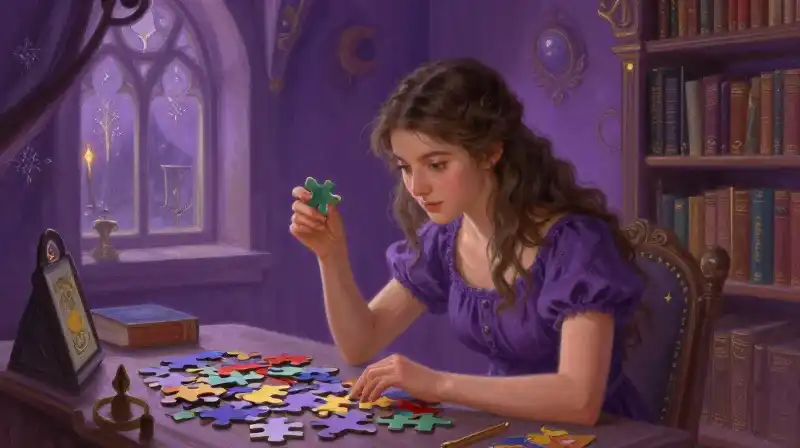
The core difference between traditional and modern feminist narratives is the relocation of power. In the classic tale, the hero often exists only to be found, married, or rescued. In the newer narratives, the character achieves the ending. This means the protagonists are proactive problem-solvers, not waiting for a convenient magical intervention or a charming suitor. When we look at these progressive story choices, we see a fundamental shift in how we define “power.”
Consider the subversion of the damsel-in-distress trope. The Paperbag Princess, by Margaret Atwood, is a prime example of a text that completely ignores the expected narrative flow [1]. Instead of being a fragile victim needing a Prince to materialize from the horizon, the protagonist demonstrates competence and initiative, demanding that the resolution meet her needs rather than hers being “saved” by a stranger.
Similarly, The Enchanted Forest Chronicles by Patricia C. Wrede presents an uncommon view of royalty. Its princess is not destined to marry a local lord but instead finds her home and purpose amongst Dragons, contrasting sharply with the rigid, restrictive roles of older folklore [1]. This suggests a world where a character’s identity is dictated by her passion and capability, not her marital status or societal expectations.
Modern Characters for Modern Minds: Skills, Science, and Self-Reliance
For educators and parents, finding narrative models that translate into real-world lessons about science, craft, and leadership is a practical necessity. These character models don’t just happen in a faraway enchanted forest; they are girls who build, discover, and lead.
Several modern series and books offer powerful, aspirational characters who define success on their own terms:
- Rosie Rever: As an engineer, Rosie provides a blueprint for problem-solving through systematic thinking, demonstrating that skills and logic are powerful forces in the world [1].
- Ada Twist: This character models scientific inquiry and a relentless spirit of questioning. She embodies the joy of experiment and learning without relying on traditional fairy-tale magic to overcome obstacles [1].
- Alanna (Tamora Pierce’s works): Pierce’s fantasy series offers a rich, complex world featuring strong female protagonists who rely on their own self-determination and courage rather than external aid [1].
- The Updated Amelia Bedelia: While the original focuses on her adult maid status, the updated versions are praised for centering a young girl with a “literal personality.” This shift encourages humor and attention to detail while removing the focus on her traditional “female service” role [1].
Furthermore, we can see these themes successfully translated into real life. Educational materials like Good night tales rebel girls transform figures such as Malala Yousafzai and Venus and Serena Williams into fairy tale structures, turning real-life feats of grit into narratives that inspire young readers [1].
Rewriting the Classics: Deeper Meanings in Old Worlds
It is tempting to simply discard old tales as antiquated, but a closer, analytical reading reveals layers of hidden agency. Sometimes, the magic lies in how we choose to interpret the narrative, especially when considering themes of emotional and feminine labor.
For instance, Hansel and Gretel, when viewed through the lens of agency, becomes a story of a sister’s success. Despite the extreme external threat of the Witch, Gretel is the one who successfully outsmarts the villain to save her brother, demonstrating decisive female agency over an active threat [1]. The witch archetype, while certainly a villain, becomes the foil that tests and ultimately allows the sister to prove her resourcefulness.
The tale The Little Red Hen is another perfect subject for classroom discussion. It can be a fantastic starting point for discussing the importance of “emotional labor” and the concept of contribution, highlighting how feminine or careful labor is vital to the success of any endeavor [1].
The *Feminist Fairytales* podcast masterfully takes disparate classic elements—mixing Alice in Wonderland with The Boy Who Cried Wolf—to remix traditional structure into a vehicle for feminist messaging [2]. These mixes allow us to see how entrenched folklore can be reinterpreted to explore modern anxieties, such as adapting Puss in Boots to explore corporate greed and the struggle of the downtrodden [2].
| Tale/Text | Traditional Role | Modern/Feminist Interpretation | Core Value Taught |
|---|---|---|---|
| Brave & Tangled (Animated) | Protagonist often relies on romantic intervention or magic. | Protagonists resolve conflict through physical action, skill, and personal decision. | Agency, Self-Confidence, Practical Skill. |
| Feminist Fairytales (Podcast) | Simple good-versus-evil dichotomies. | Intersectional themes: familial abuse, trauma, complex motherhood. | Emotional Intelligence, Nuance, Empathy. |
| Hansel and Gretel | Victim under threat. | Gretel uses wit and action to ensure her brother’s survival. | Resourcefulness, Protecting Others. |
Addressing the Curious: What Exactly Do These Stories Teach?
What makes feminist fairy tales so useful for educators and parents?
The utility lies in their specificity. Unlike generalized lessons about “kindness,” these stories provide a concrete mechanism for growth. When teaching about conflict resolution, we can reference Ada Twist’s dedication to scientific method. When discussing empathy and social awareness, the themes in the podcast’s “Your Birth” episode—which examines postpartum anxiety and depression by weaving together elements from Narcissus and *Tales of Baba Yaga*—offer a deep dive into emotional complexity that moves far beyond surface-level tales [2]. They allow us to ground abstract social concepts in vivid, imaginative scenarios.
How do these stories help develop a child’s sense of agency?
Agency is the power to act. By centering characters like Alanna or the proactive princess in The Enchanted Forest Chronicles, children are modeling a world where they are the primary architects of their destiny. They see that a girl doesn’t need permission to be strong, and she doesn’t need a “Prince” to achieve her goals. They learn that skill—whether in engineering, storytelling, or self-defense—is the true currency of the fairy tale world.
The Importance of Comprehensive World-Building
Many feminist narratives are also excellent exercises in world-building. Strong worlds are not just backdrops; they are characters in themselves, often representing the oppressive or supportive structures in a character’s life. For instance, the progressive viewpoints offered in some of these tales allow us to explore settings that contrast sharply with traditional kingdoms, showing that there are many ways to be a hero or to find community. These detailed worlds provide rich visual material for illustration, theater, and reading, allowing the reader to see how different environmental factors shape a character’s journey [1].
Ultimately, the goal is not to reject the old fairy tales, but to read them with intention. When we choose narratives that focus on independent characters, themes of overcoming oppressive structures, and the vital role of skill, we are not just giving our children a bedtime story; we are providing them with a powerful framework for their own aspirations.
Summary of Strength
Feminist fairytales are remarkable because they don’t just offer an alternative; they offer a complex and vital update. They prove that strength is found not only in magic, but in ingenuity, perseverance, and the quiet competence of a girl who knows what she wants and is willing to work for it. By exploring these stories—from the literal engineering of Rosie Rever to the magical independence of Princess Alanna—we equip our children with the knowledge that their power is inherent, earned, and ultimately, theirs to wield.
Sources
- Non patriarchal fairy tales recommendations : r/Feminism — reddit.com
- Feminist Fairytales | Podcast on Spotify — open.spotify.com
Related Articles