
Beyond the Tracks: The Symbolism of Thomas and the Beanstalk

Introduction
When a world as solid, predictable, and beautifully familiar as the Island of Sodor meets the boundless realm of fairy tale magic, something truly transformative happens. Thomas and the Beanstalk is not merely a retelling; it is a magnificent collision of industry and enchantment. By taking the classic, often perilous quest of Jack and the Beanstalk and transplanting it onto the familiar lines of the North Western Railway, this story moves beyond the simple fantasy trope. It invites us to explore how a mundane, operational world can suddenly become a magical, vertical portal, offering rich material for us to reflect upon themes of scale, hidden power, and the collaborative bravery required to face the truly immense [1].
The Mundane Meets the Myth: Sodor’s Vertical Portal
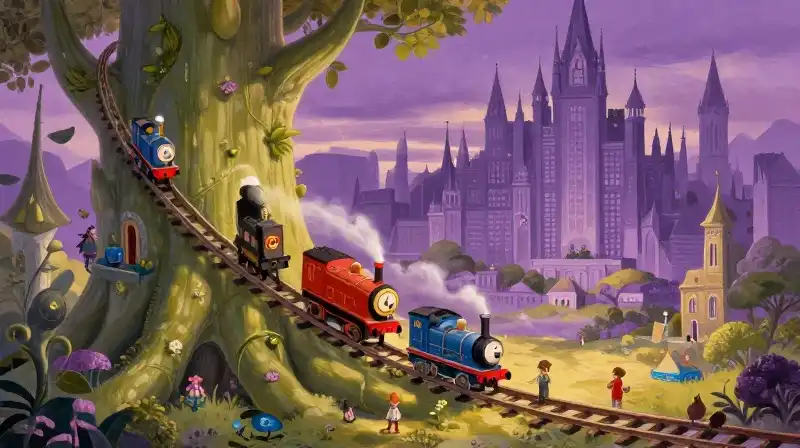
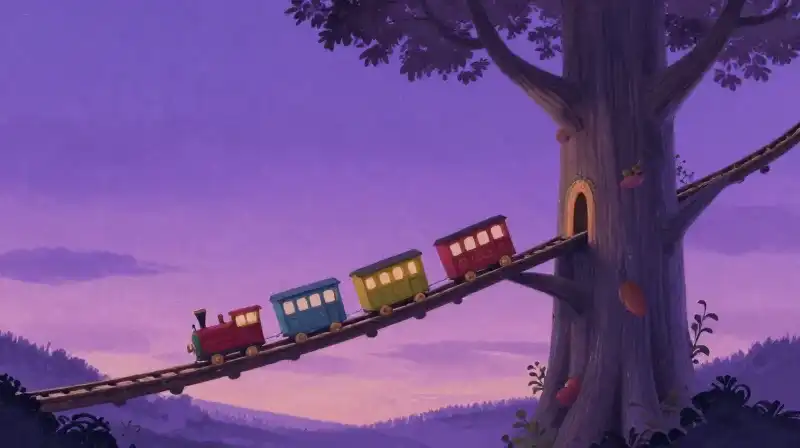
The fundamental brilliance of this adaptation lies in its setting. Sodor, in its operational context, is defined by its rail tracks, its routines, and its recognizable character dynamics. This story subtly subverts that definition. The simple green stalk of the traditional fairy tale is replaced by a massive, vibrant beanstalk featuring railway tracks leading directly toward its summit [1]. This modification does more than just make the climb easier to visualize for young readers; it fundamentally reframes the stalk as a magical vertical portal. It allows the characters—the small, sturdy engines of Sodor—to physically transcend their ordinary landscape and enter a colossal, enchanted world described as a sprawling “Sodor-sized railway with buildings to match” [1].
The Power of Setting as Symbol
The choice of Sodor itself serves as a powerful symbol. It represents the familiar, the controllable, the ordered world of daily life. By placing the ultimate disruption—the Beanstalk—into this environment, the narrative emphasizes that even the most orderly, predictable lives can be touched by, and challenged by, overwhelming wonder. The fantastical journey is not a distraction from the railway but a transformation of it, suggesting that within routine, the potential for magnificent discovery always exists [1].
The Scale of the Unknown: Navigating Immensity
Fairy tales often involve characters who confront threats far larger than themselves. Thomas and the Beanstalk handles this concept of daunting scale through the antagonists and the environment itself. The world beyond the tracks is overwhelmingly vast. The beanstalk’s sheer scale is such that “everything makes Thomas feel so small” [1]. This isn’t meant to be a source of terror, but of profound humbling and wonder. It teaches children about the magnificent scope of the world—the idea that even the smallest engines have the capacity to interact with something immensely large.
From Disruption to Colossal Antagonism
The antagonism begins with Diesel 10, who starts as a smaller, disruptive force of chaos, bashing the sacks of beans off the rails at the story’s inception [1]. However, his role quickly escalates. He emerges later as a giant, monstrous figure, mirroring the intimidating scale of the magical world they are entering [1]. This progression allows the narrative to explore the concept of overwhelming external forces. Diesel 10 and the giants symbolize the unknown, the chaotic elements of life, or the challenges that seem too big to tackle alone [1].
The Golden Engine: A Symbol of Innate Power
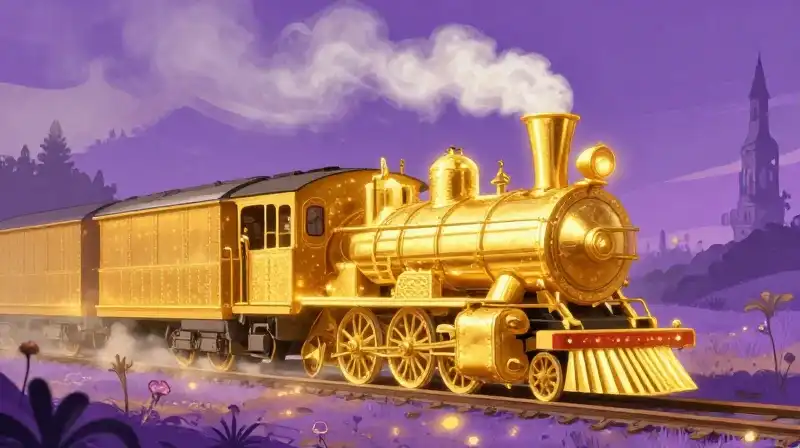
One of the most imaginative and poignant symbolic elements of this specific tale is the magical gold steam engine. This engine does not just represent wealth; it represents a fundamental shift in Thomas’s internal resources. By acquiring this enchanted engine, Thomas is able to puff “quicker than ever” [1]. This acquisition of “golden coal” is highly significant. It is not merely a piece of magical equipment; it symbolizes a valuable, innate magical energy that originates from a realm of pure enchantment, far removed from the gritty coal and iron of the everyday Sodor world [1].
In an imaginative analysis, the Golden Engine teaches children that power does not always come from their immediate environment. True potential, the ability to soar or achieve something remarkable, often comes from an outside source of wonder—a magical spark or a moment of courage that awakens something extraordinary within. It is a representation of unlocking potential, often through the journey itself [1].
Beyond Individual Bravery: The Value of Collaboration
The journey into the perilous beanstalk is not a feat Thomas manages alone. The story uses a crucial narrative device to emphasize the necessity of teamwork. When the final, desperate dash is required through the unstable beanstalk, Thomas is joined by James and Percy [1]. This moment of collaborative action is the moral heart of the tale. It demonstrates that while courage is vital, facing a magical collapse or a catastrophic challenge is best done when the strengths of multiple characters are combined [1]. The tale suggests that the scale of the problem (the collapsing beanstalk) must be met with the collective effort of the community (the small engines of Sodor) [1].
Bedtime Reflection: Lessons from the Railway
For educators and parents, Thomas and the Beanstalk is a deeply resonant piece of children’s literature, suitable for thoughtful bedtime reflection. Because the grand adventure itself is ultimately presented as unfolding within a dream—indicated by Thomas eventually waking up and the magical golden engine vanishing [1]—the story functions as a theme rather than a literal accounting of events. This provides a gentle, soothing framing perfect for winding down before sleep [1].
It offers several key takeaways for discussion:
- The Dream State: The magical components—the beanstalk, the gold engine, the giant—can be seen as representations of our imagination and inner potential. They teach children to look at the world not just as it is, but as it *could* be.
- The Test of Character: By placing the epic quest within a familiar, safe context (Sodor), the story allows children to experience enormous stakes and incredible peril in a controlled, imaginative environment, framing the adventure as a test of bravery and character [1].
- Perspective and Humility: Encountering a world “everything makes Thomas feel so small” [1] fosters a healthy respect for the immense power of nature and the vastness of the world, without diminishing the inherent worth or power of the small.
The Core of the Adventure
Ultimately, Thomas and the Beanstalk is a masterful piece of contemporary fairy tale adaptation. It takes a classic narrative structure—the journey from the mundane to the magical and back—and grounds it entirely in the specific, relatable, and comforting world of the Railway Series. It is a celebration of how small engines, through courage, collaboration, and the realization of their own innate potential (the Golden Engine), can navigate the complexities and immense scale of the unknown world. It encourages children to be adventurous, to trust their friends, and to recognize the magic that exists just beyond the tracks of their daily life [1].
Sources
- Thomas and the Beanstalk — ttte.fandom.com
Related Articles