
Clever Animal Heroes: Decoding the Wisdom of Talking Animals

Introduction
What happens when the most grounded creatures in nature—the foxes, the goats, the cats—can suddenly speak? This shift, the giving of voice to the animal, is far more than a whimsical plot device in classic literature. Across the tapestry of global folklore, the talking animal is not merely a charming spectacle; it is a powerful cultural mechanism for imparting profound lessons about cunning, community, transformation, and the surprising source of wisdom. Whether it is a feline executing an elaborate scheme or a humble creature offering critical survival advice, these animal heroes carry a specific, potent form of magic. They represent the intersection of instinct and intellect, the ability to find clever solutions where human power or conventional morality might fail.
For parents and educators seeking narratives that resonate deeply—stories that move beyond the simple “good vs. evil”—the clever animal is a rich vein of material. These characters invite us to consider motivation from a non-human perspective, asking us to understand drive and strategy through an animal’s eyes. In this exploration, we will move beyond listing these beloved stories to decoding them, revealing precisely why creatures like the witty Puss in Boots or the pragmatic jackal have remained foundational archetypes in children’s literature for centuries [1].
The Mechanics of the Clever Animal: Why Do They Talk?
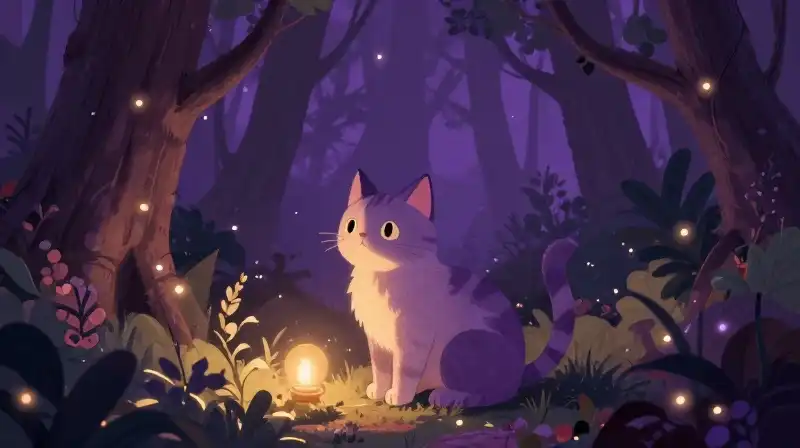
The presence of a talking animal usually serves a deliberate narrative function: they break the barriers of natural constraint. In the wild, animals communicate through instinct and behavior; in folklore, they gain language to engage in human-like strategy, negotiation, or complex emotional response [1]. Their ability to speak often links directly to their moral authority or their extraordinary cleverness. They are frequently the ones who possess the sharpest wit, enabling them to outmaneuver larger, more powerful human or monstrous antagonists.
Felines: Masters of Subterfuge and Schemes
Perhaps no animal embodies the “clever hero” archetype more successfully than the cat. The feline in European and Japanese tales is rarely a passive companion; it is often a high-level strategist. Puss in Boots, for instance, is the quintessential trickster, utilizing verbal dexterity and theatrical presentation to achieve seemingly impossible goals [1]. Similarly, in the Japanese tale *The Cat’s Elopement*, cats like Gon and Koma are depicted undertaking romantic adventures, showcasing not just cunning, but a sophisticated capacity for complex social dynamics and romantic initiative [1]. The French tale *The White Cat* adds another layer of brilliance to this archetype, presenting a gender-swapped version of common fairy tales, where the central figure is a talking feline princess [1]. These characters remind us that wit is the ultimate equalizer.
The Animal Advisor: Wisdom Outside the Norm
The talking animal often functions as a mentor or an outside consultant. This “advisor role” is particularly powerful because the animal offers advice detached from human societal expectations—a perspective grounded in survival, practicality, and natural observation. They guide protagonists toward necessary truths, highlighting the idea that the wisest counsel often comes from the most unexpected sources.
Practical Wisdom in Conflict and Survival
In Indian folklore, the tale *The Tiger, the Brahman, and the Jackal* exemplifies this dynamic. The jackal provides critical survival advice, guiding the protagonists through a perilous situation by offering keen insights into their surroundings [1]. Similarly, the African tradition of *The Enchanted Gazelle* operates like an animal-guided adventure, where the gazelle uses its innate animal wits not only to survive but also to earn wealth, mirroring the resourceful cunning seen in Puss in Boots [1]. These tales demonstrate that ‘knowledge’ in folklore is often synonymous with ‘resourcefulness’ and ‘situational awareness.‘
Transformation: When Animals Become Mirrors of the Soul
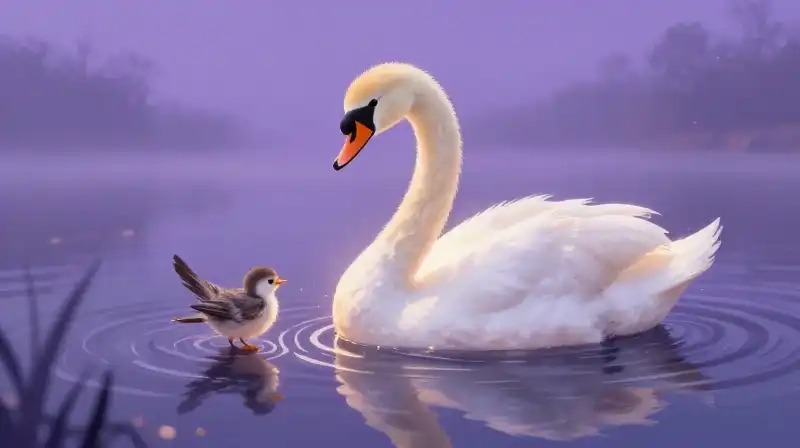
Some of the most poignant narratives involving animals concern change—the literal, often magical metamorphosis. These stories use the animal form to symbolize a soul’s journey from obscurity to greatness, or from perceived flaw to hidden strength. This mechanism is deeply comforting, as it mirrors the human desire for growth and self-acceptance.
The Journey from Commonplace to Regal
Hans Christian Andersen’s *The Ugly Duckling* stands as the paramount example of this theme. The duckling’s struggle with his awkward appearance and eventual realization that he is, in fact, a regal swan, is a narrative masterpiece about enduring adversity and trusting in one’s intrinsic nature, despite external judgment [1]. The talking animal here serves as the catalyst or the mirror for this internal change. The Frog Prince, while technically a human prince under a spell, retains this central function: the transformative spell and the magical creature embody the theme of overcoming a challenging initial state to achieve a more beautiful, fulfilled form [1].
Global Archetypes: The Diversity of the Talking Animal
The clever animal hero is a universally resonant archetype, but its expression shifts dramatically across different cultures. Examining the global reach of this motif allows us to see how fundamental human ideas—such as rivalry, resourcefulness, and cooperation—are expressed through diverse animal lenses.
| Folklore Tradition | Key Character/Tale | Core Function of the Animal | Narrative Insight |
|---|---|---|---|
| French | Puss in Boots / The White Cat | Strategist / Trickster | Wit and verbal cunning overcome social barriers [1] |
| Danish | The Ugly Duckling | Symbol of Self-Actualization | Overcoming adversity to reveal inherent beauty [1] |
| Norway | The Three Billy Goats Gruff | Defiant Protector | A small group of beings uniting to overcome a massive challenge [1] |
| Japan | The Cat’s Elopement | Romantic Agent | Exploring complex human-like emotional life [1] |
| African | The Enchanted Gazelle | Resourceful Advisor | Using natural wits for practical gain [1] |
| Indian | The Tiger, the Brahman, and the Jackal | Pragmatic Survival Coach | The value of practical, non-human perspective [1] |
Community vs. Individual Cleverness
While many animal heroes shine through individual wit, other tales emphasize teamwork. *The Bremen Town Musicians* presents a cohesive unit of all-animal characters—a donkey, dog, cat, and rooster—traveling together [1]. Here, the cleverness is distributed, showing that community and collective resolve can achieve what individual schemes sometimes cannot. This is a vital theme for children, teaching them that even disparate individuals can form a powerful, intelligent unit.
Navigating the Versions: Understanding Narrative Nuance
In folklore, the “original” version is often a fluid, contested entity. To understand a character or a tale deeply, we must recognize these variations. For instance, the Brothers Grimm provided two distinct versions of *Mrs. Fox’s Wedding*. In one, the focus is on an aging Mr. Fox; in another, the Fox fakes his own death to test his wife’s fidelity [1]. This highlights how the same core animal motif can be repurposed to explore drastically different human emotional terrains—from domestic aging to suspicion and testing loyalty. This kind of nuanced reading elevates a simple “talking animal list” into a rich study of human nature projected onto the wild.
Parent’s Guide: Which Animal Tales Work Best for Bedtime and Classroom Use?
If you are looking for specific, actionable recommendations for your child, here is a guidance based on the themes these heroes embody:
- For Encouraging Resilience (Ages 3-7): The Ugly Duckling. This tale is profoundly soothing because its central struggle is internal—one of identity—and its resolution is beautiful self-acceptance. It’s a gentle reminder that what we perceive as flaws are often just stages in growth [1].
- For Teaching Wit and Problem Solving (Ages 5-9): Puss in Boots or The Enchanted Gazelle. These stories provide clear examples of agency. They teach children that intellectual effort, sharp observation, and strategic thinking are powerful tools against bigger problems [1].
- For Exploring Moral Complexity and Teamwork (Ages 8-12): The Three Billy Goats Gruff or The Bremen Town Musicians. These tales move beyond single characters. They require the audience to analyze how collective action (the goats working together) or the combination of different traits (the musician troupe) can conquer formidable obstacles [1].
- For Addressing Ambiguity (Ages 10+): Goldilocks and the Three Bears. While commonly known, the original ending of this story is famously open to interpretation—whether she escapes, is harmed, or is sent to jail [1]. Discussing this ambiguity with older children encourages sophisticated literary analysis of fate and consequence.
Synthesis: Why Animal Heroes Matter in Our Stories
The clever animal is more than just a narrative decoration; it is a symbol of the untapped potential within every being—and every story. By placing human-like intellect and strategy into the body of an animal, folklore teaches us that wisdom is not restricted to those in crowns or cloaks. It resides in sharp observations, tenacious spirits, and the capacity for unconventional thinking. Whether they are tricksters like Puss in Boots or pragmatic guides like the jackal, these heroes ground our fantastical stories in the reality of the natural world while simultaneously elevating human understanding. They remind us that the deepest lessons often come not from rigid rules, but from the clever, adaptive, and surprisingly wise voice of nature itself [1].
Sources
- 13 Delightful Fairy Tales with Talking Animals — snowwhitewrites.com
Related Articles