
Into the Woods: Exploring Complex Themes in Fairy Tales

Introduction
In a world where fairy tales often promise pristine perfection, where villains are unequivocally wicked and every problem has a neat, sugar-coated solution, the forest is often too small for the truth. *Into the Woods* doesn’t merely borrow the cloak of classic folklore; it rips the stitches out of those familiar narratives to show what lies underneath. This is not a story about simple wishes granted or monsters cleanly vanquished. It is a sophisticated collision of beloved tropes—Cinderella’s longing, Rapunzel’s isolation, Little Red Riding Hood’s dangerous journey, and Jack’s quest for grandeur—all converging within a single, magically volatile woodland [1]. By blending these archetypes, the creators craft a “Fairy Tale Mashup” that serves as a potent reflection of modern life: complex, messy, and often profoundly gray. For parents and educators looking to discuss life’s ambiguities with children, this story offers far more than a colorful spectacle; it offers a surprisingly honest lens through which to view the real world [3].
Unraveling the Mashup: The Colliding Tales
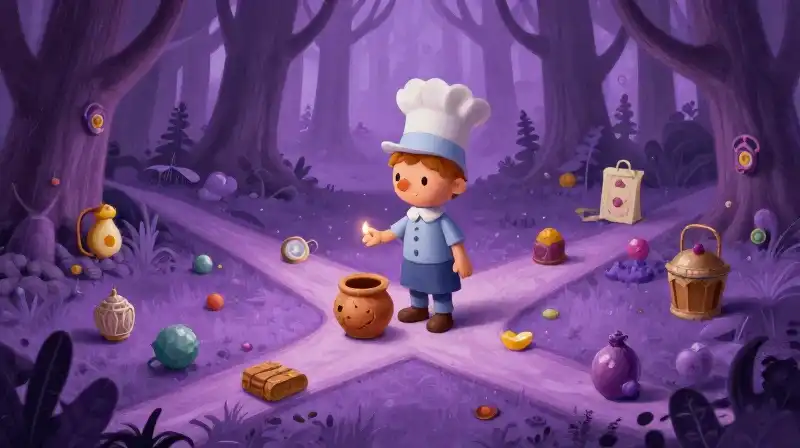
At the heart of *Into the Woods* lies the necessity of fulfilling a wicked curse. A childless Baker and his wife are trapped in a dark obligation, tasked by a demanding Witch with gathering four specific, symbolic items to stave off the consequences of their lives [2]. This mission drives the intersecting paths of the various characters, each embodying a different classic archetype under the banner of this overarching magical quest. The items to be gathered—a cow white as milk, a cape red as blood, hair yellow as corn, and a slipper pure as gold—are not merely arbitrary objects; they are symbols representing the core desires and struggles found across the traditional stories [3].
The Foundations of the Forest
The story’s structure is built upon the foundations of established folk narratives, allowing the audience to see the original tales twisted, illuminated, and refracted through a contemporary lens:
- Cinderella: Represents desire, waiting, and the quest for a better life.
- Rapunzel: Represents isolation, hidden potential, and the painful cost of overprotective control.
- Little Red Riding Hood: Represents innocent journeys that lead into treacherous moral landscapes.
- Jack and the Beanstalk: Represents sudden, sometimes reckless, ascent into wealth and power.
Beyond the Binary: The Gray Complexity of Choices
Unlike many classic fables, which typically offer clear moral binaries—good vs. evil, right vs. wrong—*Into the Woods* embraces a “SUPER gray” moral landscape [1, 3]. The story’s true brilliance lies in its insistence that life and relationships are rarely simple equations. Characters are constantly confronted with the consequences of their own choices and inherent failings, a concept that moves the narrative far beyond typical fairy tale plotting [3]. This complexity means that the characters’ journeys are not just about achieving a happy ending, but about understanding the bitter cost of achieving it.
The Evolution of Family and Loss
A central thematic current of the musical is the volatile nature of family dynamics. The narrative explores how the conflict between parents and children is a recurring, potent theme in classic folklore. Children are not simply passive recipients of parental care; they are active learners, assimilating the missteps and failures of their guardians [1, 2]. This theme is encapsulated by a powerful, insightful line from the Witch herself: “Children can only grow from something you love to something you lose” [1]. This perspective challenges the fairy tale ideal of the perpetually stable, perfect family, grounding the narrative in the difficult, sometimes painful reality of human connection and growth.
The Modern Villain: Redefining the Witch’s Role
Perhaps the most fascinating element of the story is the deconstruction of the antagonist. The Witch of *Into the Woods* is not a flat, cartoonishly wicked figure designed solely to provide obstacles. She is a deeply complex character whose motivations are rooted in a specific, tragic backstory—she seeks repayment for having stolen a baby [1]. This context shifts her role from pure malice to a complicated force of reckoning. In certain moments, she acts less as a purely destructive force and more as a voice of dark reason, forcing the protagonists to face the harsh realities their desires have created [1]. This nuance allows the audience to see how even the most frightening archetypes can carry a layer of vulnerability or justification.
| Character Archetype | Origin Tale Association | Core Motivation/Conflict |
|---|---|---|
| The Baker/Wife | The Quest/General Family | Obligation, fulfilling a destructive curse, balancing ambition with consequence. |
| The Witch | Rapunzel/Original Folklore | Seeking balance, repayment, and dealing with past failures; a force of necessary reckoning. |
| Rapunzel | Rapunzel | Struggling against overprotective barriers and the limitations of an isolated life. |
Into the Heart: Navigating the Hazards of the Forest
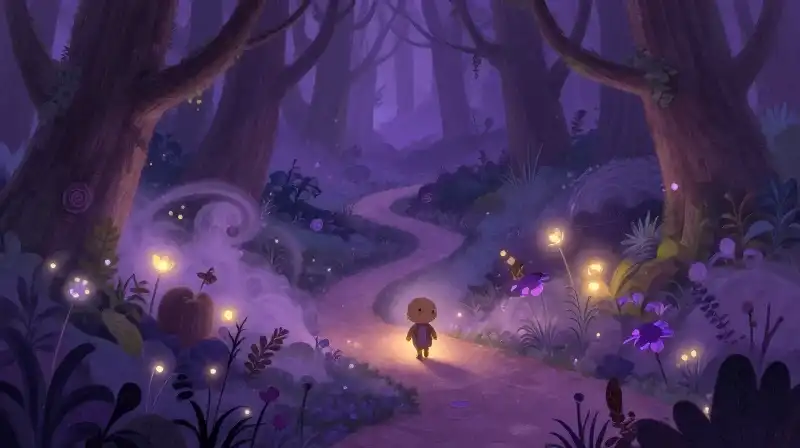
The “age-old archetype of the magic fairy tale forest” in *Into the Woods* is less a lush, charming backdrop and more a volatile, hazard-filled stage for growth [1]. Characters do not simply walk through beautiful scenery; they navigate challenges like “facing a ravenous wolf” [1]. This environment symbolizes the unpredictability of life, where adventure is inextricably linked to potential danger. The visual language—the “less literal” scenic design utilized in stage productions, which suggests the various magical settings rather than depicting them fully—pushes the focus onto the characters’ emotional and narrative journeys rather than literal location [3].
The Weight of the Aftermath
The final lesson of the story is rarely a joyous “Happily Ever After.” Instead, it teaches a crucial, often challenging truth: “happy endings sometimes taste a little bitter after a big loss” [2]. Victory in *Into the Woods* is never purely triumphant. Every success is intertwined with lasting consequences, forcing the characters—and the audience—to grapple with the idea that maturity requires acknowledging failure, regret, and the pain that accompanies profound change.
Who Are the Tales and Characters Referenced in *Into the Woods*?
For those exploring the foundational elements of the story, *Into the Woods* serves as a brilliant synthesis of four major children’s tales:
- The Cinderella Narrative: Captured through characters and themes of wanting more, often contrasted with the limitations imposed upon them.
- Rapunzel: Represented by the struggle against confinement and the difficulty of escaping parental overreach or isolation.
- Little Red Riding Hood: Her journey embodies the crossing of boundaries, warning us that even simple journeys can lead to unexpected and daunting encounters.
- Jack and the Beanstalk: His story highlights the precariousness of sudden gain and the moral cost of unchecked ambition.
These familiar fables are not merely background dressing; they are the very DNA of the conflicts explored on stage and screen [2].
Age and Nuance: How to Approach This Sophisticated Story
Because of its sophisticated lyrical content, intricate musical structures, and complex moral themes, *Into the Woods* functions as a gateway for older children and adolescents. The musical is noted for its sophisticated lyrics and “brilliant wordplay” by Stephen Sondheim [1]. This makes it particularly suitable for children around age 12 and up, who are beginning to question simple moral answers and are ready to process narratives where good and evil are not distinct categories. The 2014 Disney film version, while successfully capturing the required items—the cow named Milky-White, the red cape, yellow hair, and gold slipper—incorporates specific plot alterations from the original 1987 musical score, making both versions rich, but distinct, experiences [2]. Whether you approach it as the original stage production, the film, or the lyrical genius of the score, the complexity remains the same, offering layers of interpretation for families who love deep, imaginative storytelling.
Synthesis: The Magic of Necessary Messiness
What makes *Into the Woods* so profoundly remarkable is its unapologetic embrace of “necessary messiness.” It takes the world of classic fairy tales—the world of immediate magical resolutions—and subjects it to the brutal, beautiful realism of life. It teaches a critical lesson that sometimes, the things we love most (like family, dreams, or perfect endings) are the very things that cause the most pain and the most difficult choices. By showing us that happiness is often a hard-won, tempered victory, *Into the Woods* grants children and adults a sense of honesty that is profoundly comforting, reminding them that growth comes not from flawless success, but from the strength found in navigating the gray spaces of life.
Sources
- Into the Woods: The Ultimate Fairy Tale Musical — snowwhitewrites.com
- Into the Woods (film) — en.wikipedia.org
- Into the Woods at The Guthrie Fractures All the Fairytales in a Fantastically Fun Production — thestagesofmn.com
Frequently Asked Questions
What fairy tales are referenced in Into the Woods?
Into the Woods is a mashup that references several major children's tales, including Cinderella, Rapunzel, Little Red Riding Hood, and Jack and the Beanstalk. These narratives are blended to reflect modern life, exploring themes like Cinderella's longing for a better life and Jack's reckless quest for power.
What fables are in Into the Woods?
While the article describes the story as a synthesis of 'familiar fables' and 'classic folklore,' it does not provide a specific list of which stories are classified exclusively as 'fables.' It generally refers to the foundational tales, such as Cinderella and Jack and the Beanstalk, as part of the source material that the musical reinterprets.
Related Articles