
The Truth Behind Wonderland: Alices Fight for Hope in the Grimm Comics

Introduction
There are many versions of a girl falling down a rabbit hole, but the one presented in the Grimm Fairy Tales Presents universe offers something far more intense than a whimsical afternoon. This adaptation of *Alice in Wonderland* moves beyond the nonsensical tea parties and curious creatures of popular myth to reveal a high-stakes struggle for existence. In this interpretation, Wonderland is not merely a place of playful absurdity, but a fragile, once-hopeful realm that has been slowly consumed by darkness [2]. For parents and educators looking for a deep dive into children’s literature, this comic series offers a genuinely illuminating look at what happens when the world’s inner chaos manifests into a physical, magical war.
The Fractured Realm: A World Battling Chaos
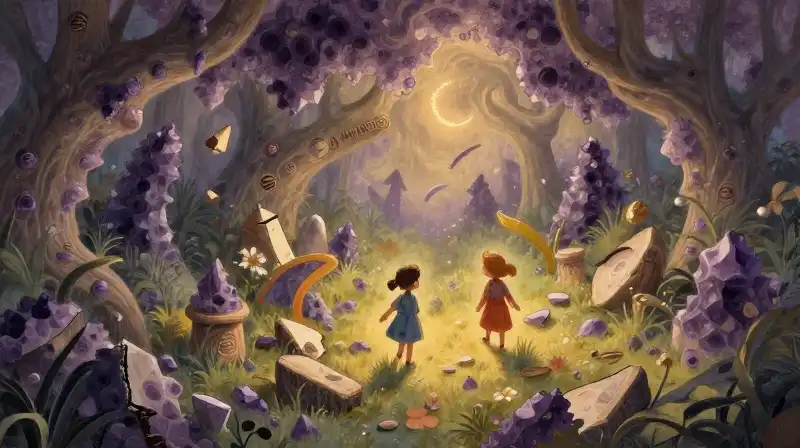 When we think of Wonderland, we often conjure images of bright colors, talking animals, and gentle madness. However, this specific narrative offers a more complex, haunting view of the setting. At its core, Wonderland began as a peaceful land steeped in dreams and hope [2]. The tragedy lies in its transformation. This initial tranquility gradually succumbed to chaos, leading to the “horror-filled realm” that Alice ultimately enters [1]. This change in atmosphere is a powerful thematic device: the crumbling of a beautiful, dream-like world due to the encroaching power of madness [2].
From Gentle Dreams to Growing Darkness
The world of the *Grimm Fairy Tales* is depicted as a setting perpetually at war with itself. The conflict is not just personal; it is a systemic struggle. Wonderland is experiencing a burgeoning war, a clash for its very soul, as the pervasive element of insanity seeks total dominion over its inhabitants [2]. This makes the land itself a primary antagonist—a beautiful but failing ecosystem constantly under threat of total spiritual dissolution.
Alice’s Descent: The Price of Survival
Alice’s journey through the rabbit hole, therefore, is not a harmless adventure; it is an immersion into a profound crisis [1]. She plunges into a world of absolute instability, where logic fails and fear is the dominant force. The narrative meticulously traces her experiences within this realm of madness [1].
The “Broken Adult” and Emotional Weight
The comic adaptation suggests that Alice’s passage through this horrific landscape leaves her fundamentally changed—a “broken adult” [1]. This detail is crucial for analysis. Her survival is not portrayed as a simple magical escape; it is an experience that demands a psychological toll. She carries the weight of witnessing the corruption of Wonderland, the trauma of the encroaching madness, and the sheer effort required to navigate such instability [1]. For older readers and educators, this opens a sophisticated dialogue about how intense experiences, even in fantasy, can leave lasting marks.
The Central Conflict: Hope Versus the Tide of Madness
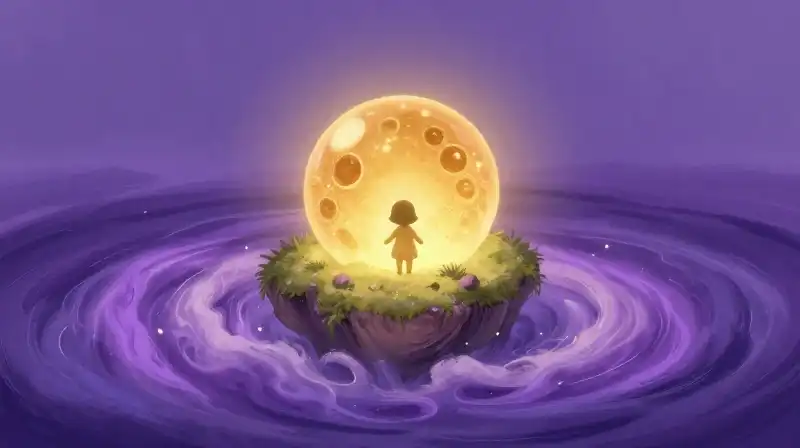 The most striking element of this story is the elevated stakes. This is not a cautionary tale about questioning one’s sanity; it is an epic tale of survival against an existential threat [2].
The High-Stakes Struggle
The entire plot centers on this fierce struggle: the battle between hope and the relentless forces of darkness within Wonderland [2]. The narrative posits that Alice’s visit is meant to serve as a full revelation of the truth behind the terror she encounters—the truth of the war for the soul of the realm [1]. The chaos isn’t random; it is driven by an active, destructive force—madness itself—which is actively trying to reign over the inhabitants [2].
The Cosmology of the Wonderland Universe
The world is populated by a rich array of characters who are caught in this cosmic conflict. Beyond Alice, the “Wonderland Universe” features unique figures such as Olivia, the Goblin Queen, and the complex history tied to the Liddle Family [1]. These characters serve as facets of the conflict—representing resistance, corruption, or the complex, fractured nature of the realm itself.
Alice’s Resilience: Survival as Salvation
Despite being fundamentally altered by her journey, Alice achieves a victory that transcends personal triumph. Her perseverance—her willingness to survive the onslaught of insanity and darkness—becomes the catalyst for the survival of the entire realm [1]. In a story where madness seeks to be absolute, her simple, tenacious will to endure is the force that ultimately saves humanity. Her survival is thus less about winning a fight and more about refusing to succumb, thereby upholding the possibility of hope [1].
Using Wonderland for Reflection and Growth
For parents and educators, this dark, complex version of *Alice* provides rich material for discussions that go far beyond simple “good vs. evil.”
- Exploring Trauma in Storytelling: The depiction of Alice as a “broken adult” offers a mature perspective on how extreme experiences can shape a person. This can be used in classroom discussions to talk about resilience and the way stories reflect real-world emotions.
- The Nature of Chaos: The systematic corruption of Wonderland (peaceful chaotic war) provides a concrete way to discuss systems breaking down and the importance of foundational hope [2].
- Encouraging Tenacity: Alice’s survival is the ultimate proof that even when faced with the most illogical or overwhelming forces (madness), the act of simply enduring and holding onto hope is a powerful, necessary act [1].
The *Grimm Fairy Tales* comic series transforms a classic story into a high-stakes narrative about enduring what seems impossible. It reminds us that sometimes, the most profound magic isn’t found in a delightful tea party, but in the desperate, stubborn fight to keep hope alive even in the face of chaos.
Sources
- Alice in Wonderland 1 | Grimm Fairy Tales Presents: Wonderland Wiki | Fandom — gftwonderland.fandom.com
- All Wonderland Comics — zenescope.com
Frequently Asked Questions
Are the 12 dancing princesses Grimm?
The article discusses the *Grimm Fairy Tales Presents* universe but does not mention any specific characters such as the 12 dancing princesses. It focuses on the adaptation of *Alice in Wonderland*, describing characters like Olivia and the Goblin Queen.
Related Articles