
The Woodcutters Tragic Choice: Lessons in Korean Folklore and Love

Introduction
When we think of fairy tales, the mental imagery often leans heavily toward happy endings, glittering castles, and fairy godmothers. But tucked away in the ancient, moss-damp traditions of Korean folklore lies a narrative that resists easy categorization—a profound tragedy that challenges the Western notion that love triumphs above all else. The story of “The Fairy and the Woodcutter” offers a glimpse into a cultural landscape where deep moral duties often compete fiercely with passionate desires. This tale is not just a charming listen before bed; it is a richly layered exploration of sacrifice, duty, and the often-painful complexity of choice.
The Core Elements of a Korean Myth
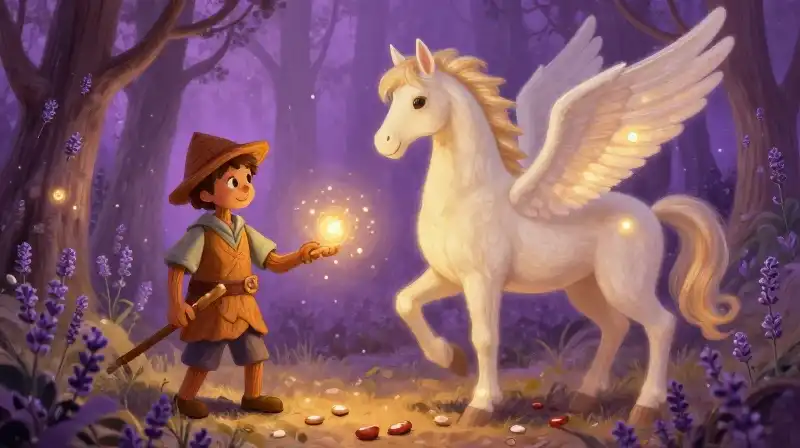 The Woodcutter’s journey is a classic ascent into the realm of magic, but its foundations are distinctly Korean. The tale begins when a devoted Woodcutter discovers a fairy hiding her “winged clothing,” which is her only means of flight, from the eyes of his skeptical wife [1]. This act of concealment, while born of love, is the initial hinge upon which the entire story turns. The Woodcutter’s ascent is not purely solitary. He is aided by a resourceful deer, a key element of Korean storytelling, who procures him vital magical beans and, later, a magnificent winged horse [1]. These creatures serve as catalysts, moving the story from the mundane fields to the heavens. The journey concludes with the Woodcutter achieving a celestial existence, becoming a figure of heavenly grace, before his fate is changed by a seemingly small, domestic act.
The Tragedy of the Porridge: Analyzing the Climax
The most striking divergence of this tale from familiar Western myths is its conclusion. In many stories, the protagonist’s tragic downfall is caused by an external villain or a curse. Not so here. The Woodcutter’s tragic transformation into a rooster that crows with grief is the result of a self-inflicted miscalculation [1]. The catalyst is a spilled hot porridge, which knocks the winged horse off course. This detail is critical because it frames the Woodcutter’s fate not as a punishment for love, but as a consequence of his actions when faced with an impossible choice. His ultimate demise is not a romantic failure; it is a profound moral conflict brought on by external obligation.
Filial Piety vs. Romantic Desire: The Woodcutter’s Choice
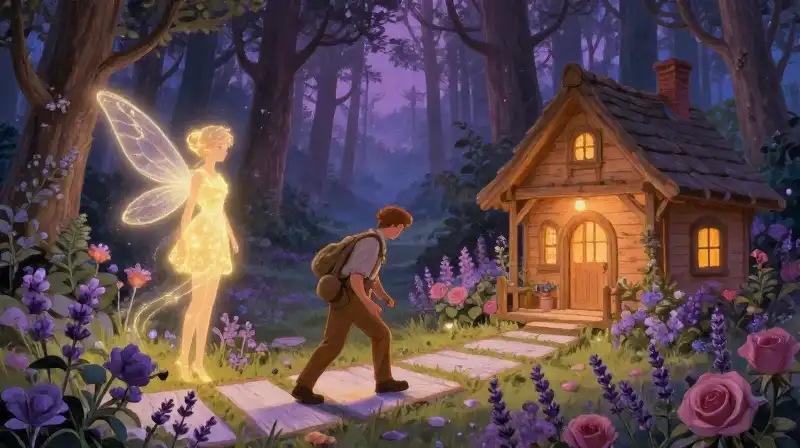 At the heart of this powerful folktale lies the theme of *filial piety*—the traditional and deeply respected duty and honor owed by a child to their parents, particularly their mother [1]. This is the central thematic analysis that elevates the Woodcutter from a romantic figure to a tragic figure of immense internal conflict. When his family requires him to return, the Woodcutter is confronted with a choice: pursue the perfect, eternal love of the fairy in the heavens, or return to the terrestrial world to uphold his duty to his mother. He chooses the latter, prioritizing his filial devotion over his heavenly life and his romantic bliss [1]. This decision makes the Woodcutter’s suffering uniquely meaningful.
- The Conflict: The story pits the intense, life-altering power of romantic love against the rigid, deeply ingrained social duty of filial piety.
- The Sacrifice: By returning to his mother, the Woodcutter effectively sacrifices his immortal status and his happiness to honor his cultural responsibilities.
- The Lesson: The narrative forces the reader to grapple with the idea that sometimes, the highest virtue is not romantic fulfillment, but the difficult commitment to one’s roots and moral obligations.
Korean Fairies and Mythological Nuance
While many cultural representations of fairies are exclusively female (think benevolent winged women), the structure of Korean mythology allows for a more flexible definition. Some interpretations suggest that the concept of a “fairy” or celestial being is not strictly gendered, as attributes of achievement and transcendence can define a being [2]. Furthermore, the tale functions in the way many ancient myths did: as a *pourquoi* tale. This means it offers an explanation for a natural phenomenon—in this case, explaining the origin of a rooster that crows in sorrow, reflecting the Woodcutter’s transformed state [1]. This blend of high romantic drama and practical mythological explanation is a hallmark of Korean storytelling.
| Theme | Western Fairy Tale Focus | Korean Folktale Focus (“The Fairy and the Woodcutter”) |
|---|---|---|
| Ending | Triumph of Love/Restored Status | Tragic Choice/Self-Sacrifice |
| Protagonist’s Struggle | Overcoming External Obstacles (Villain, Magic) | Navigating Internal Moral Obligations (Duty vs. Desire) |
| Moral Lesson | Love conquers all | Duty and familial commitment are paramount |
Addressing the “Forbidden” Question
A common query among story lovers is whether this tale is “forbidden.” While the word itself is subjective, the reason it might feel *forbidden* to some readers is its unrelenting realism regarding suffering. Unlike stories where tragic moments are fleeting and the “happily ever after” is guaranteed, this tale accepts a permanent, sorrowful ending. For a parent reading this, the richness lies in how to handle that sorrow. It is an opportunity not to instill fear, but to introduce complex, mature emotional themes. Instead of being a frightening tale, it is an emotionally rigorous one.
A Guide for Parents and Educators
“The Fairy and the Woodcutter” is an excellent story for children who are moving beyond simple good-and-evil narratives and can handle nuanced moral dilemmas.
Age Guidance and Practical Application:
- Ages 6-9: Use the story to discuss the feeling of a difficult choice. Focus on the Woodcutter’s love for his mother and his deep love for the fairy. Ask: “What would *you* choose if you loved both things so much?” This helps kids understand that priorities are not always easy.
- Ages 10+: Engage with the theme of cultural values. Discuss the concept of filial piety as a cultural lens and how it can be a powerful force in life—sometimes a powerful one, and sometimes a heartbreaking one.
This is a story that encourages empathy, not just for the Woodcutter’s sorrow, but for the weight of the choices that define us. It teaches that true greatness sometimes means accepting a sacrifice that changes you forever.
The Enduring Power of the Choice
“The Fairy and the Woodcutter” is remarkable because it avoids the comfort of a predictable fairytale resolution. It grounds its celestial drama in the very real, often heavy, emotional world of duty. This Korean folktale invites the reader to look past the magical flight and glittering wings to the powerful, grounded human choice—the devastating moment when the demands of family meet the lure of the sublime. It leaves us not with a happily-ever-after, but with a meaningful, resonant truth: that the choices we make often define our true self, even if those choices are profoundly tragic.
Sources
- The Fairy and the Woodcutter: tragic love, Korean-style : Korea.net : The official website of the Republic of Korea — korea.net
- Fairies and Korean Mythology : r/KDRAMA — reddit.com
Frequently Asked Questions
What is the forbidden fairytale in Korean?
The article addresses whether the tale is 'forbidden' by noting that this perception comes from its unrelenting realism regarding suffering. Unlike stories that guarantee a 'happily ever after,' this Korean folktale accepts a permanent and sorrowful ending.
Related Articles