
The Juniper Tree: Understanding Its Complex Themes and Symbols

Introduction
Fairy tales often shine in hues of vibrant magic and happily ever after, yet sometimes, the most memorable stories are the ones that tread into the shadows. The Brothers Grimm were masters of both, creating worlds of enchantment and brutal honesty. Among their most profound, and perhaps most challenging, is “The Juniper Tree.” This is not a story about fluffy woodland creatures or magical slumber; it is a dark, complex narrative of childhood tragedy, corrosive jealousy, and the long, slow burn of divine justice. For the parent or educator looking beyond a simple plot summary, this tale demands a closer look at its deep symbolism—the weight of the tree itself, the duality of life and death, and the powerful journey of transformation that leads to retribution.
The Weight of the Juniper Tree
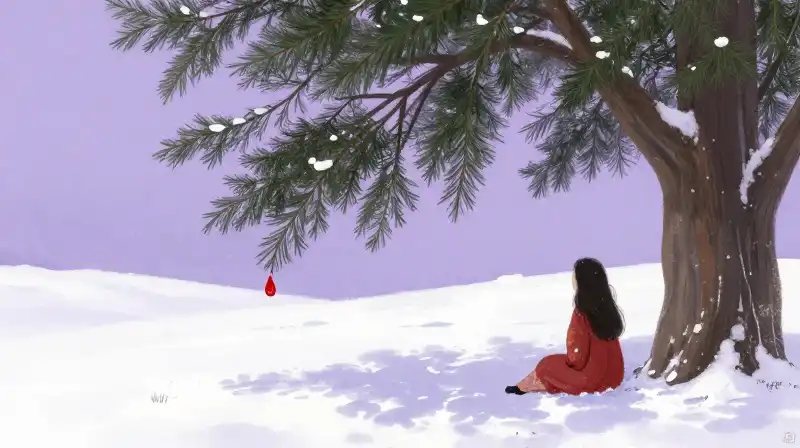
The juniper tree is more than just a scenic backdrop in this story; it functions as the moral and emotional anchor of the entire narrative. In many tales, a natural setting provides atmosphere, but here, the tree embodies a primal, almost spiritual significance. The tale opens with a woman standing beneath its boughs, engaging in a quiet, personal moment of yearning. It is here that the wish for a child is rooted in a very specific, visceral image: a drop of blood, falling into the snow, inspiring a desire for a child “as red as blood and as white as snow” [1][2].
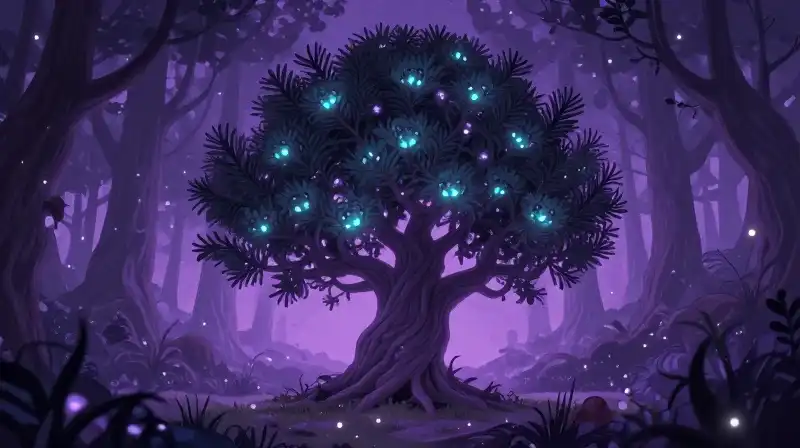
The tree thus establishes a dichotomy right from the start—the life (the red blood) meeting the purity (the white snow). As the story progresses, the tree remains a fixed point, witnessing the trauma and the transformation. In its final moments, it is the site of the ultimate supernatural event. When the boy’s bones are found beneath its roots, the tree triggers a profound, mysterious mist, resulting in the miraculous re-emergence of a beautiful bird, signaling a completion of the cycle [1]. It is a silent, ancient witness to human frailty and ultimate divine reckoning.
An Analysis of Corrosive Jealousy: The Stepmother’s Role
The central antagonist of “The Juniper Tree” is the second wife, who embodies the destructive forces of jealousy and a desperate hunger for worldly security—the inheritance. She is not a caricature of evil, but a study in psychological motivation. Her actions are calculated and escalating. Initially, her malice is hidden, but her intent to harm the stepson becomes undeniable through deliberate acts of violence.
Escalation and Intent
The stepmother’s attempts to kill the boy are multifaceted, showing a willingness to employ both brute force and calculated deception. One devastating act involves slamming the lid of a chest onto the boy’s neck, a moment of pure, sudden cruelty [2]. Later, her deception is even more insidious; she tricks her own daughter, Marlene (or Marlinchen), into delivering the killing blow to the boy’s head, likely intending to make it appear accidental or to cover up her own involvement [1][2].
The story functions, in part, as a dark character study of child abuse and the destructive power of resentment. Her actions drive the narrative forward, forcing the boy into a state of death and subsequent reincarnation. She represents the societal dangers of prioritizing gain over humanity, and the narrative explores how such malice inevitably creates a reaction that cannot be ignored.
From Flesh to Flight: The Symbolism of the Vengeful Bird

The transformation of the murdered child into a bird is one of the most powerful moments of symbolic vengeance in the tale. Death does not end the boy; it initiates a journey of spiritual justice. The bird is not just a creature of nature; it is a vehicle for the boy’s voice, serving as the narrative device that drives the theme of justice [1][2].
The Power of the Song
The boy’s song—a haunting, tragic lament that begins with “My mother, she killed me…” [1][2]—is the mechanism through which the town and the wicked are confronted with the truth. This repetitive song is the boy’s spiritual biography, a constant broadcast of his suffering. In folklore, the song often serves to “tell the truth” where human speech fails or is suppressed. As he flies, the bird collects essential artifacts: a gold chain, red shoes, and a millstone. These items are not random; they are symbolic components necessary for the ultimate act of divine judgment.
The bird’s journey represents the endurance of the innocent spirit. Even after the brutal consumption of the child, the spirit persists, gaining the strength to orchestrate the final, inevitable moment of retribution [2].
The Intertwined Themes: Food, Death, and Divine Judgment
A core thematic thread weaving through “The Juniper Tree” is the disturbing, cyclical relationship between food and death. The story presents an almost macabre form of life cycle: blood falls onto snow at the beginning, followed by the body being chopped, cooked, and consumed as “blood-soup” by the father, who is convinced of its delicious quality [1][2]. This consumption is a profound symbol of the complete assimilation and acceptance of death. Yet, death does not conclude the story. The subsequent rebirth and the bird’s appearance ensure that life always finds a way to reclaim its balance.
Justice and Biblical Undertones
The tale carries powerful symbolic weight related to religious themes. The consumption of the child’s body for sustenance hints at profound biblical undertones, drawing parallels to sacred themes of sacrifice and the Eucharist [2]. Furthermore, the stepmother’s extreme malicious actions can be read as a personification of the Devil, reflecting the ancient folklore tradition of assigning personified vice to villains [2]. The final confrontation is the ultimate act of divine retribution. When the bird drops the heavy millstone onto the stepmother, killing her instantly, it is a clear portrayal of God’s final, swift judgment upon the wicked, perfectly sealing the cycle of justice [2].
Navigating Darkness: Age Guidance for Families
Given the intense themes of child murder and cannibalism, “The Juniper Tree” requires careful handling, especially when read to younger audiences. It falls squarely into the category of dark, cautionary tales. For parents and educators, the most valuable aspect of this story for discussion is not the gore, but the themes of endurance and justice.
- For Young Listeners (Ages 5-7): Focus entirely on the transformation. Center the narrative around the powerful song and the journey of the bird. Frame the “violence” as a “mistaken injustice” that is eventually corrected by a powerful spirit. The focus should be on the victory of truth and transformation, not the physical violence [1].
- For Older Listeners (Ages 8+): This age group can handle the complexity. Discuss the symbolism of the tree, the motivations of the stepmother (jealousy vs. evil), and the concept of spiritual vengeance. This facilitates a deeper discussion on moral weight and consequence.
- For Classroom Study: The tale is an excellent vehicle for discussing archetypes, the difference between malicious intent and destructive impulse, and the concept of cycles—life, death, and renewal.
Why This Story Matters: A Synthesis of Justice and Hope
What makes “The Juniper Tree” so remarkable is that it refuses to offer simple, clean resolutions. It is a story that acknowledges the profound, devastating reality of human cruelty while still insisting on the eventual supremacy of moral law. It is a story of the long road to healing—not immediate, magical healing, but a spiritual journey of suffering that matures into inevitable, powerful justice. For anyone who loves children’s stories and seeks something genuinely illuminating, this tale teaches that even when the darkness seems absolute, the truth, like a song, will always find a way to be heard, and a spirit, like the mist from the juniper tree, will always find a way to be reborn.
***
Sources
- Grimm 047: The Juniper Tree — sites.pitt.edu
- The Juniper Tree (fairy tale) — en.wikipedia.org
Related Articles